
PHOTO
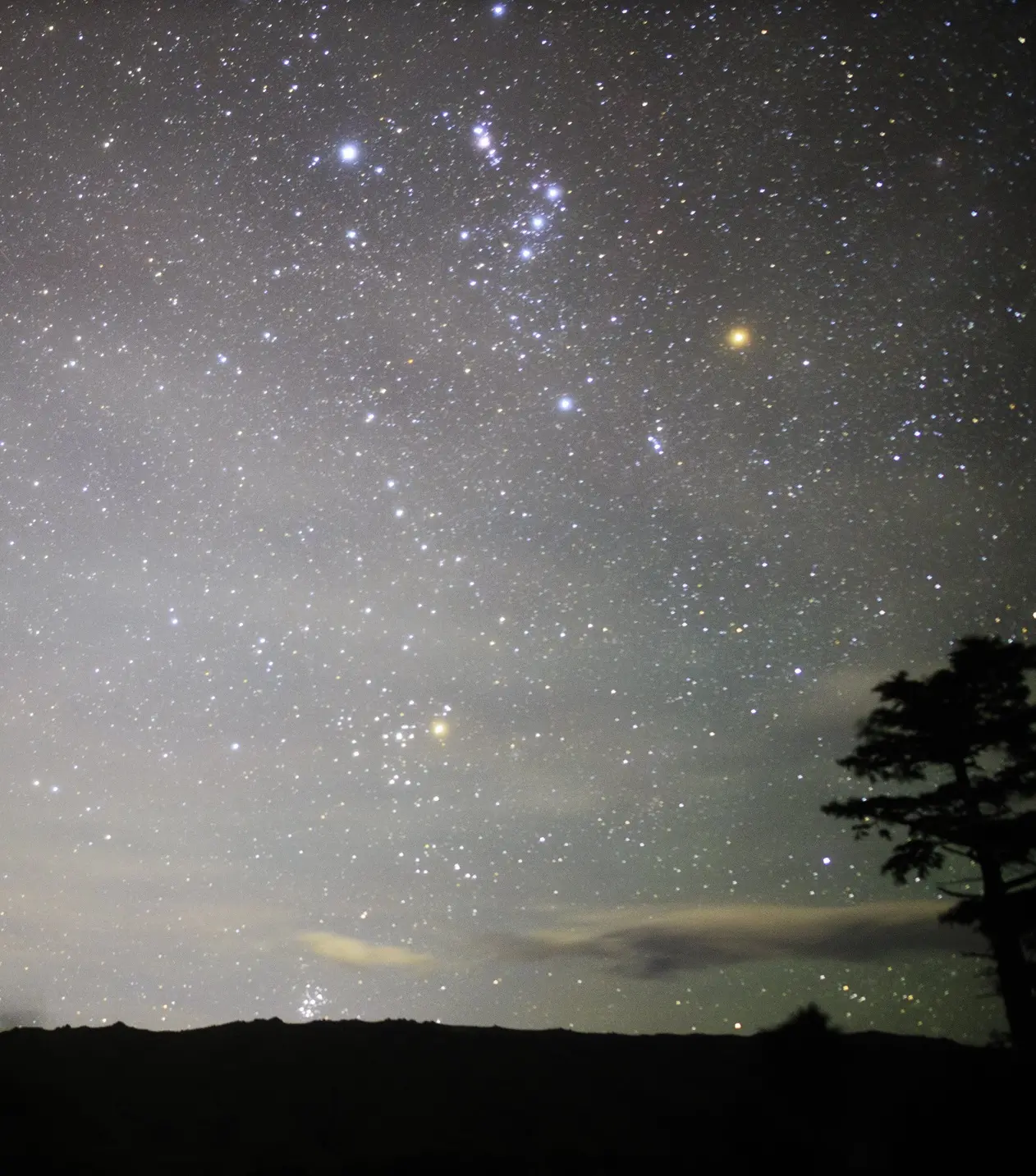
The western horizon from my Middlemarch place has improved markedly of late. A stubborn clump of willows has gone and with it a long-standing blind spot in the sky.
The Rock and Pillar Range now slopes cleanly down to the horizon, and the stars have a proper place to set.

Last week, late on a clear evening, I was out watching exactly that happen.
Matariki — the Pleiades — was easing its way down towards the hills, a tight scatter of pale blue points slipping quietly westward.
Above it glowed Aldebaran, the great red eye of Taurus and higher still stood Orion, unmistakable, broad-shouldered and impossible to ignore.
I should explain that I was doing this from a hot tub, a recently installed one set to a perfectly respectable 39°C. This is not, I hasten to add, some sort of astronomer’s fantasy tableau.
It simply turns out to be an excellent place to watch stars set, provided one remembers to
look.
What struck me that night was how much colour there was in the sky. We often think of stars as white pinpricks, but they are anything but uniform.
Their colour tell us their temperature and you don’t need a telescope — or a hot tub — to see.
Blue stars are the hottest, burning at tens of thousands of degrees. White and yellow stars, like our Sun, are cooler but still formidable. Orange stars are cooler again and red stars, like Aldebaran, are the coolest of the lot — though “cool” here still means several thousand degrees at the surface.
An astronomical thermometer written across the sky.
Look at Orion and you’ll see the contrast clearly: blue-white Rigel blazing at one corner, red Betelgeuse smouldering at another. The difference is real, physical, and immediate.
Summer is an excellent time to notice these things. The evenings are warm, the constellations are bright and familiar and there’s no need to hurry. You don’t need special equipment or special settings. A deck chair will do.
The stars are generous that way — they offer up their secrets whether you’re wrapped in a towel, a coat, or simply paying attention.