
PHOTO
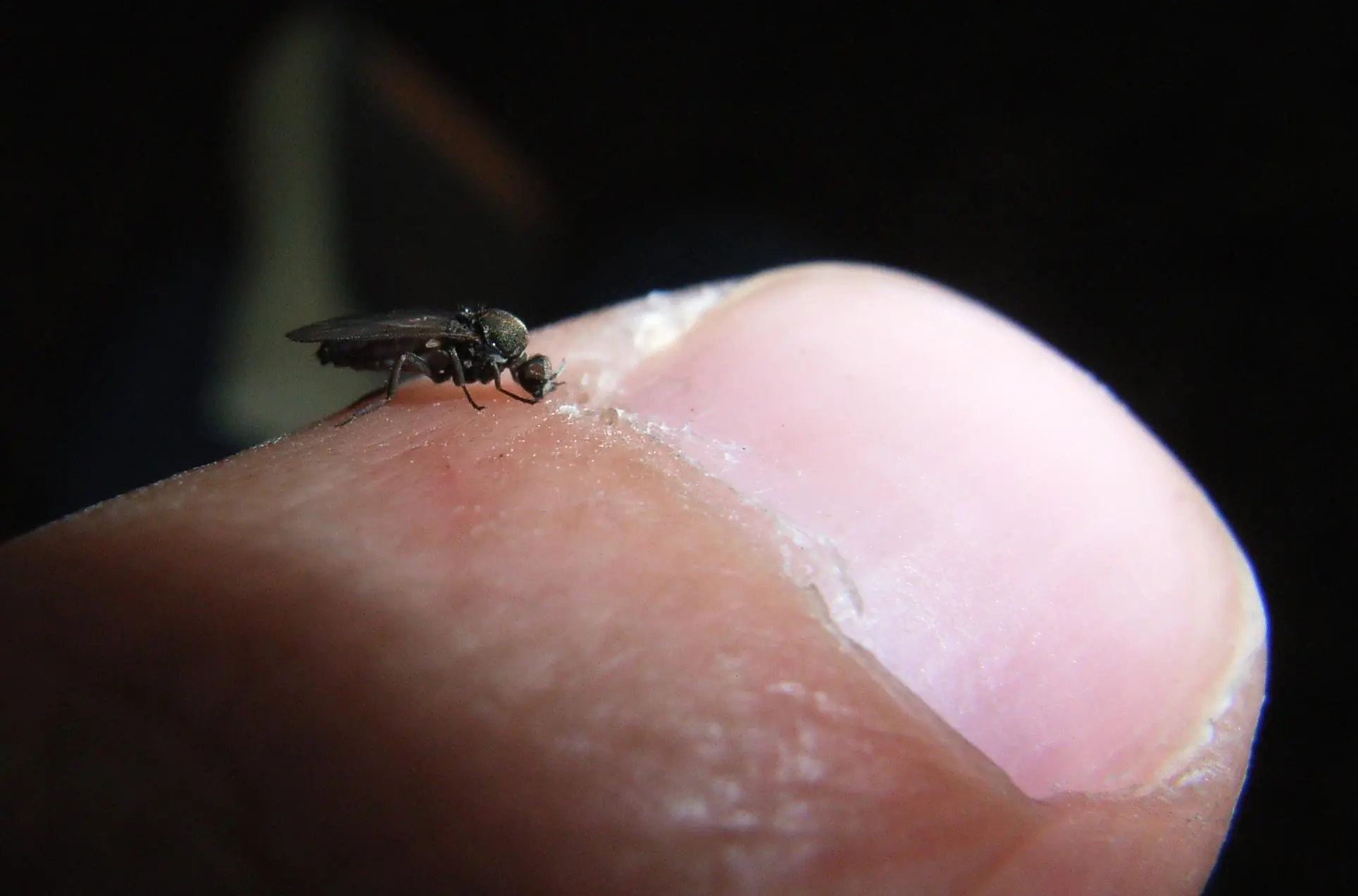
Overcast, humid weather favours sandflies, which are starting to be reported.
Only the females suck blood, which they need to mature their eggs. The males eat plant nectar.
When I did fieldwork on sandbanks by streams in Fiordland, Arthurs Pass, and elsewhere, there was always a persistent cloud of sandflies around my head, and as I attempted to sample insects they would land on my head, face, and arms, and immediately suck blood.
Throughout the South Island and Stewart Island, this biter was mostly Austrosimulium ungulatum. There are about 16 species of sandflies in New Zealand.
Some sandflies breed in well-oxygenated, fast-flowing, clean water, while others favour still water with overhanging vegetation. Eggs are laid on stones or plants at or just below water level.
Sandflies belong to the family Simuliidae, which are called blackflies in most parts of the world.
Austrosimulium ungulatum breeds in small, fast-flowing streams with aquatic plants for larvae to hold onto. The water must be clean and well oxygenated. Eggs are laid on stones or plants at or close to the surface. A newly hatched larva attaches itself to the plant with silk threads as well as with a circle of small hooks at its rear end. As the body floats out into the current, a pair of fans on the head strain tiny organisms from the water.
When fully grown, the larva makes a cocoon of solidified saliva and turns into a pupa inside. Eventually, the cocoon splits open, releasing the newly emerged adult, which floats to the surface in a bubble of air.
Inclement weather throughout New Zealand during the past few weeks and set to continue will be giving sandflies quite a boost and adult females will continue to have better than average meals at camping sites in Northland, Auckland and throughout much of the country, should people disregard the weather and venture to their usual summer vacation haunts.