

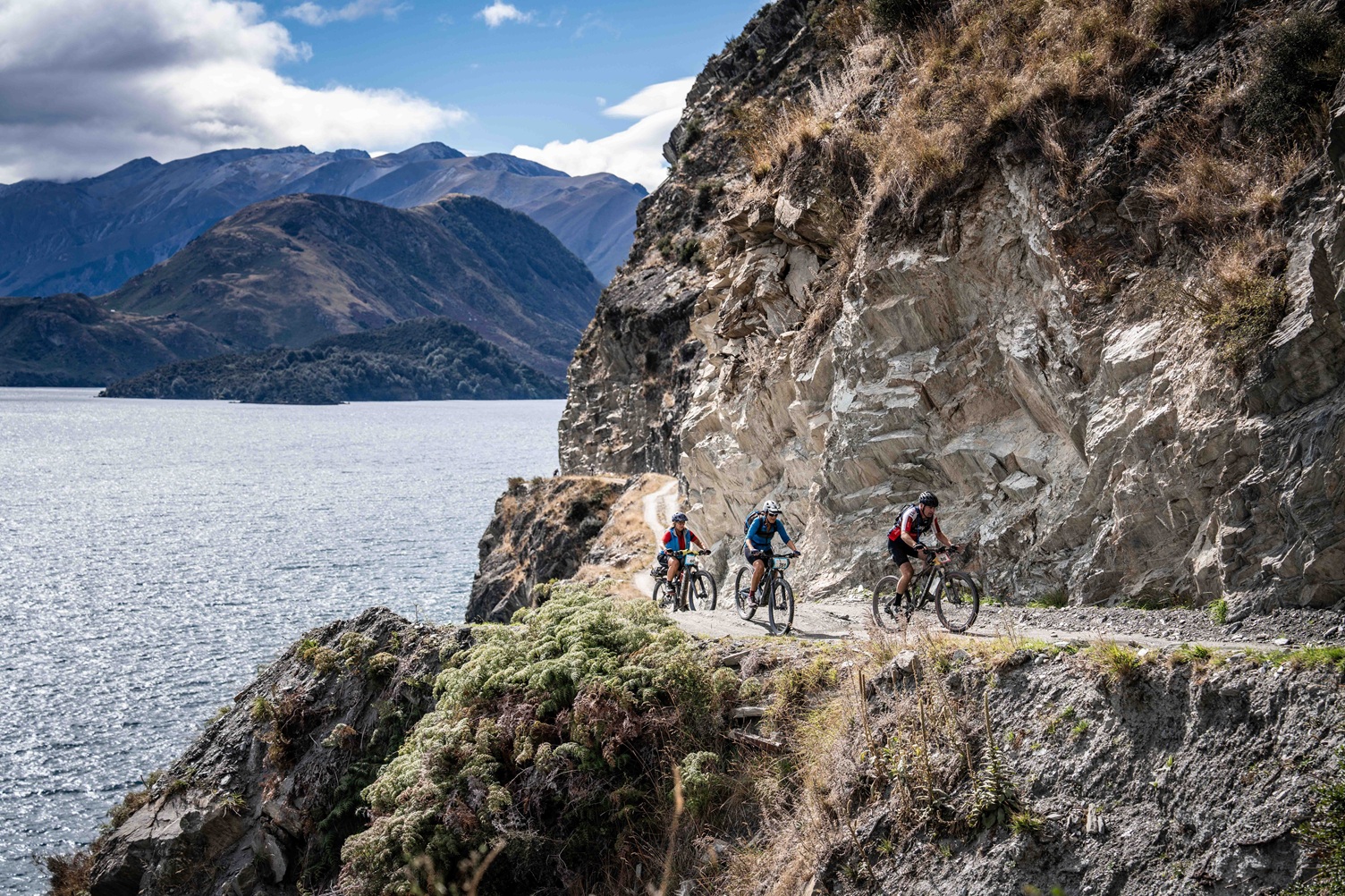
Enter a bike race. You still might not win, but you definitely won’t feel like a loser.
It started at the Gravel in Paradise in Alexandra. I arrived horribly car sick due to the Yorkshireman’s ‘‘tradie punishing a white van’’ driving.
The course was basically one ginormous hill. The race winner, a huge Viking with a red beard, lapped me just as I reached the top of it, but I managed to finish, crossing the line as they were packing up the flags.
But then, a miracle. Because there were only three people entered in the women’s 50-59 class, I got to podium. They even gave me a medal. I was hooked. They should have told me there was jewellery.

What compels a person to do a 10-hour ride? Instead of wondering, I went straight to the top and asked two-time Coast to Coast multisport world champ, Ironman and adventure racing champion Dougal Allan, now race manager of the Hāwea Epic, an event that has returned reinvigorated after a five-year hiatus.
Why put yourself through it?
‘‘I’ve had 20 years of asking myself the same question,’’ he said.
‘‘How philosophical do you want me to get?’’
Go for it, I said.
‘‘Our DNA is such that it’s not built for constant comforts, which is what technology is currently providing us with.
‘‘It pushes back against that — we take pleasure from struggles and discomfort and overcoming these.
‘‘Events like the Hāwea Epic give us a chance to move towards what our survival instincts demand.
‘‘We once used these to hunt and survive in the elements, and it still calls to us.
‘‘There is always going to be some sense of competition against other riders, but that’s not enough.
‘‘The course, and the environment, has to be part of the overall experience.’’
Having been at the race day, I noticed how much the community of riders, volunteers and family members lifts each other up.
Dougal agrees.
‘‘This has been my life for so long, I’ve had a lot of time to think about it, and come to the belief that for us to really engage in anything in life we need three things: competence, autonomy and connectedness.
‘‘A fundamental sense of belonging to a community. For the Hāwea Epic, that community is the town, the biking community, the volunteers and supporters. My goal is to make everyone feel part of a family.’’
‘‘For newbie cyclists the key is autonomy. You have to feel you’re doing this for yourself, that the desire to be part of it is coming from within. The process of getting to the start line, committing to training, having a goal ... people need something to look forward to.’’
Or something to hope for, as Norm Kirk said, even if it’s just hoping you’ll cross the finish line.
My next race is the Mackenzie in two weeks, a loop of Lake Tekapo. And one day, if my knees don’t disintegrate, who knows?
‘‘We don’t hide from the fact that the Hāwea Epic is a tough event, but with the right training anyone can do it,’’ Dougal says.
Physical challenge accepted, I blurted.
‘‘Them’s fighting words. Look forward to seeing you next year.’’
Eeek. Um. Actually, I think I just got swept up in the overwhelming positive vibe — and my mouth is writing checks my body can’t possibly cash. I doubt there would still be a finish line by the time I got over it, two days later, in a rescue helicopter.


