
PHOTO
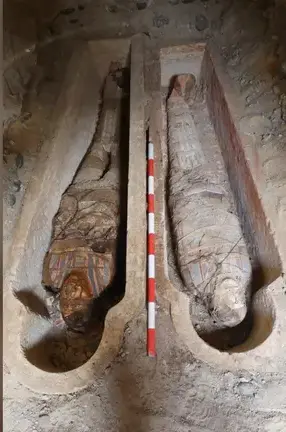
Last December, a remarkable discovery in Egypt jogged my memory on two counts. A papyrus found in the abdomen of a 1600 year old mummy at Oxyrhynchus, a city on the Nile, contained a text from Homer’s Iliad that described the massive Greek fleet as Agamemnon arrived for the Trojan War.

My first memory was of Peter Parsons, a school friend renowned as the finest Greek scholar of his generation. He won just about every prize as a student at Oxford, and became the Regius Professor of Greek there. His lifetime of research centred on the Oxyrhynchus papyri, half a million written texts that survived in the bone-dry rubbish heaps of that ancient city. The name translates as “sharp nosed” and in his book The City of the Sharp-nosed Fish, Peter drew together tax records, lost plays, personal letters, administration, even biblical extracts, to reconstruct the lives of the inhabitants.
My second memory was my first visit to Troy. We climbed up past crumbling stone walls to the summit, and looked out over the flat plain that led the eye to the narrow entrance to the Dardanelles. The sight of those thousand ships, come to avenge the abduction of Helen of Troy, must have caused a panic in the court of King Priam. Even more so after the great wooden horse was brought as a Greek gift to the city gates.
When a bustling city, Oxyrhynchus was controlled from Rome, but following the earlier conquest of Alexander the Great, Greek was the favoured language. There was also the continuing Egyptian tradition to embalm the dead in preparation for the afterlife. Several of the dead in the cemetery there were equipped with pure golden tongues, for gold would have allowed the dead to converse with the gods. At the time of Tutankhamun, vital organs were removed by embalmers and stored in special canopic jars. But 1600 years ago, the abdomen was often filled with papyri containing religious and magical texts.
Why was this particular text from The Iliad used to stuff a corpse? Archaeologists from the University of Barcelona are now pondering this. Most of the papyri found in graves contained ritual instructions and protective texts. Perhaps an extract from The Iliad was simply a mistake, but if it was, it predates the oldest complete text by at least six centuries.