
PHOTO
Sometimes we can take technological breakthroughs by genius ancestors for granted. Just think about metal - how would we survive today without it? What you have to do to make metal? In the case of the earliest such breakthrough, it was all to do with copper.

Copper ores such as malachite and azurite come in bright green to blue colours and it was this that first attracted humans in Anatolia and the Levant, at least 10,000 years ago. They sought the brightly coloured stones and cut and bore holes in them to make attractive beads. Copper can also occur naturally in metallic form, and this too was used to make ornaments.
There are several prehistoric villages in Turkey, where you find clusters of houses occupied by the first farmers who cultivated their wheat and barley, as well as domesticated sheep and goats. They buried their dead wearing malachite or copper ornaments. Some speculate that it was the green colour of growing crops, that really attracted their attention. However, the big breakthrough was yet come.
This involved actually mining the ore and smelting it to extract molten copper metal. To do this, you have to be able to control heat, for copper smelting requires a continuously maintained temperature of between 1200°C-1300°C.
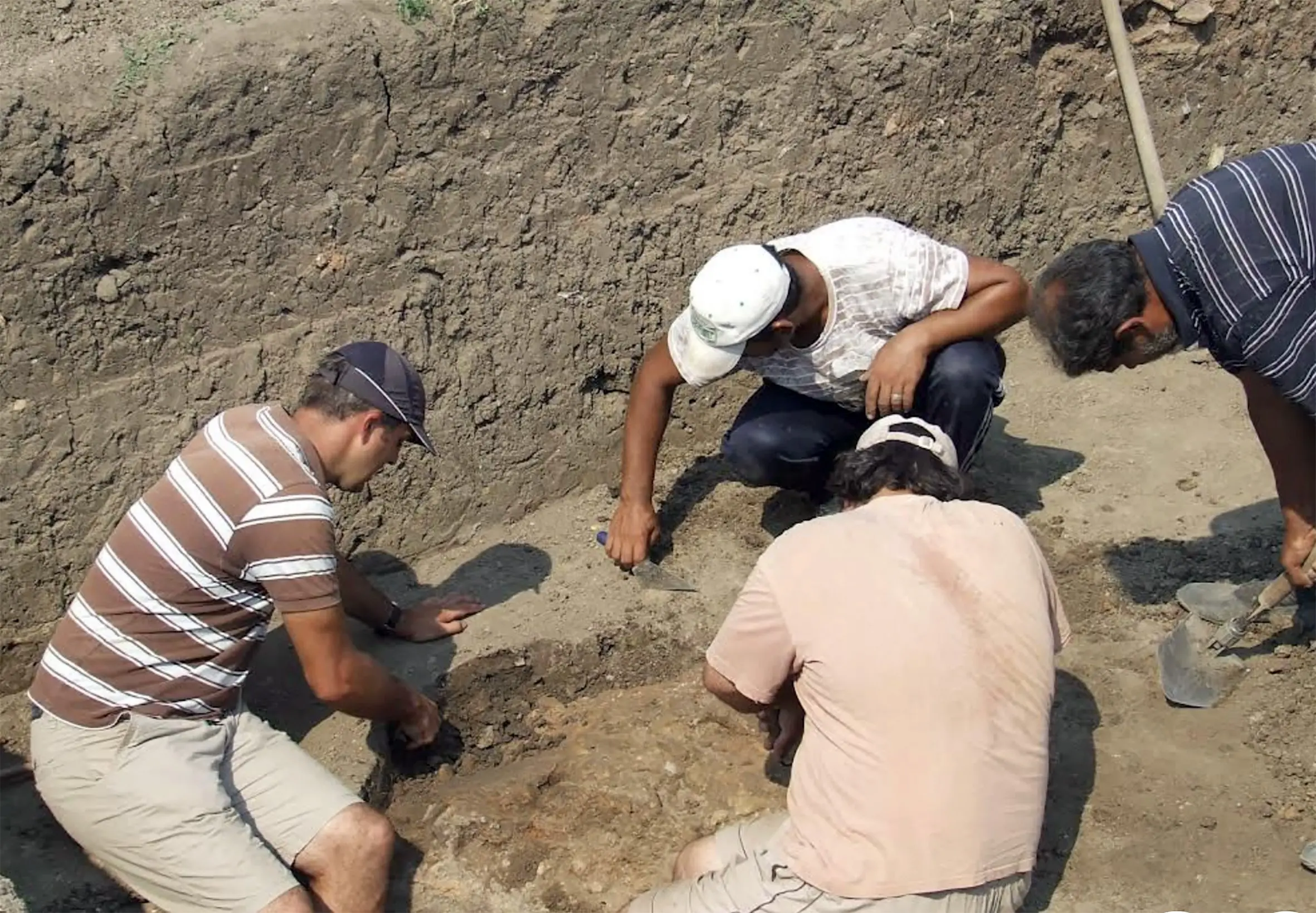
From about 7000BC, farmers began to migrate west into Greece and then north into the Balkans. By then, they had begun to make fine pottery vessels and fire them in kilns. In 1960, I spent a long hot and exciting summer excavating in Macedonia, where we delved into the 8000-year-old homes of those farmers and found some of their copper ornaments.
There are several large deposits of copper ore in Serbia and these were mined from at least 5400 BC. Malachite was moving along newly established trade routes and one of these brought some to the site of Belovode in Serbia.
A great friend of mine, Miljana Radivojevic, has been working there for years and to her must go the credit for finding the earliest evidence for actual copper smelting. It involved a scoop in the ground lined with potsherds into which the charge of ore was placed, then a cover of charcoal and a lot of blowing through tuyerès followed to retain the necessary heat. Lo and behold, out came a marvellous flow of golden liquid metal.
The first substance in human history that could be continuously melted and cast into new object be they tools, weapons or ornaments.