
PHOTO
The discovery of DNA has had a massive impact on our understanding of human evolution.
Foremost is the realisation that about 5 million years ago, we shared a common ancestor with chimpanzees.
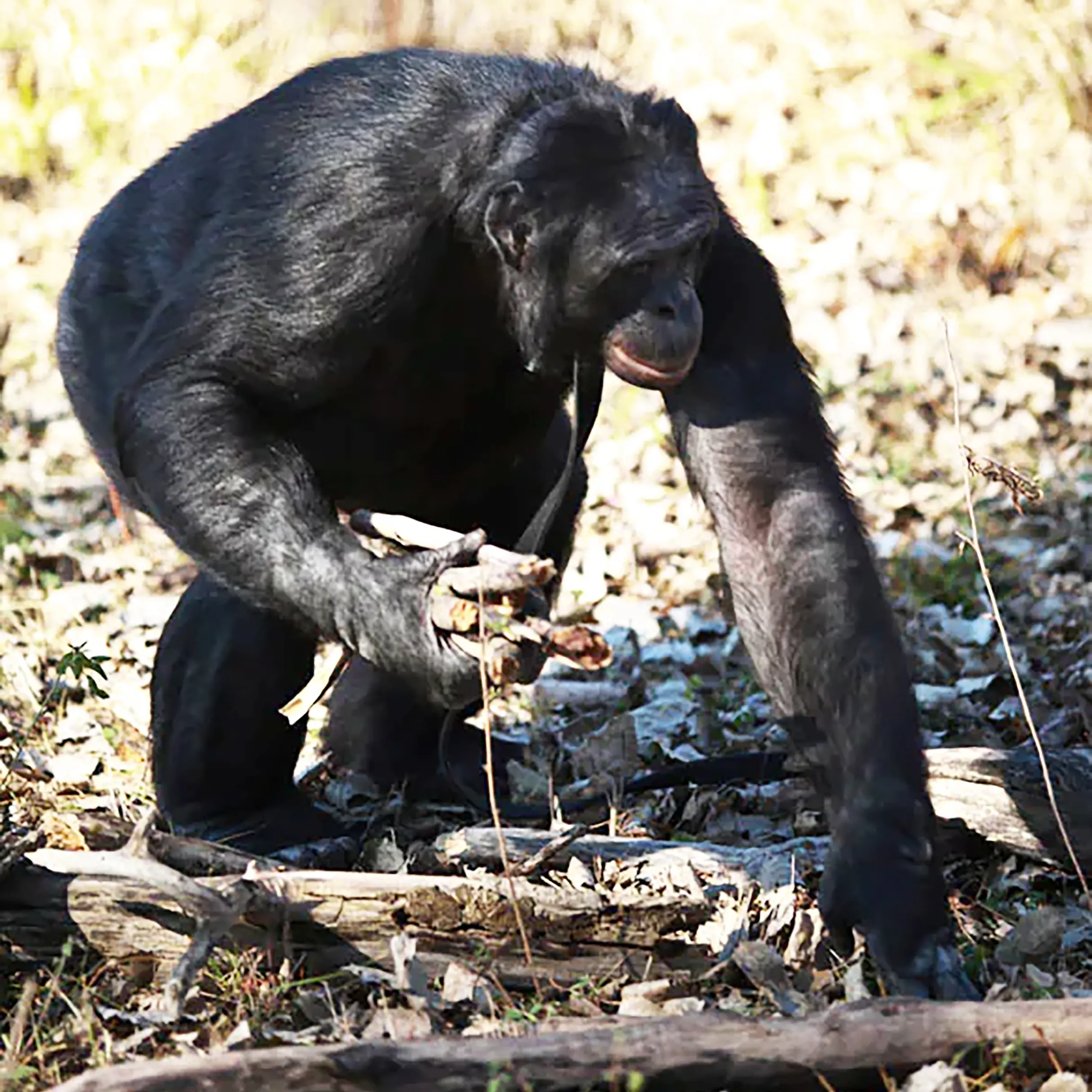
The bonobo is less well known than chimpanzees, but those two diverged about 2 million years ago. Kanzi is probably the best known bonobo. In a recent lecture series on we clever apes, I showed a movie clip of Kanzi flaking a stone tool, then walking to a box containing an apple. With his stone knife, he severed the rope sealing the box to secure the apple.

Now, Kanzi has again hit the headlines. Invited to a make-believe tea party, he watched as a man with an empty jug pretended to fill two glasses with orange juice. He then emptied one of them back into the jug. Kanzi always chose the glass for a drink that had not been emptied.
There has been much speculation on when our ancestors learned languages. Kanzi has contributed to this debate by learning the meaning of about 3000 words, and can, with a lexigram, ask to watch his favourite movie, Quest for Fire. Bonobos recognise other individuals, in one case, even after an interval of 26 years.
We humans have regularly sought out unique behaviours that set us apart from all other animals. Once it was said that we are the only tool makers. Not so, as Jane Goodall found out years ago.
Then it was our unique capacity to communicate with language. Again, not so. Bonobos have a wide range of different verbalisations.
Chimpanzees have different cultures too, one group might make stone tools, another uses wood for the same function.
When Rakus, the orangutan, was injured in a fight with a rival, he mashed up a medicinal plant and healed the deep cut.
Chimpanzees and gorillas live in social groups dominated by silverback males. As the Pope said recently, we too are confronted with a handful of tyrants who manipulate religion. Perhaps the invention of deities is one peculiarly human characteristic. It is certainly a very recent one; Christianity has only been with us for 0.04% of the time since our and chimpanzees’ ancestors were one. Kanzi died last year aged 44; surely he made it to heaven.