
PHOTO
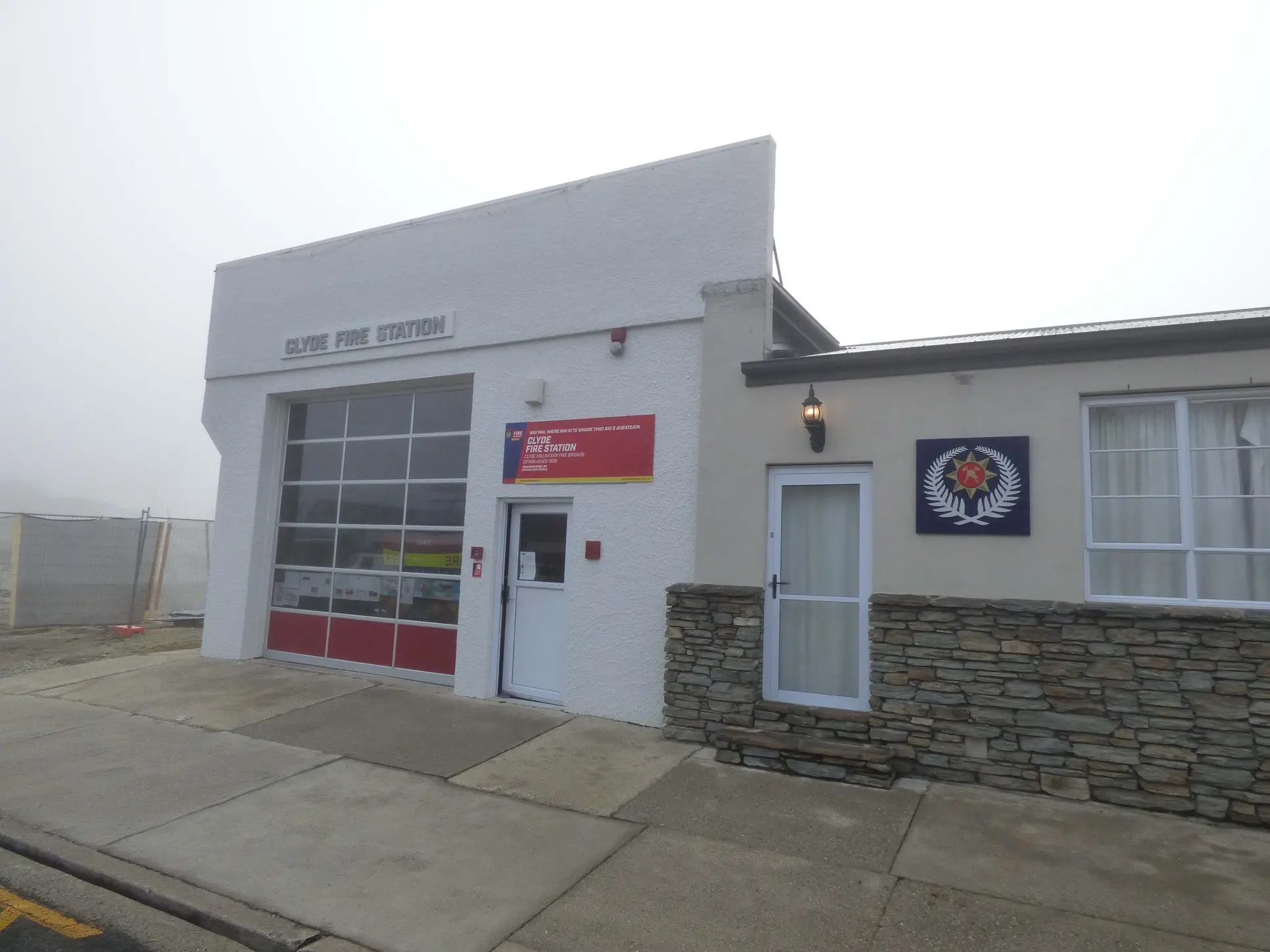
Ian, the proprietor of Dunstan House where I’m staying in the picturesque Central Otago town of Clyde, is an ex-cop and a volunteer in the local brigade. He tells me that retired chief fire officer John Grenfell, who I’m meeting at the station, is a mine of information.
After a short walk in the cold morning fog, I find myself inside the station sitting with John and current CFO Steve Gee, who turns the heat pump on. As we warm up, octogenarian John tells me his story.
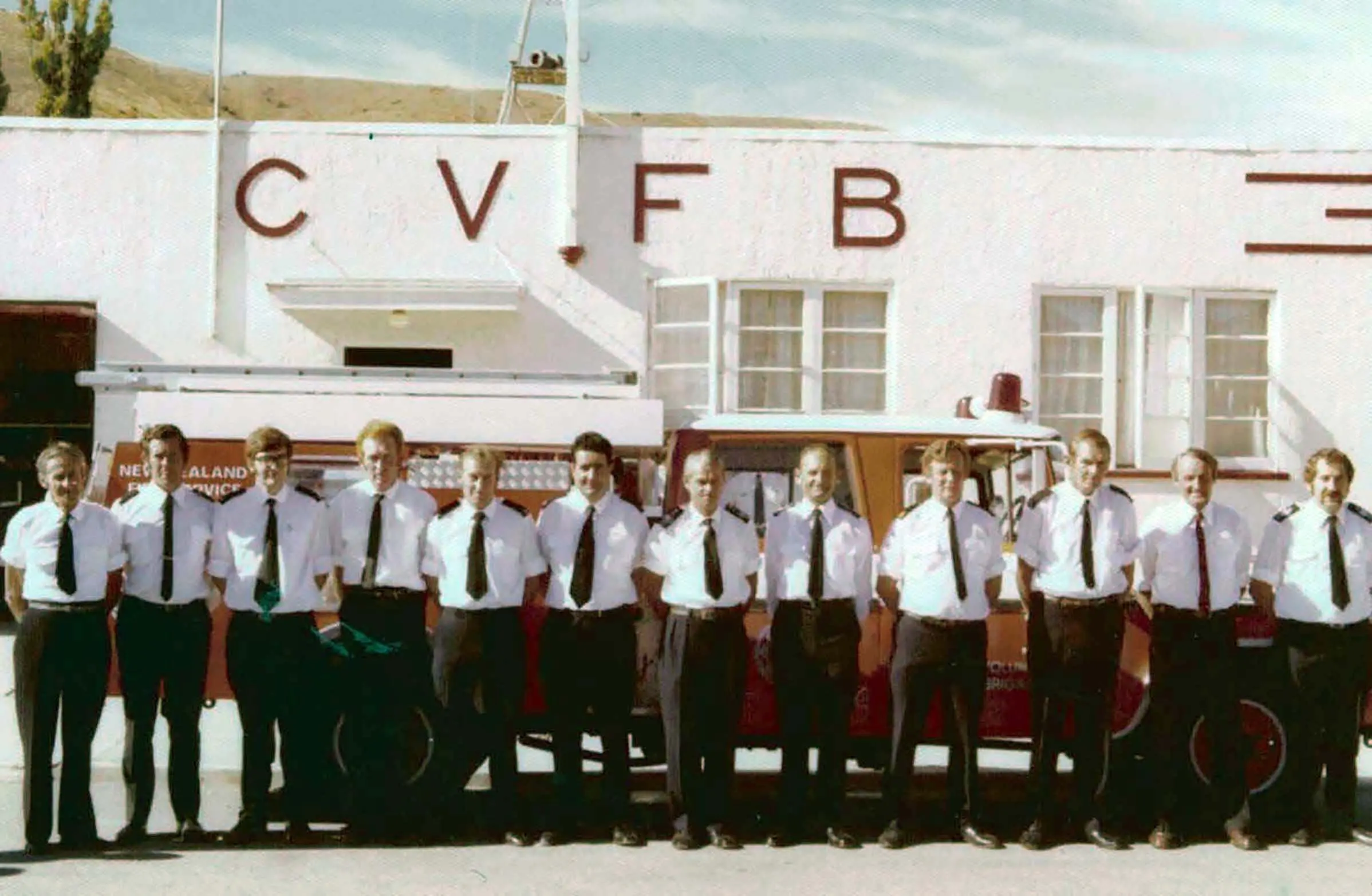
He joined the Clyde Brigade way back in 1969 and was very handy for making it to the truck during the day as he worked as a mechanic next door at the local service station.
"I soon became a senior firefighter, but in those days there were no courses as such.
"It was all a bit crude back then. When I joined, the back of the engine bay was a dirt floor.
"I became CFO in 1984 and retired in 1995 after twenty-six years in the brigade."
John is a past president of the United Fire Brigades' Association (UFBA) and has had a 48-year involvement with the Otago Southland Provincial Fire Brigades’ Association.
"I was fortunate enough to be awarded with my Fire Brigade Service medal [for 25 years’ service] by Governor-General Dame Catherine Tizard at Government House," John says.
"It’s been a bloody great rollercoaster of a ride, George!"
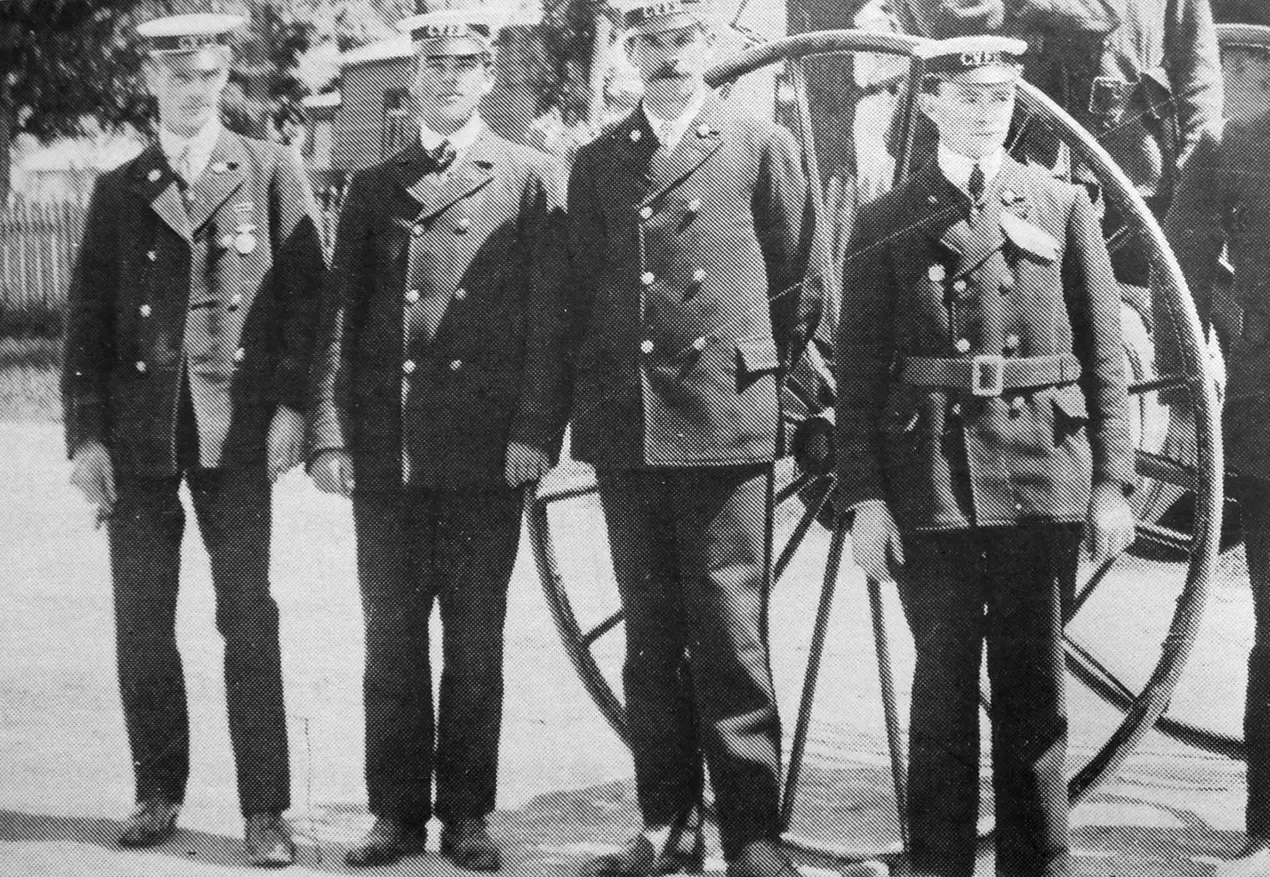
Clyde became a member of the UFBA in 1905 and the present brigade officially formed in 1906.
However, according to the Dunstan Times, a fire brigade was unofficially formed in the town as far back as 1868 during the gold rushes. That same year, the Commercial Hotel caught fire and burned to the ground within 10 minutes. Two months later, 17 men enrolled in the new fire brigade, making it one of the oldest in New Zealand.
In 1869, two portable "fire engines" arrived from Dunedin for the brigade’s use.
The official roll call of the Clyde Volunteer Fire Brigade of 1906 consisted of a captain, two lieutenants, a foreman, seven firemen and a secretary.
Their first improvised hose reel was made from a cheese crate on a buggy axle and wheels with a long pole and a length of rope, while the hose was made of riveted together leather!
Like many fire stations, the one in Clyde was built, maintained and extended by volunteer labour. The first fire station, built in 1908, was a corrugated-iron shed, which sat on the same site as today’s building, with a meeting room added in 1910 at the cost of £5 and four shillings.
The disastrous fire at Christchurch’s Ballantynes Department Store in 1947 proved to be a boon for many fire stations as Fire Service Council money was made available for improvements. These funds helped to build the new station on the current site in Clyde in 1952. This was extended in 1964 — again, using voluntary labour — and in 1981 the engine bay was replaced.
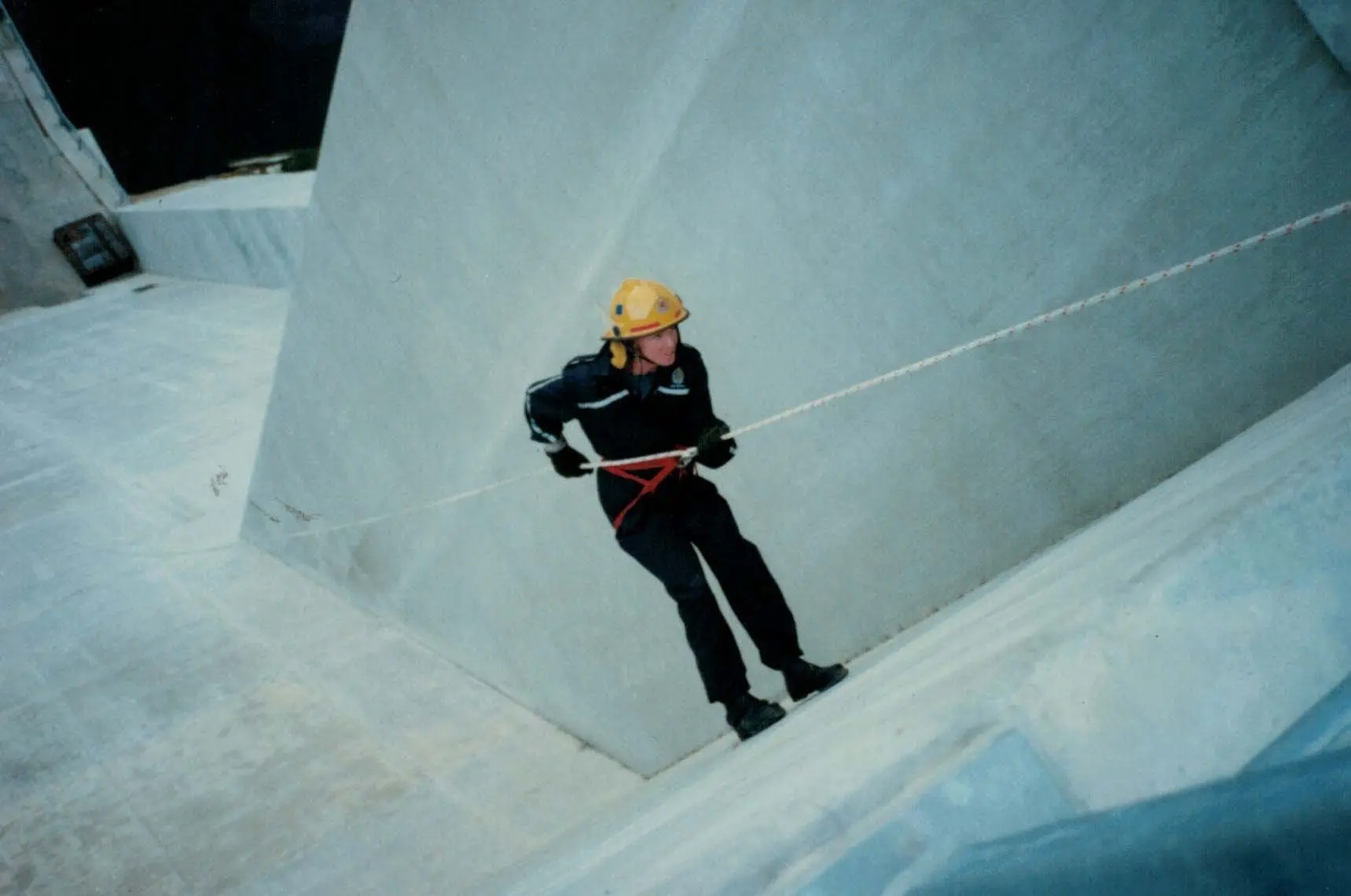
The Clyde Dam (the country’s second-largest hydro-electric dam) was constructed between 1982 and 1992 creating Lake Dunstan. With the power project came a huge increase in personnel, equipment, plant and buildings as well as increased responsibilities for the brigade.
"We were fortunate when the Clyde Dam was being built as a couple of our members worked on the dam for the Electricity Department, so we had access to concrete and trucks.
"We poured a lot of concrete out the back there and our siren pole was put up. Before that we used a bird scarer siren on a windmill tower that came from Dunstan Hospital," John says.
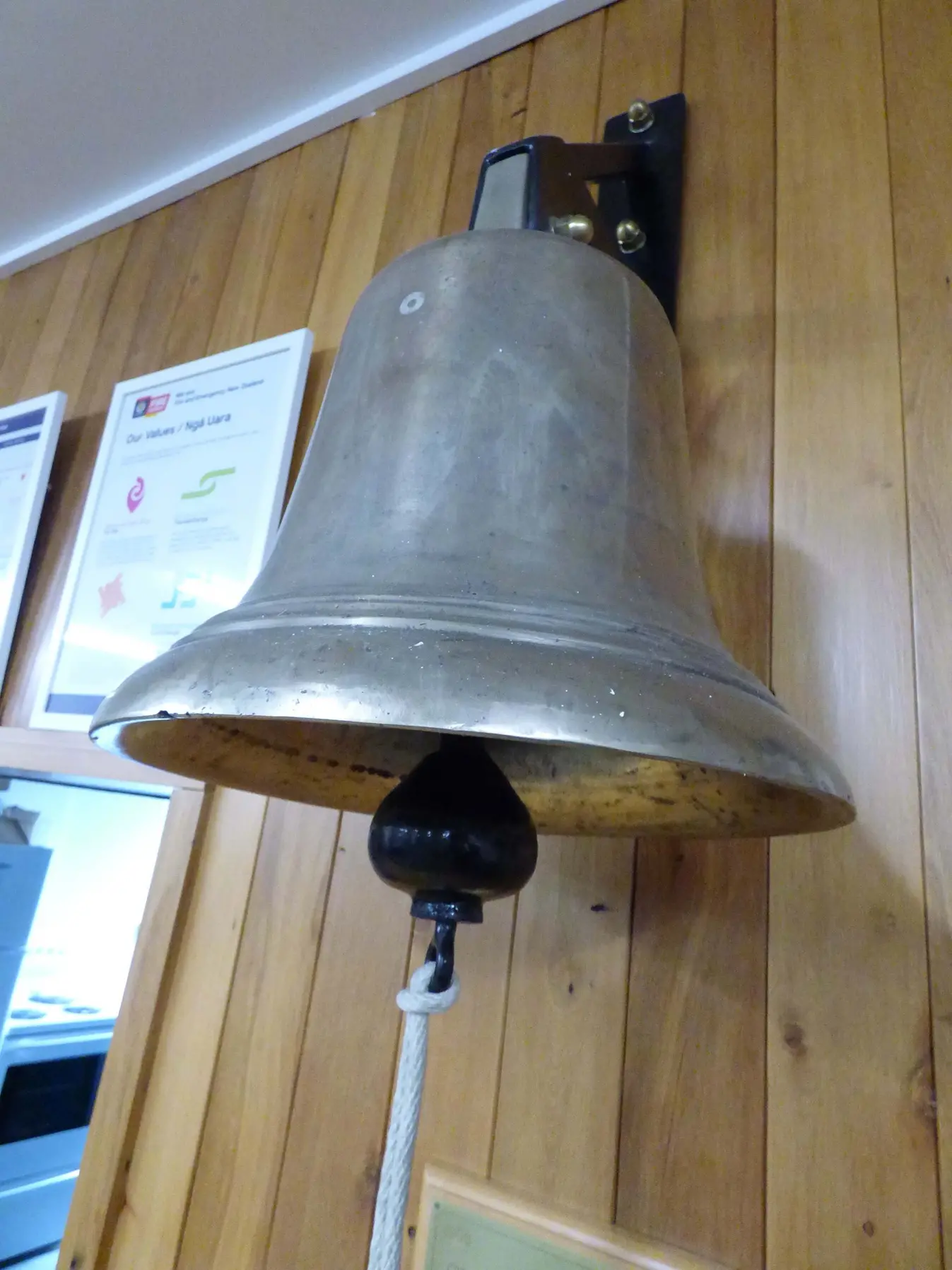
"Prior to that we used that bell over there," he says as he points to a bell hanging on the wall.
Every Monday at noon, John would test the siren by going to the public telephone across the road and ringing the local exchange, who would set the siren off.
"At one time, one of our guys fixed up an extension from the siren to a buzzer in the pub and when it went off, half the bloody pub would empty.
"But the siren would sometimes freeze in winter," he says.
"So someone had to climb the tower with a Stillson wrench, get inside the box and free up the frozen rotor.
"One winter’s day, the siren burned out at Omakau, but the s... really hit the fan when Alexandra’s burnt out.
"So, a couple of volunteers had the idea of rigging up a thermostat and a trace heating element similar to an electric jug element and that did the trick.
"I think all sirens use a similar thermostat system to this day."
"How’s that for Kiwi number-eight wire ingenuity," says Steve, who’s been quietly listening to John’s story and recording it for posterity on his tablet.
John recalls a big fire in Earnscleugh’s Fraser Domain back in the day, when the brigade was called to a blaze started by someone emptying their hot ashes near pine trees (not a good idea).
"It was a howling wind," he says.
"We only had the Land Rover, and I was on the pump. It was all I could do to stop the Land Rover catching fire!’
High winds were responsible for most of the call-outs back in the 1970s according to John.
Gale-force nor’westers ripped the old station sliding doors off their tracks in 1970. That same year the new tilt-a-doors were also damaged as the brigade attempted to respond to another gale.
He remembers working at the garage and watching the old tin roof rise and fall a couple of feet and seeing sheets of tin flying off the old motel. Trees would come down on the golf course, as would power poles, causing grass fires.
"The roof from the old rugby club blew off once," John says, laughing.
"We still haven’t found it!"
Back when John joined the brigade, there were still steam trains running to Cromwell and the clinkers from the smokestack would often cause grass fires.
"Back then of course everyone smoked and there were a lot of boys around who were very handy with dad’s matches!
"I remember in 1978 there was a big grass fire at the campground, and the fire was moving faster than we could drive," John says.

"We were pumping and rolling at the same time. So, we attended a lot of grass fires. There were humongous winds on Labour Day one year when a fireman was killed in Twizel.
"We had grass fires here too, and I remember burning the seal on the water pump."
There were also a couple of orchard fires in the 1970s.
Back then, orchardists would convert 44-gallon drum lids into "frost pots", which contained oil or diesel and were placed between fruit trees.
These were then lit to create a micro-climate, protecting the fruit from frost after flowering.
These frost pots, numbering in the hundreds, would often burn for three or four days, with the old engine oil and diesel stored in drums nearby.
"They’re banned now of course," John says.
Clyde Brigade’s first "proper" vehicle arrived in 1956.
"Little Flick" was a short-wheelbase Land Rover, which ably served the brigade for the next 25 years.
In 1981, it was replaced by a new J20 four-wheel-drive Jeep appliance with a Darley high-pressure pump and a 580-litre water tank. The J20 served alongside Clyde’s first real fire appliance, which had arrived in the form of a new Dodge in 1978.
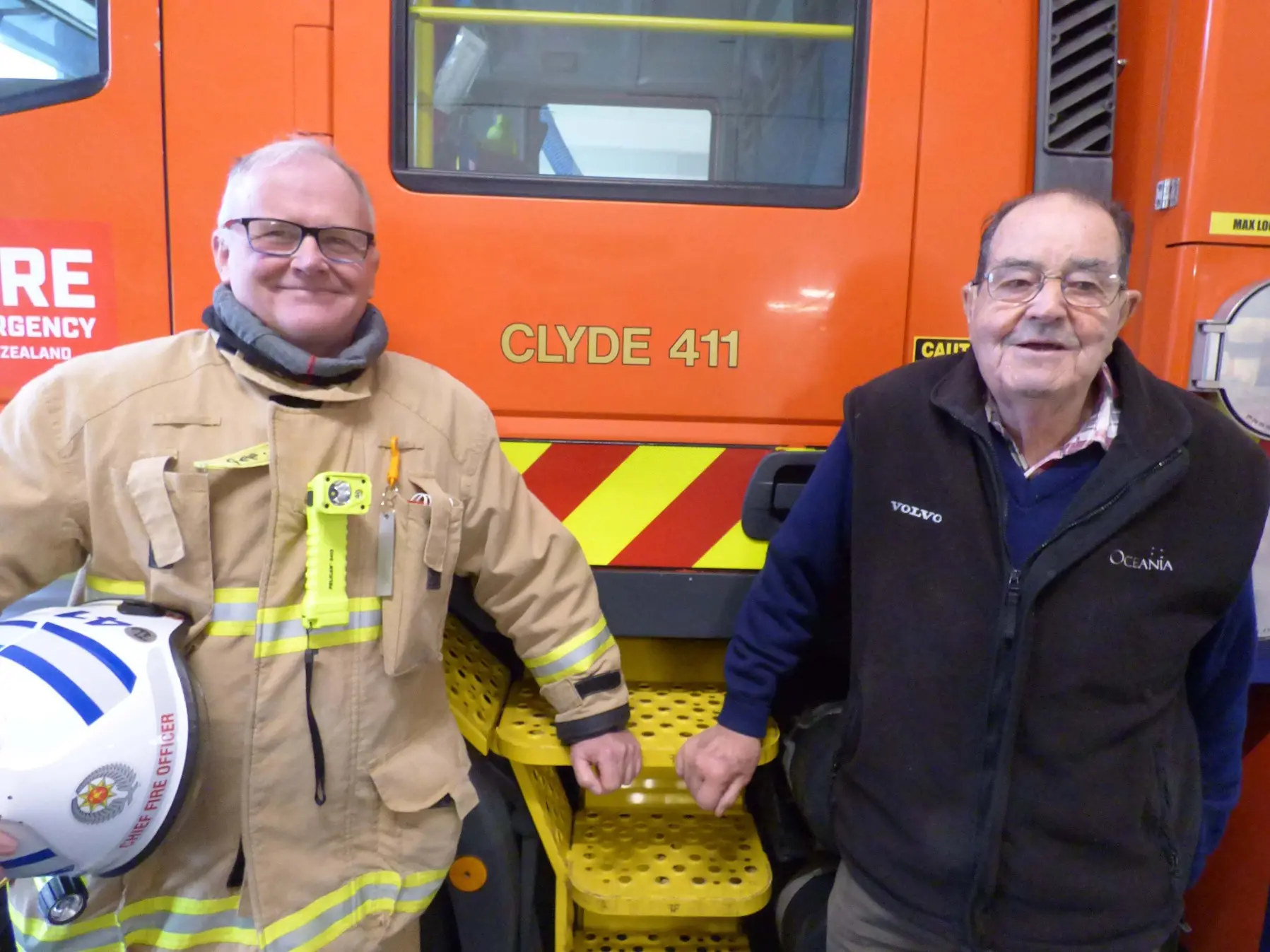
Today, Clyde is a one-pump station with a modern Iveco appliance and a support van.
They work closely with the Alexandra Brigade who are equipped for serious car accidents.
Current chief Steve works as an estimating programme manager for a lines company.
He was a senior officer in the Ōhope Brigade in the North Island before he married and moved to Clyde. His introduction to the Clyde brigade was an interesting one. The day after his wedding, he was driving along when he came across a man who’d suffered a heart attack and fallen off his push-bike.
"My first thoughts were, ‘Who’s this silly bugger in the middle of the road?’," Steve says.
"The guy’s wife, who was a nurse, was on the phone to [Hato Hone] St John, but when she saw me pull up and looked at my plate which reads ‘RESCUE’, she hung up! I started CPR and told her to call the ambos back.
"When they said they were over 30 minutes away, I told her to call the fire brigade, because I knew they had the resources to help. They arrived quick-smart and we worked on the man for 45 minutes.
"They were still working on him as he left in the chopper and fortunately, he survived."
I ask Steve how big Clyde’s patch is.
"We have a fairly big area, but the biggest risk now is probably the new housing developments that not long ago were just rocks and rabbits.
"You drive up there now and you wonder where all the new houses have come from. A big vegetation fire up there could be devastating."
I had been told that the Clyde brigade also had a Coastguard rescue boat and I was intrigued.
Steve and John are happy to enlighten me.
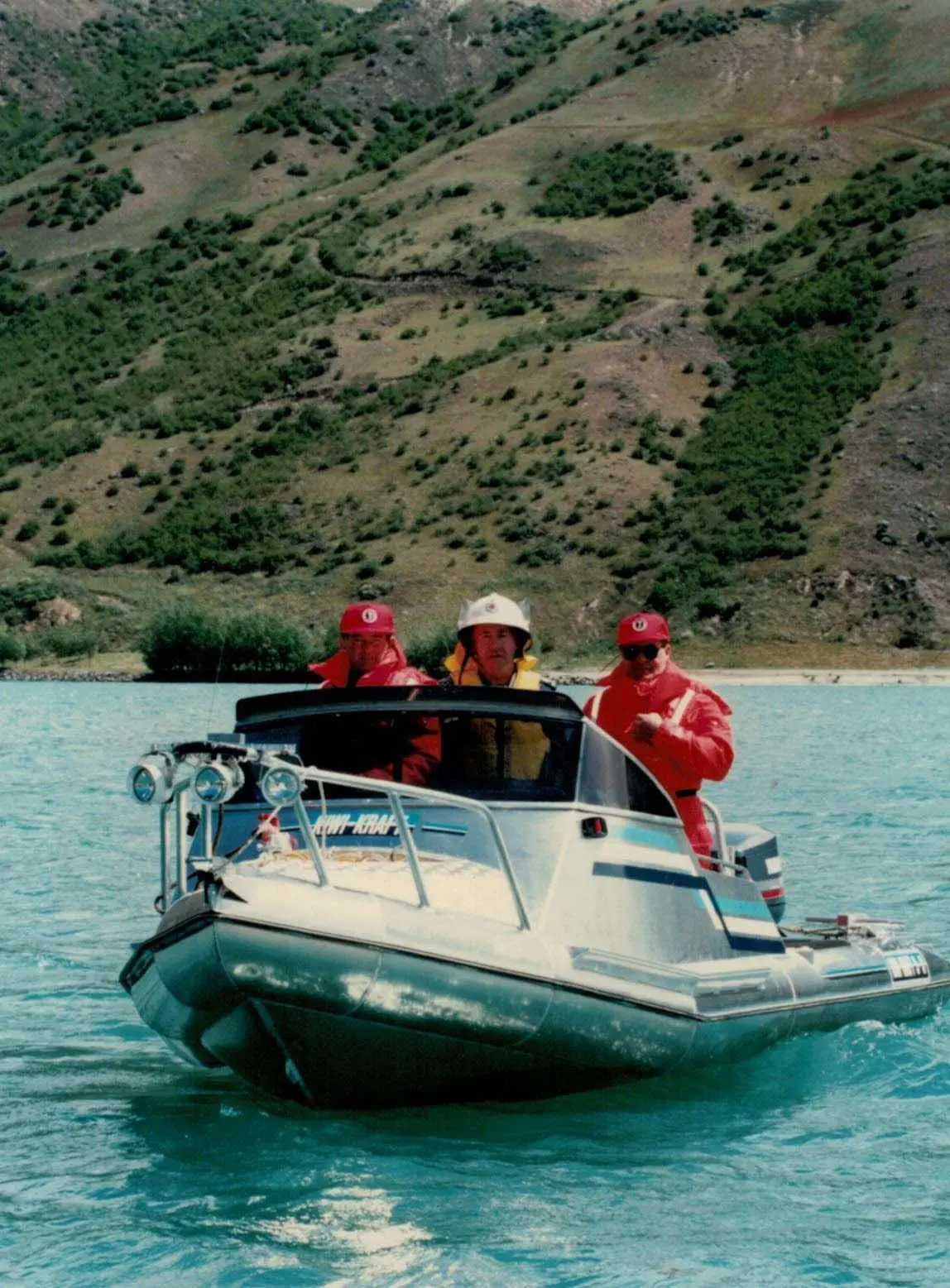
The rescue boat or fire boat, purchased with funds from the Central Lakes Trust, the local Masonic Lodge and fundraising efforts, came into service around 1996 just after John had retired.
"With the completion of the dam there was obviously an increase in recreational water activities on Lake Dunstan, so there was certainly a need for it," Steve says.
The aluminium pontoon rescue boat was purchased via a community trust fund.
The boat sat on a trailer in a shed at the back of the station, along with an additional support van.
The police were very supportive of the project and used the boat for diving and body recovery, with a volunteer firefighter skippering the vessel.
"It was a community resource. But the compliance levels for a Coastguard vessel were phenomenal, plus the level of training required," Steve says.
"Ultimately, it was unsustainable, especially for a small brigade like ours.
"I suppose a degree of friction developed, with some members being purely focused on waterborne rescue, versus some whose focus was on traditional fire service duties.
"It’s like any brigade, George, some focus on the medical side while some just want to squirt the wet stuff on the hot stuff."
Steve says they never used their boat in anger during his time in the brigade, though they trained with Coastguard Clyde and worked actively doing risk analysis, especially regarding the Lake Dunstan Trail.
"Climbing up from the lake to the trail itself, you take one step up and two steps back," Steve says.
"It was quite interesting doing the risk analysis and deciding on a lead agency in the event of an injured cyclist. At first, it was unanimous that the fire brigade would be the lead agency.
"I remember saying, ‘excuse me, but in all honesty, unless a cyclist is pedalling along and they spontaneously combust, I’m not too sure how we become the lead agency’.
"It would effectively be a medical event, which is St John. We would be a resource.
"So, we did some exercises with St John as the lead agency, with the mode of transport being Coastguard and we were literally there to assist, as in ‘what do you need?’."
Steve believes the brigade’s fireboat, which was sold in 2024, created great interest and awareness in the community as far as water rescue went.
It was also influential in the 2004 birth of Coastguard Clyde, whose brand new bespoke boat Clyde Rescue II came into service in 2024.
This 7m-long, Hamilton Jet-powered, state-of-the-art rescue boat now serves the whole of the Central Otago region.
I ask John, who is a long-term resident, how he feels about the changing demographic of Clyde, from a small thriving community to more of a tourist hub or place for retirees.
"In the early days, you played hard for rugby and supporting your mates. There was lots of camaraderie, like a big family.
"Now it’s harder to get people to play rugby or to get people to do anything. Well, we used to have a thing called a 40-hour week, but now everything’s 24/7, so maybe people have less time.
"These days, a lot of people say, ‘the government should do that!’ But the people who join the brigade are bloody good people. There just seems to be a lot less of them."
Steve has a slightly more sanguine view when I ask him how he sees things going forward.
"It’s certainly harder these days to make a commitment to a brigade with such busy lives.
"But we’re very fortunate to have some keen people who have introduced kids back into the brigade, which, as you know, changes the dynamic considerably.
"I always try to encourage that commitment in our youth, because the skills they learn here in Fenz [Fire Emergency New Zealand], be they people skills, practical skills, or leadership skills, will benefit the community in which they live and the community they may end up in."
The book
Edited extract from Chapter 4: Clyde Fire Station in Fire Stations of Aotearoa New Zealand, by George Lockyer. Published by Catch Phrase Media NZ.