
PHOTO

Dunedin was hot yet cold. Dry but wet. Alexandra was the driest in the country while it blew at record level all over the South on October 23.
Earth Sciences NZ has produced its climate summary for last year and for the country it was the fourth-warmest year on record.
The national average temperature was 13.51°C, which was 0.77°C above the long-term average.
ESNZ meteorologist Nave Fedaeff said 2025 was expected to be either the second- or third-hottest year for the world when announced in the next few weeks.
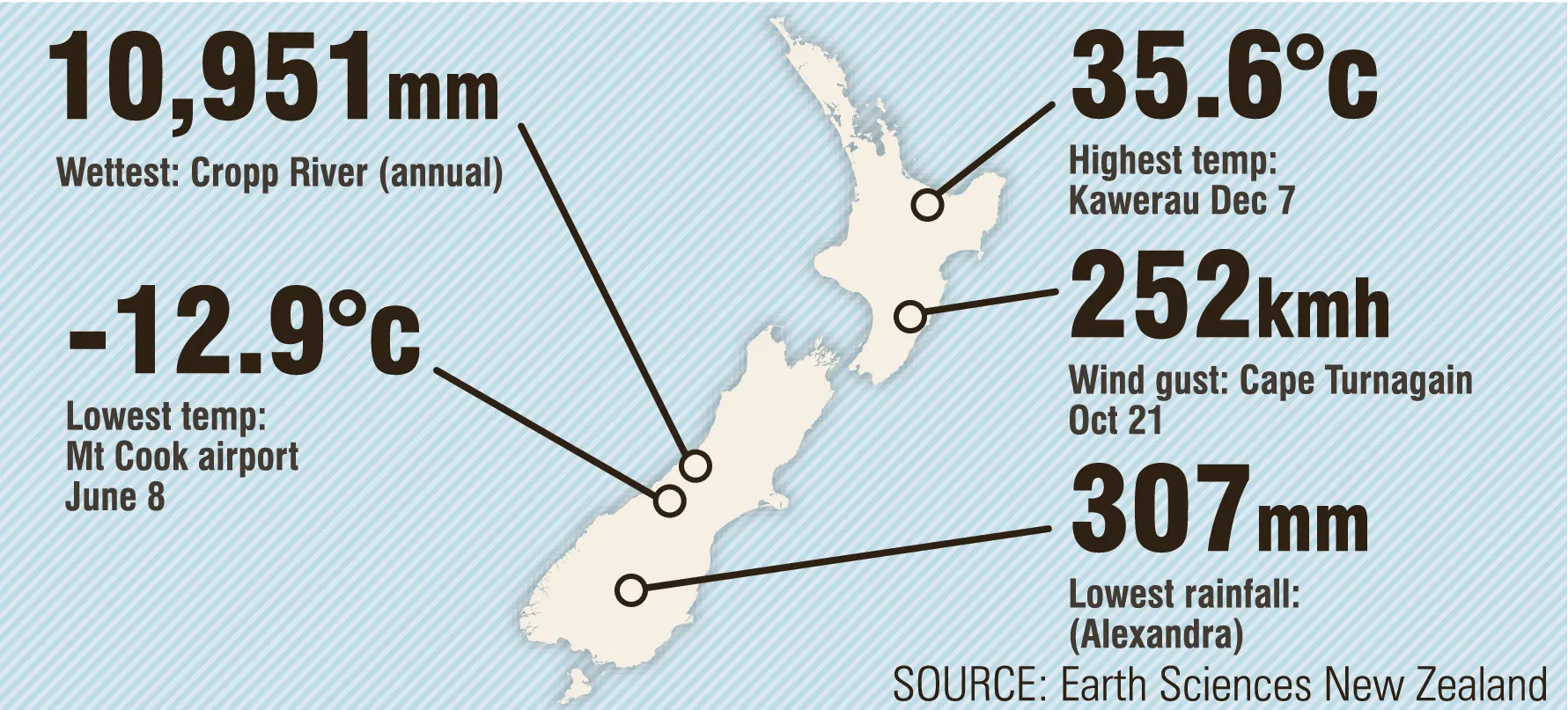
The year had started off dry in New Zealand and there was low soil moisture in many areas in the first three months of the year but that did not last as more rain arrived in the next couple of months.
In the South, the rain did not come to three Otago towns, which were the three lightest in terms of rainfall for the year.
Alexandra was the driest in the country with just 307mm for the year.
Cromwell recorded 399mm and Oamaru recorded 414mm.
In average mean temperature, Oamaru recorded 11.7°C, which was 0.7°C above average, the third-highest on record.
Dunedin recorded 12.1°C, which was 0.9°C above average, the fourth-highest on record.
In the mean maximum temperature, Oamaru recorded its second-highest with 16°C, the second highest, while Dunedin had 14°C, the fourth-highest recorded.
In the rainfall figures for the six main centres, Dunedin was the lowest with 683mm although that was well over double Alexandra’s rainfall. Tauranga was the highest main centre for rainfall with 1516mm.
Dunedin shared the lowest temperature of the main centres with Christchurch who recorded 12.1°C.
There were some hot days at strange times in the South with South West Cape in Stewart Island recording 25.9°C on April 3, the highest temperature in the area by 4.3°C for April.
On April 4 and November 26, Dunedin recorded 29.5°C and 31.7°C respectively which were records for those months.
On October 23, where carnage was recorded all over the South from high winds, record wind gusts were lodged at Dunedin, 119kmh, Manapouri, 102kmh, Gore, 124kmh and South West Cape tallied 194kmh.
New Plymouth recorded the most sunshine hours in the country with 2743 followed by Nelson with 2672 and Blenheim with 2644.
Ms Fedaeff said the door to the tropics were open for the next couple of months, so tropical cyclones might hit the country.