


New Age Exploration is one of many companies searching for gold across Otago, and its Lammerlaw Gold-Antimony Project is about 70km west of Dunedin.
In an announcement to the Australian Securities Exchange (ASX) this week, the company said it had discovered a shear-hosted gold mineralisation ‘‘that has all the hallmarks of a Macraes-type system’’.
Drill results confirmed the potential for a substantial mineral system that pointed to significant potential within a more than 5km-long and up to 100m-thick rock form hosting gold, antimony, tungsten and associated mineralisation.
New Age Exploration chief executive Kirby Johnson said the company was excited and encouraged by the results, which was one of a 15-hole drill programme.
‘‘Based on experience and the fact that this is the same geology as Macraes, that’s why we’re excited, because of the very strong similarity.
‘‘Because we’ve hit good grades of gold, high-grade gold, and thick intercepts, then that makes the analogy even stronger to Macraes.’’

That figure would still be subject to capital and operating costs.
But because of the grades of gold, it could be similar to Macraes in terms of its hundreds of employees, profits generated, royalties and taxes paid, and other potential economic benefits to the region.
The caveat was the project was still in the early stages.
Exploration did not guarantee mining and there was a lot of work to do and approvals to acquire before the company got to the point of mining.
‘‘It’s still an early stage exploration project, but it’s very encouraging and enough for us to know that we have a new mineral system here.’’
Years ago, a large underground rock structure was identified that was a main feature of Otago, Mr Johnson said.
North of this structure was the Macraes system, but there was also a very large and potentially similar structure to the south.
‘‘That’s exactly what we found.
‘‘We’ve got a repetition on the southern side of the same kind of geology; at Macraes it’s dipping to the north of the structure, at Lammerlaw it’s dipping to the south.’’
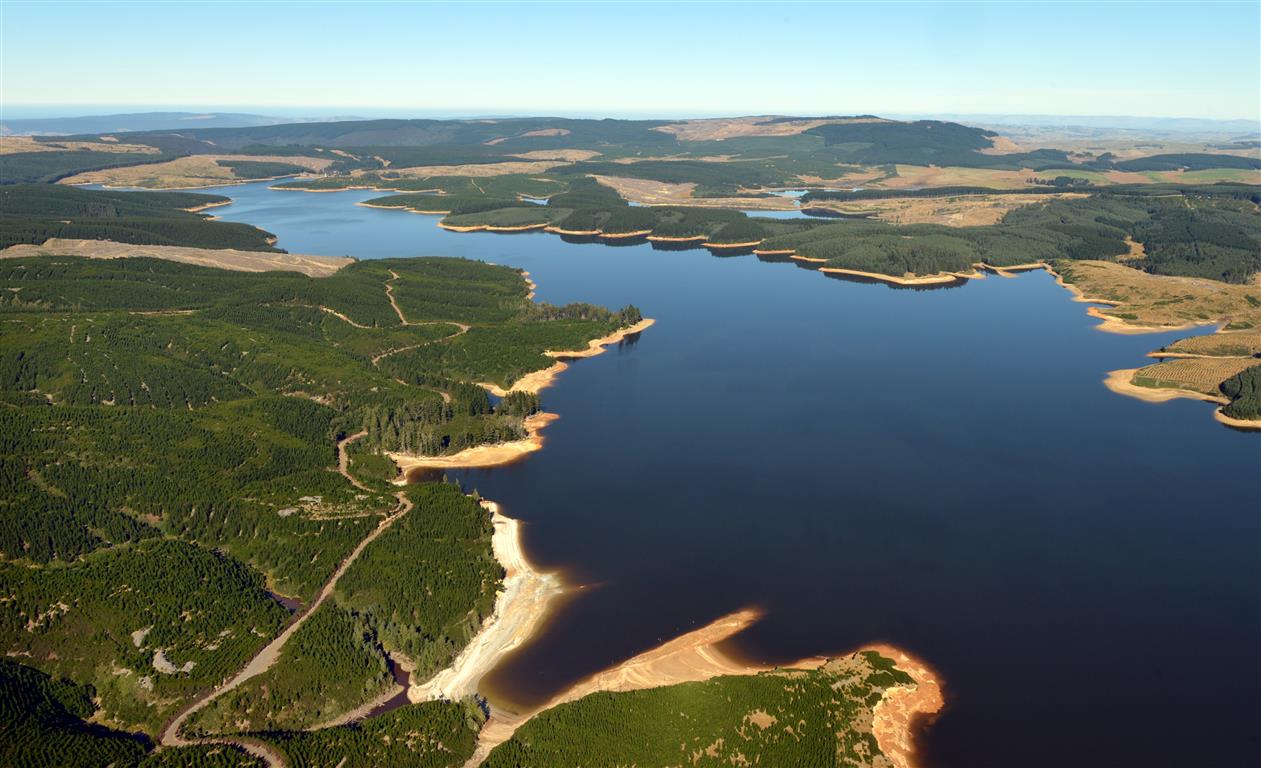
Asked about the impact on the landscape from a potential mine, Mr Johnson said the land they were working with was of ‘‘marginal agricultural value’’.
There were no inhabited houses in the immediate vicinity, or wineries, and plenty of evidence of former mine pits and shafts.
‘‘There is no tourism sector here at all.’’
And if the project did eventuate in a mine, their strong preference was for an underground operation as opposed to an open pit.
‘‘Our objective would be to build an underground mine that has a smaller ‘footprint’ than, say, a typical small-town industrial estate.
‘‘For most underground mines you drive past the front gate and not even know it is there.’’
In terms of development, Mr Johnson described the project as about four to five years less developed than that of Santana Minerals.
A small drilling programme was carried out at the Fulton’s and Antimony prospects last year.
More drilling was planned for the coming summer, but New Zealand’s environmental management standards would ultimately decide how the project progressed, he said.
‘‘We’re four or five years before we get to a stage of saying we’ve got a deposit that could be turned into a mine and starting to seek mining approvals.
‘‘There’s a lot of work to do here before we’re even at a point where we can say we could have a potential mining operation here.’’


