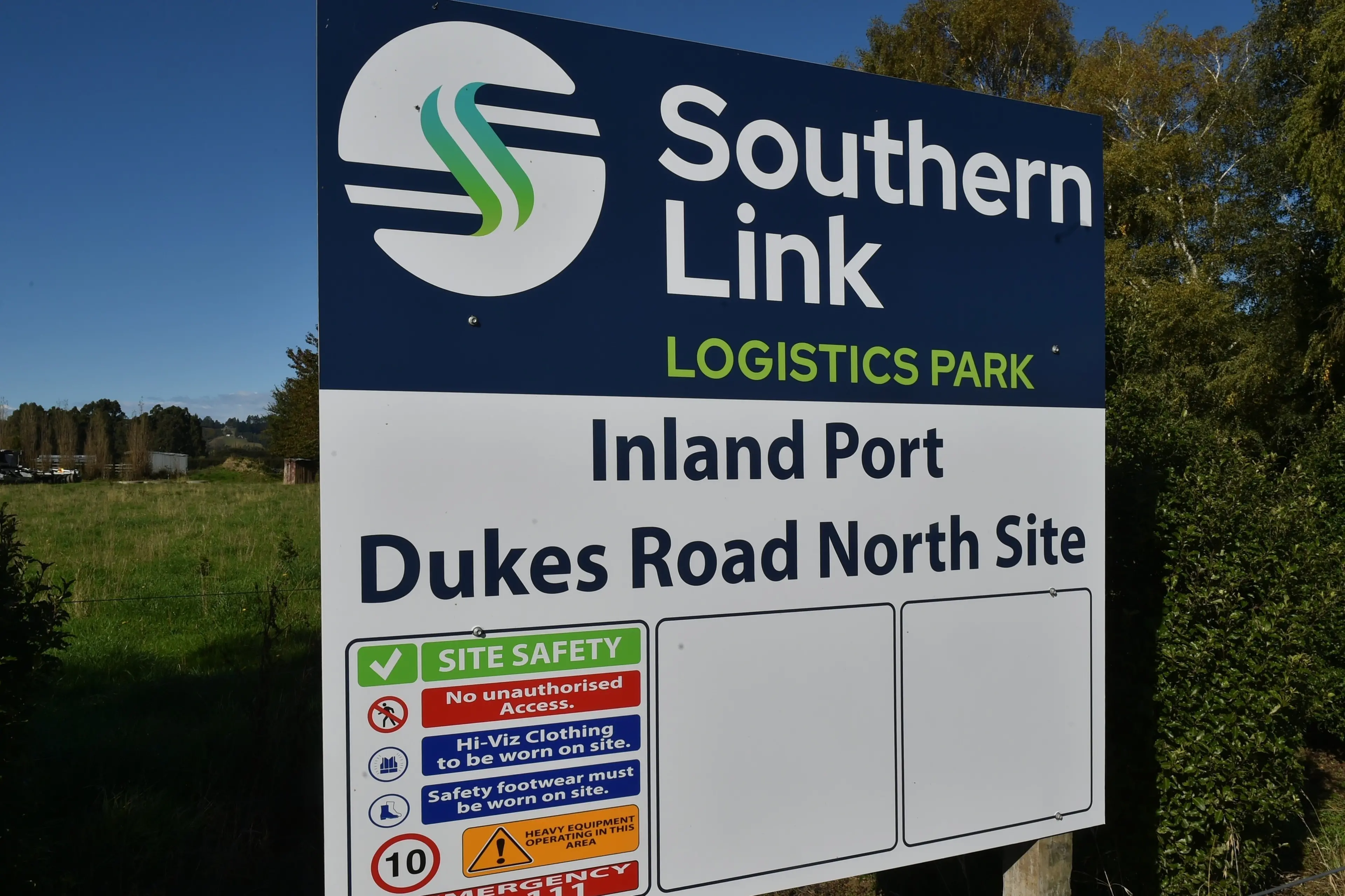
The new inland port in Mosgiel is not expected to cause any delays at intersections, and most of its traffic will not be at peak times, a report says. A new report provided to the fast-track panel overseeing the application to develop the inland port outlines the numbers of truck movements in Mosgiel and also the mitigation of traffic impacts to be carried out. The inland port/logistics hub is in Dukes Rd North and is a joint venture between Port Otago and the Dynes Group. The report, provided by the applicant after questions from the fast-track panel, said the new port would take more than 30,000 traffic movements off Stage Highway 88 to and from Port Chalmers In the 2021-25 period, the average weekday volume on SH87 in Mosgiel was about 15,100 vehicles per day, and had risen about 0.2% per annum, which was a very low level of growth, the report said. The report said it used two data sets about traffic growth and both indicated historically there had been very low levels of traffic growth in Mosgiel. The low levels of growth might reflect the capacity constraints at the SH1-SH87 interchange. A separate NZ Transport Agency Waka Kotahi (NZTA) study was under way to investigate options to reduce congestion. “The addition of 130-150 heavy vehicles movements per day represents a small proportion of the overall traffic on the strategic road network compared with existing and potential future volumes,’’ the report said. “Although the Mosgiel connection to SH1 at SH87 can become congested at peak times, the inland port heavy vehicle movements are spread across the day, and will represent an even smaller proportion of overall traffic at peak times.” At full development, the inland port was expected to generate about 32,000 heavy vehicle movements annually in Dukes Rd North and Gordon Rd. Daily volumes would reach about 150 movements per day during the busiest weeks of the year. At the same time with the use of rail, there would be considerably less traffic on SH88. Freight would be shifted by rail from the inland port to Port Chalmers and a rail siding would be constructed at the new inland port The configuration of the SH87-Dukes Rd North intersection and its location on a curve had led to a moderate rating for intersection-related crashes, which had greater likelihood for causing injury. This was because of the speed environment and the volume of heavy vehicles turning at the intersection. Based on analysis, the modelled increase in peak volumes would not contribute to any noticeable changes in delays or queue lengths as these were forecast to be less than 2sec and 2m respectively. OTAGO IMAGES/OTAGO DAILY TIMESDukes Rd North intesection with SH87. Photo: Gregor Richardson In the Mosgiel township, crashes at intersections were more common than crashes along mid-block sections of road. “Since the heavy vehicle movements generated by the inland port will be travelling straight through intersections rather than turning, it is considered unlikely that they would contribute to a change in intersection crash rates.” Although reconfiguring the intersection of Dukes Rd and SH88 as a roundabout or extending the right bay at the intersection would provide safety benefits, changes to the intersection were not warranted by the change in traffic movement volumes associated with the inland port. The inland port did create a new conflict point at the entrance on Dukes Rd North, but since works were proposed to ensure the entrance was designed to enable a high level of safety to be maintained, this was not considered to be a material adverse effect. NZTA had indicated it did not consider any improvements were necessary to accommodate the additional movements associated with the inland port, the report said. A right turning bay would be constructed in Dukes Rd into the inland port along with a footpath and internal car park for all employees.