PHOTO
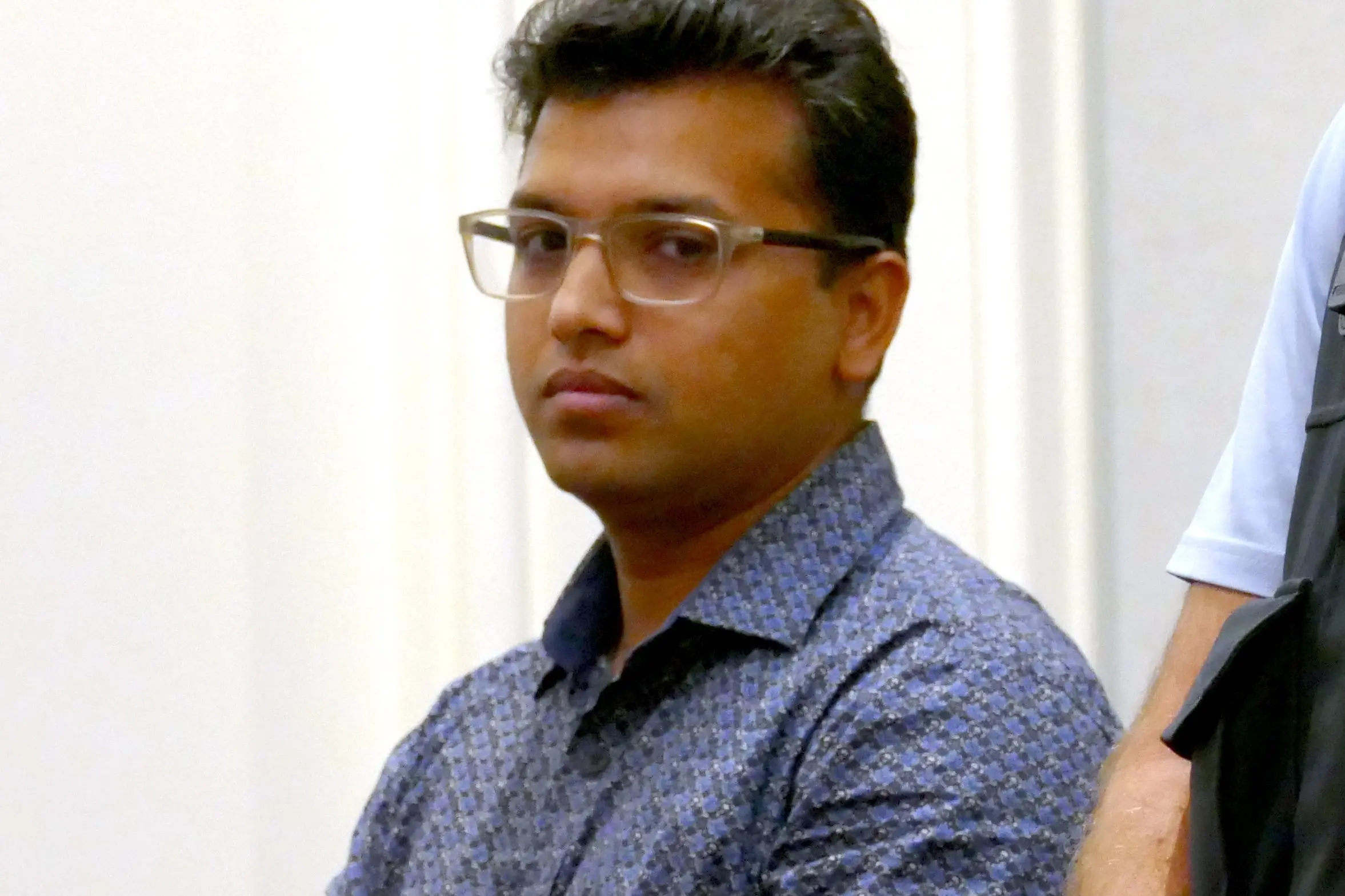
A man jailed for taking a fake bomb into a secure area of Dunedin Airport in 2019 has since changed his name and gained a law degree. But he is now being blocked from joining the legal profession, as he is still not considered a "fit and proper" person.
Preetam Prakash Maid was sent to prison for three years over the bomb scare, which happened two days after the Christchurch mosque shootings in March 2019.
That sentence was reduced to 17 months by the Court of Appeal.
Maid was released from prison in October 2021 and has changed his name to Preetam Atua-Azad.
Atua-Azad has persistently maintained he was not involved in the events that led to his conviction.
Despite this, he was found guilty after a jury trial in 2020 of taking an imitation explosive device into a security-enhanced area of Dunedin Airport.
The case against him was that while working as a security officer he placed a laptop bag containing a gas canister, a decommissioned cellphone and red and black wiring into the alcove of a hut at the end of the runway.
Atua-Azad's trial was told he had been vocal about what he perceived to be inadequate security in some areas of the airport, and that the bomb hoax was his way of exposing those supposed shortcomings.
The prosecutor, however, suggested that the then security officer had been motivated by getting "more work, more hours, more pay".
Between 2020 and 2024, Atua-Azad studied law at the University of Otago, earning good grades and winning a prize, the Richard Sutton Memorial Award.
He graduated in 2024, however, his attempts to be admitted to the legal profession as a barrister and solicitor were blocked, first by the Law Society and then by the High Court, to which he appealed.
The High Court decision says Atua-Azad applied to the Otago branch of the Law Society last year for the "certificate of character" required for him to enter the profession.
At that time he was employed by the trustee and estate planning company Perpetual Guardian as a client manager.
The Otago Law Society branch, after interviewing him, declined to recommend the certificate of character.
Among its reasons were that Atua-Azad did not have a reference from anyone at Perpetual Guardian who knew of his conviction, and he continued to deny responsibility for the offending.
That position was upheld at the national level by the Practice Approval Committee of the Law Society, which declined a certificate of character "due to concerns about Mr Atua-Azad's conviction and perceived lack of candour".
"The committee considered Mr Atua-Azad's denial of responsibility for his offending showed a significant lack of judgment and insight into his own behaviour, so that the committee could not be satisfied he was a fit and proper person for admission," the High Court decision said.
Atua-Azad told the High Court that a "single blemish" on his character should not prevent him from becoming a barrister and solicitor.
"He says he should not be repunished for the conviction and that, irrespective that he maintains his innocence, he has served his entire sentence along with restrictive bail provisions and post-release conditions without any breach, demonstrating a respect for the rule of law," the court's decision said.
He also pleaded his good conduct in life before, during and after being convicted, his tenacity to complete his law degree with a high grade average, and "his professionalism in pursuing justice in the face of adversity".
High Court Justice Owen Paulsen accepted Atua-Azad had "demonstrated perseverance and tenacity" to acquire his qualifications.
He also said Atua-Azad's offending was serious, and evidence against him had been reviewed and found strong by the Court of Appeal.
"After much reflection, I have come to the conclusion that Mr Atua-Azad has not satisfied me he is presently a fit and proper person to be admitted as a barrister and solicitor of the High Court who will properly discharge his duties to clients and to the court," Justice Paulsen said.
He dismissed Atua-Azad's application to be admitted to the profession at this time, but left it open for him to apply again in the future.
Justice Paulsen said Atua-Azad's law degree would not be wasted.
"There are many employment opportunities which will be open to him," he said.
Atua-Azad did not engage a lawyer in going to the High Court, but presented his case himself.