
PHOTO
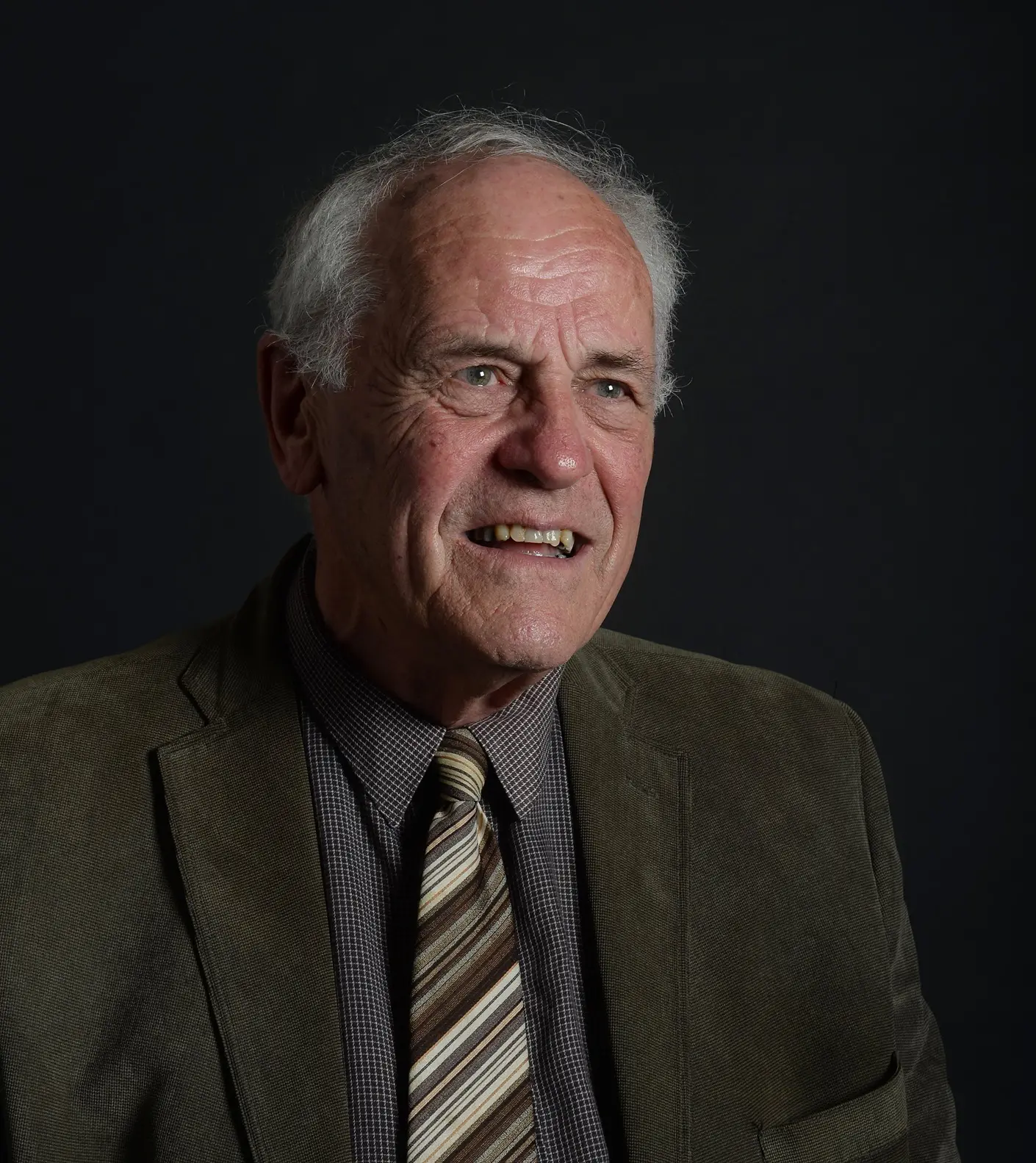
John Wesley, one of the founding fathers of Methodism, exhorted the faithful to love God with all one’s heart, mind, soul and strength and to love one’s neighbour as oneself.
The Rev Donald James Phillipps was deeply, profoundly Methodist, and the former Methodist minister and University of Otago chaplain did all he could, within his considerable powers, to make life better for as many people as possible.
Mr Phillipps held many of the top roles available in his church — superintendent, historian, president of conference and at one time acting general secretary — and used those roles to help as many of his neighbours as possible. Professionally and personally deeply involved with his community, Mr Phillipps left his mark in many ways.
He was born in Wellington on November 11, 1932, son of Jack and Freda Phillipps, and was educated at Kilbirnie School and Wellington College.
Donald was lucky to be alive — his father had enlisted underage to fight in World War1 and was very nearly killed at Passchendaele in 1917. Consciously or subconsciously, that knowledge drove the younger Phillipps throughout his life to contribute to as many causes as he could.
As well as instilling a sense of duty — Jack Phillipps (CBE) was a Home Guard lieutenant-colonel and director of military transport during World War2 — he also handed on to his son a lifelong love of cricket. Jack Phillipps managed the New Zealand cricket team’s 1949 and 1958 tours of England and Donald was a more than willing pupil of the game.
The younger Phillipps could not have loved cricket more; Kilbirnie Cricket Club, near his childhood residence in Hataitai, was like a second home. He was proud of his MCC membership and of having watched the game at its revered home, Lord’s, the first time being when he accompanied his parents on a tour "home" to the United Kingdom in 1953.
After coming to Dunedin later in life he soon became involved in the Otago University Cricket Club, and would relish any opportunity to turn a conversation to the topic of the sport.
Meanwhile, in the mid 1950s, Nelson girl Barbara Laurenson had moved to Wellington for work. She met Mr Phillipps at the Hataitai Methodist Church, and they were married in 1958. They lived a long love story, only ended by her death in 2019.
Mr Phillipps graduated from Victoria University with a BA, before joining the Department of External Affairs (the forerunner of the Ministry of Foreign Affairs), where his office was in the House of Representatives building. He then worked for chemicals firm ICI, but felt a deeper calling stirring within.
The family moved to Auckland in 1965 and Mr Phillipps began training for ministry at Trinity College.
Three years later the Phillipps family came south for Mr Phillipps’ first posting, in Milton, before they moved to Dunedin in 1970, Mr Phillipps having been appointed chaplain of the University of Otago. He graduated from there with a bachelor of divinity degree in the early 1970s.
Mr Phillipps deeply believed that holiness was not a personal attribute, rather something to be demonstrated by contributing to the community. With growing children — Sara, Martin and Rachel — in the same demographic as his campus flock, the Phillipps home in Albany St virtually operated an open-door policy and many were welcomed in by "everyone’s dad".
It also nurtured the nascent talents of the Phillipps children, Martin especially. He formed his first bands while still living at home, sister Rachel also performing with him.
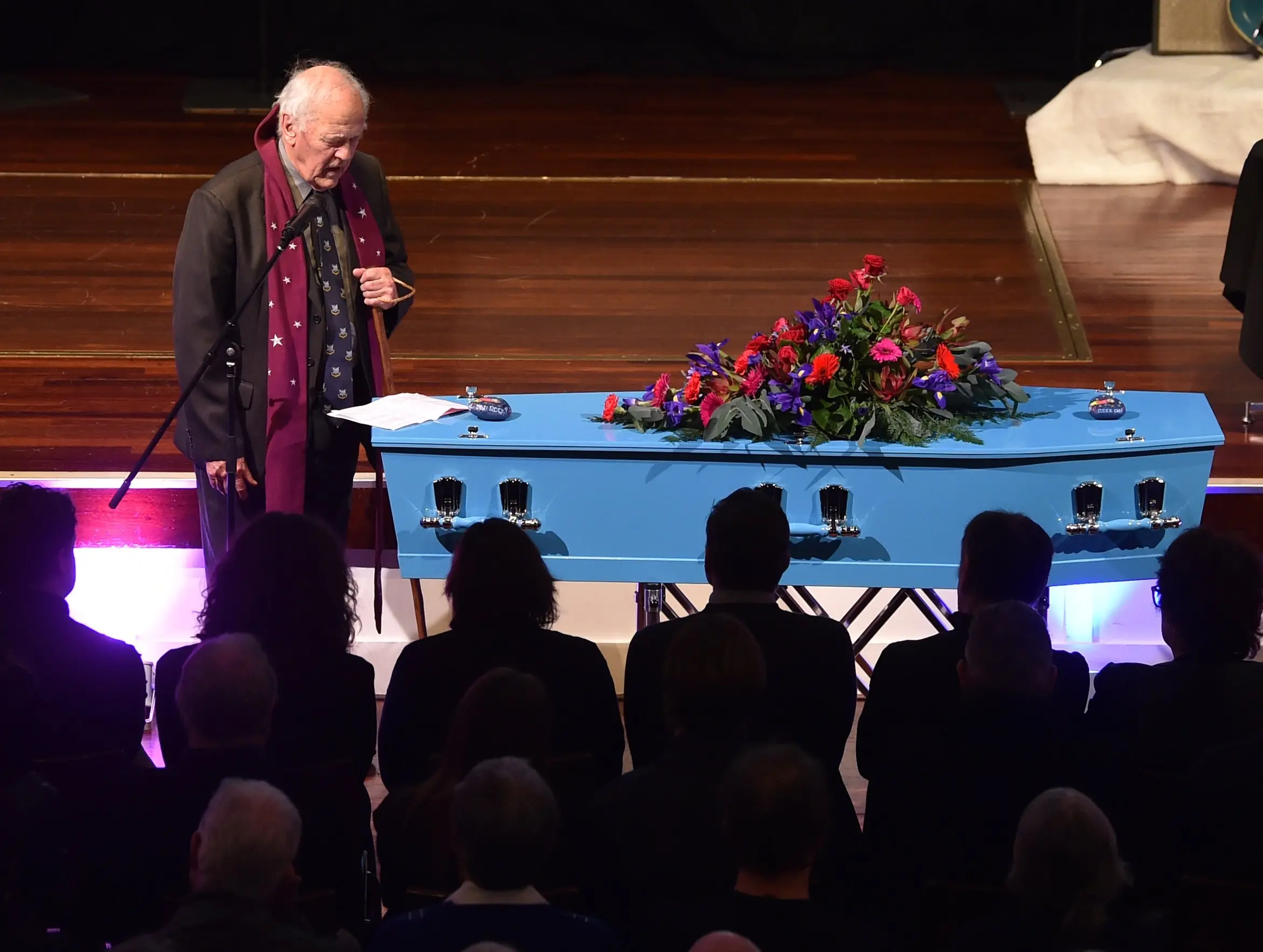
Martin Phillipps would go on to become one of Dunedin’s favourite sons, taking the city to the world via his band The Chills. Martin died in 2024 and Mr Phillipps — who had conducted the funeral services for many Dunedin notables — was a strong and inspiring figure as he delivered the final committal for his son.
More happily, Mr Phillipps conducted many weddings as well — especially during his time at the university. One notable wedding was that of artist Ralph Hotere and writer Cilla McQueen — one of her poems was read at Mr Phillipps’ funeral.
Words were incredibly important to Mr Phillipps. They were the tools of his trade and as a preacher, writer and enthusiastic conversationalist he was a dedicated user of the rich offerings of language.
He was a dedicated historian of Methodism in New Zealand and a skilled author on many related topics. Until shortly before his death, Mr Phillipps was a regular and respected columnist for the Methodist Church’s newspaper Touchstone.
Mr Phillipps was also a voice for those who were seldom heard from. He served as president of the Dunedin Council of Social Services for several years and was always an advocate for the less well-off.
In 1988, after returning from a visit to England, Mr Phillipps told the ODT he felt desperately sorry for people left poor or unemployed by government policies.
"It’s just not true that if you provide opportunities for people to become wealthy that the wealth will filter down.
"It’s farcical to expect the newly rich to share their wealth or to be generous about creating employment," he said.
"The state must be the principal initiator of social welfare programmes. It is wrong to expect the community to do it.
"There should be really good constructive partnership between the state and the church."
Another area which Mr Phillipps advocated for stronger partnerships was with Māori. A staunch supporter of early initiatives towards biculturalism, he had a five-decades-long association with Ōtākau Marae. He preached in its church, and was instrumental in it being transferred back into the ownership of the marae.
Among his numerous contributions to local Māori was assisting with the creation and administration of a $100,000 scholarship fund endowed from the sale of church property in Queenstown. The trust continues to make grants to local students.
Kaumātua Edward Ellison said at Mr Phillipps’ funeral that Māori knew that he was not only their minister, but their friend. The local iwi repaid that friendship and long Methodist connection by providing Mr Phillipps with his final resting place, at Ōtākau Marae.
Mr Phillipps thrived at the university. As well as his pastoral work he was a member of the University Council, and an enthusiastic user of and advocate for the Hocken Library. As well as being a longtime member and delver into its rich resources, he was also a past president of Friends of the Hocken.
He left the university in 1982 to become the district superintendent of the Otago and Southland Methodist Church. In 1987 he was elected president of the New Zealand Methodist Church, the first Dunedin clergyman in 30 years to hold the position.
The year-long role involved visiting parishes and preaching throughout country. His final duty was preaching a sermon at St Paul’s Cathedral, Wellington, to mark the official opening of Parliament.
Retirement did not slow Mr Phillipps down — a man who loved driving, he was notorious for his lead foot and accumulation of speeding tickets.
He continued to mentor and minister throughout the region, offering his experience and wisdom to any who asked. Mr Phillipps was also free to indulge in other passions such as walking, and food — he was a regular patron at many local cafes.
Mr Phillipps continued to lead a full and active life until his final weeks. He died on October 5, aged 92, survived by Sara and Rachel and six grandchildren
At his funeral, the Rev Tara Tautari, the general secretary of the Methodist Church of New Zealand, said Mr Phillipps taught people through his actions that faith was not something you just talked about, it was something you did.
"Donald knew that words matter, because they shape the world we build together.
"Through his sermons, reflections and writings, he invited us to see faith not as fixed doctrine, but as a living story, unfolding in the life of Aotearoa, in the relationships we form and in the justice we seek," she said.
"He never stopped preaching, never stopped writing, never stopped mentoring, because Donald believed that as long as there is breath in us, there is more truth to seek, more compassion to give." — Mike Houlahan