
PHOTO
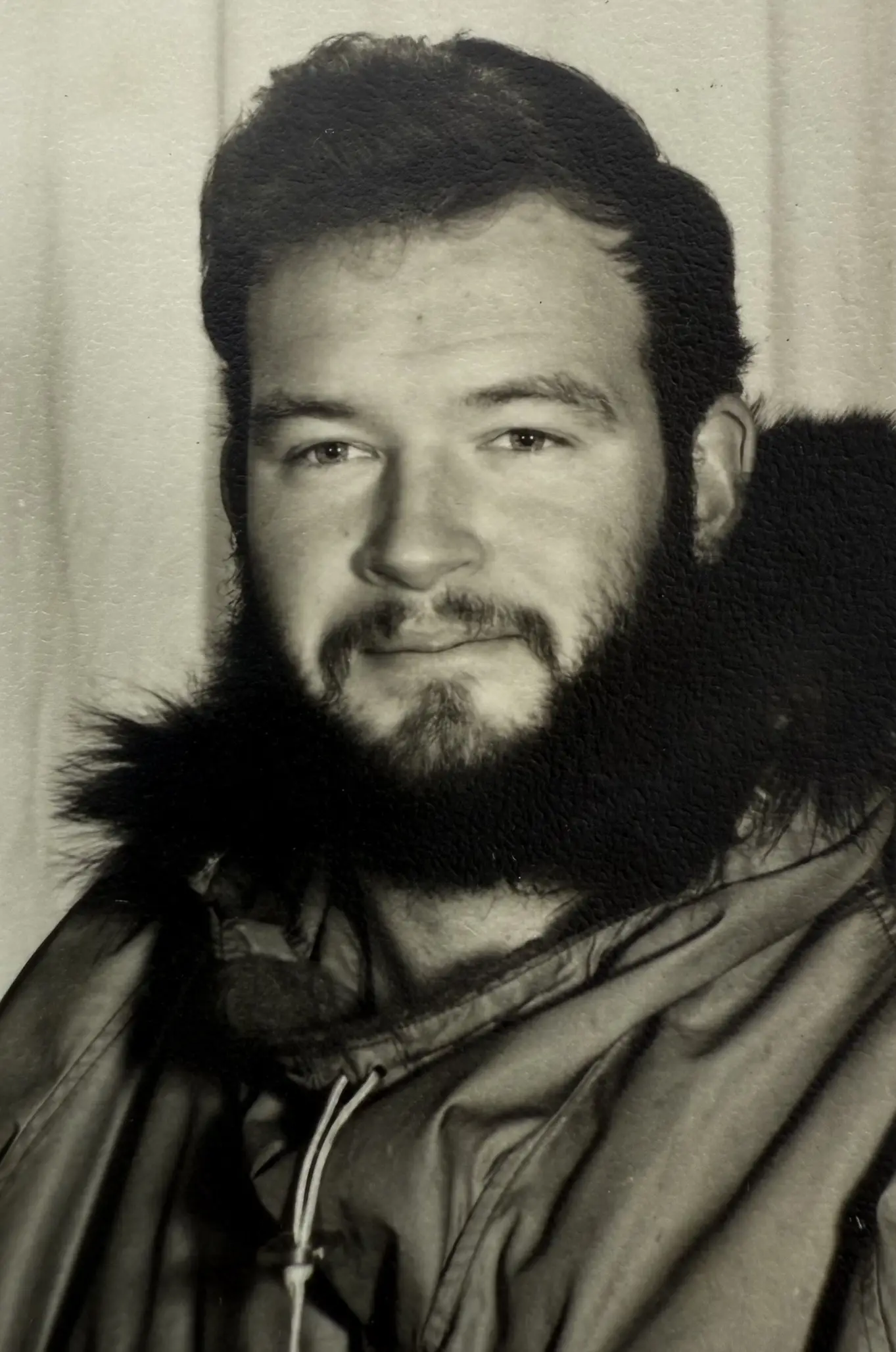
On January 11, one of New Zealand’s prominent former national park rangers, and a member of one of the last New Zealand early geological expeditions in the Ross Dependency Antarctica, died in Dunedin.
Born on December 20, 1944 at Lower Hutt, Grahame Champness, the son of a woodwork teacher in the technical department at Ashburton Borough School, was educated at the primary and post primary school, leaving in 1958.
He did well at school and on leaving, began his working career with the National Parks Board on the Milford Track. This was followed by Franz Josef Glacier, then as a parks ranger at Aoraki/Mt Cook.
Grahame soon developed an intense interest in the environment, natural history and photography, retaining these all his life.
At Mt Cook National Park, his next posting, he proved to be a proficient guide and mountaineer, accompanying notable and strong climbers such as Bruce Jenkinson, Aat Vervoorn, Don Cowie, Lindsay Strang and Ian Gardiner, to name a few.
He had already become a member of the Canterbury Mountaineering Club in October 1962 and his climbs included Aoraki/Mt Cook (3724m) West Ridge, this being the 185th ascent, on December 10, 1965. In the same month, he climbed Mt De la Beche (2950m).
After studying soils and plants with Margaret Bulfin and Bryony McMullen near Malte Brun hut (1710m), Mt Malte Brun (3155m) was climbed from the Tasman Glacier with Tony Archer in February 1967.
The Minarets (3040m and 3031m) followed along with other peaks. Champness Rock in the Waiho Valley at Franz Josef is a popular venue with several excellent routes on firm schist.
Grahame had a special interest in alpine huts and worked on the second Ball Hut in 1961 and Plateau Hut, built in 1963-64. He also participated in search party and recovery operations.
In 1967 when 22, he was granted leave from Mt Cook National Park for work in Antarctica as a field assistant in the 1967-68 summer. His wide experience as a park ranger and competent climber doubtless contributed to his selection.
The New Zealand Geological and Survey Expedition, with a six-man party, took Grahame to the Rennick Glacier region of North Victoria Land with leader Dave Massam and two other field assistants, Maurice Sheehan and John Glasgow who each had excellent alpine experience.
The two geologists were John Dow as senior geologist and Vince Neale. Pre-Antarctic training included accommodation and lectures at Waiouru military camp and snow craft on Mt Ruapehu.
From Christchurch the party flew to McMurdo Sound. Departing Scott Base on November 11, 1967, they were then flown with 6000lbs (2721kg) of cargo, in a LC130 ski-equipped Hercules to their field area.
Three American "Sno-traveller" Polaris toboggans would be used to pull six Nansen sledges during 70 days in the field when several peaks over 2590m were climbed.
One prominent peak near one end of the Morozumi Range, named from a USN photograph as Berg Peak (1870m), was climbed by Massam’s party on December 9. This was perhaps the first ascent of the peak.
In spite of problems with the toboggans, the successful expedition included 20 day’s travel in very crevassed and dangerous country with icefalls, 27 days of geology and 23 days when tent-bound.
They were collected on January 20, 1968 and returned to Scott Base after enjoying some of the most beautiful scenery in Antarctica.
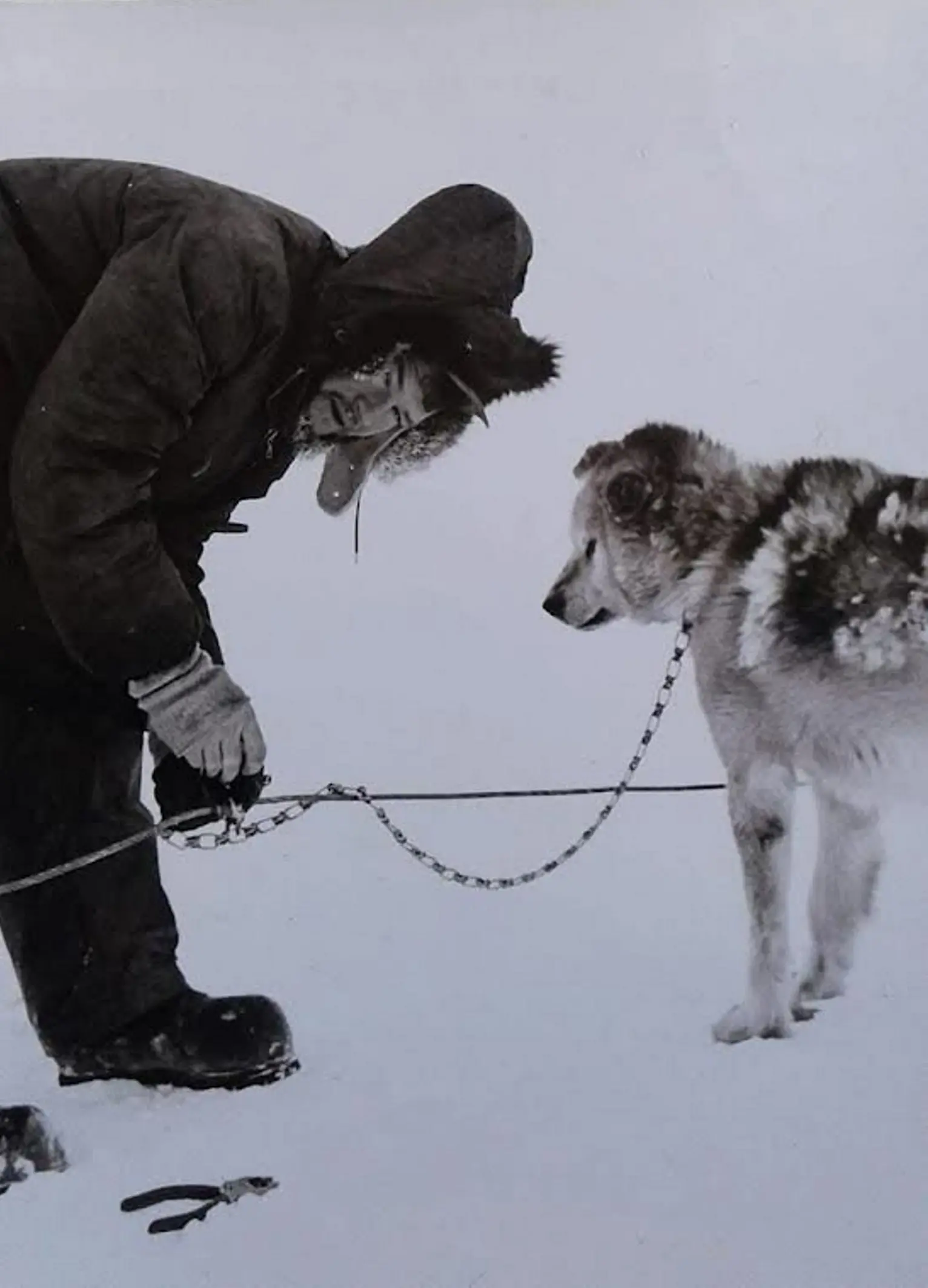
Grahame remained at Scott Base for the winter with 10 other staff including the winter leader Bill Webb. As field assistant and dog handler, Grahame had to care for two teams, each of nine dogs, and the few pups born that summer.
Nansen sledges were repaired, teams trained for sledging, 50 seals were killed for dog food and supplies prepared for sledging the next summer.
Several years later a sample from a new geological formation (a granodiorite), collected in the Bowers Mountains in 1982, was named by geologist Scott GBorg in 2009 the Champness diorite.
The Champness Glacier, also in the Bowers Mountains, was named by Dave Massam on November 26, 1967 and later officially published in the New Zealand Gazette.
These names recognised Grahame’s significant contribution to New Zealand’s Antarctic programme and to science. A modest man, he was very proud of the richly deserved honours.
Returning to Mt Cook in 1968, Grahame, soon in the mountains again, guided a client over the Copland Pass (2150m) and also in the late 1960s, he assisted Ministry of Works glaciologist Trevor Chinn and others, with snow surveys on the Tasman Glacier.
Grahame continued his long interest in alpine huts and helped build the new Horace Walker Hut in Westland Tai Poutini National Park in 1971. The next year he attended a face rescue exercise and his work as a parks ranger continued with service at Arthurs Pass National Park in 1975-80.
Here he worked with experienced parks ranger John Charles. Grahame completed a parks ranger 2 course in engineering at Lincoln College (now Lincoln University) and received his parks and reserves diploma.
A further interest involved a visit by Grahame to Raoul Island in the Kermadecs Group during the mid-1970s for an assessment of the weed eradication programme started by the Department of Lands and Survey in 1972.
Graeme moved from Arthurs Pass to Hokitika to work on catchment survey and managed Westland reserves. He had already expressed concern to authorities at further plans to quarry rock in the Waiho Valley at Franz Josef. Rock removal had been taking place since 1977.
As Murray Reedy recalled, Grahame recognised "the futility of blasting roads 40 years before anyone else... he was an inspiration to many of his peers".
His protest, along with support from others, led to aggregate being obtained from another source.
Grahame was also supportive of protection for unique roches moutonnee (glacial landforms) eyed for removal by the Ministry of Works in 1982. On this occasion the Minister of Lands, Jonathan Elworthy, and the commissioner of Crown lands Mr J N Rodda, were contacted by a concerned Christchurch resident.
Mr Rodda requested the ministry find an alternative source outside the national park which was done and the Geological Society of New Zealand was also very pleased.
Of further interest was the small settlement of Punakaiki located on the edge of the Paparoa National Park established in 1987. This served as a "gateway" to wonderful features including the coastal landscape, Karst caves with unique sub-fossil bones including moa, and significant Tertiary-era geology.
Grahame played a major part in creation of the management plan (1992) for the park.
With establishment of the Department of Conservation in 1987, Grahame was made redundant. After a long and dedicated career, he was very disappointed at this.
However, he did see certain benefits gained by the new department and enjoyed maintaining contact with many friends.
Grahame retired to Oamaru. He loved the environment, the peaceful lifestyle and he became interested in pottery as a hobby at home where he made a kiln for firing his pots.
With increased mobility problems, he relocated to Ross Home in Dunedin.
Grahame showed an unwavering loyalty, allegiance and devotion to everything he did and earned the respect from all in the community. As Neil Clifton stated, "his advocacy and commitment to ‘national park values’, conservation insight and dedication were absolute".
He was, as Trish McCormack observed, "a real old-style ranger".
Bob McKerrow said Dorothy Fletcher, daughter of Alec Graham, the mountain guide at Franz Josef, had told him Grahame was the best ranger ever in the Westland National Park.
"Apart for his conservation work, he spent a lot of time taking school children into the park and kindling their exploratory spirit and sense of enjoyment."
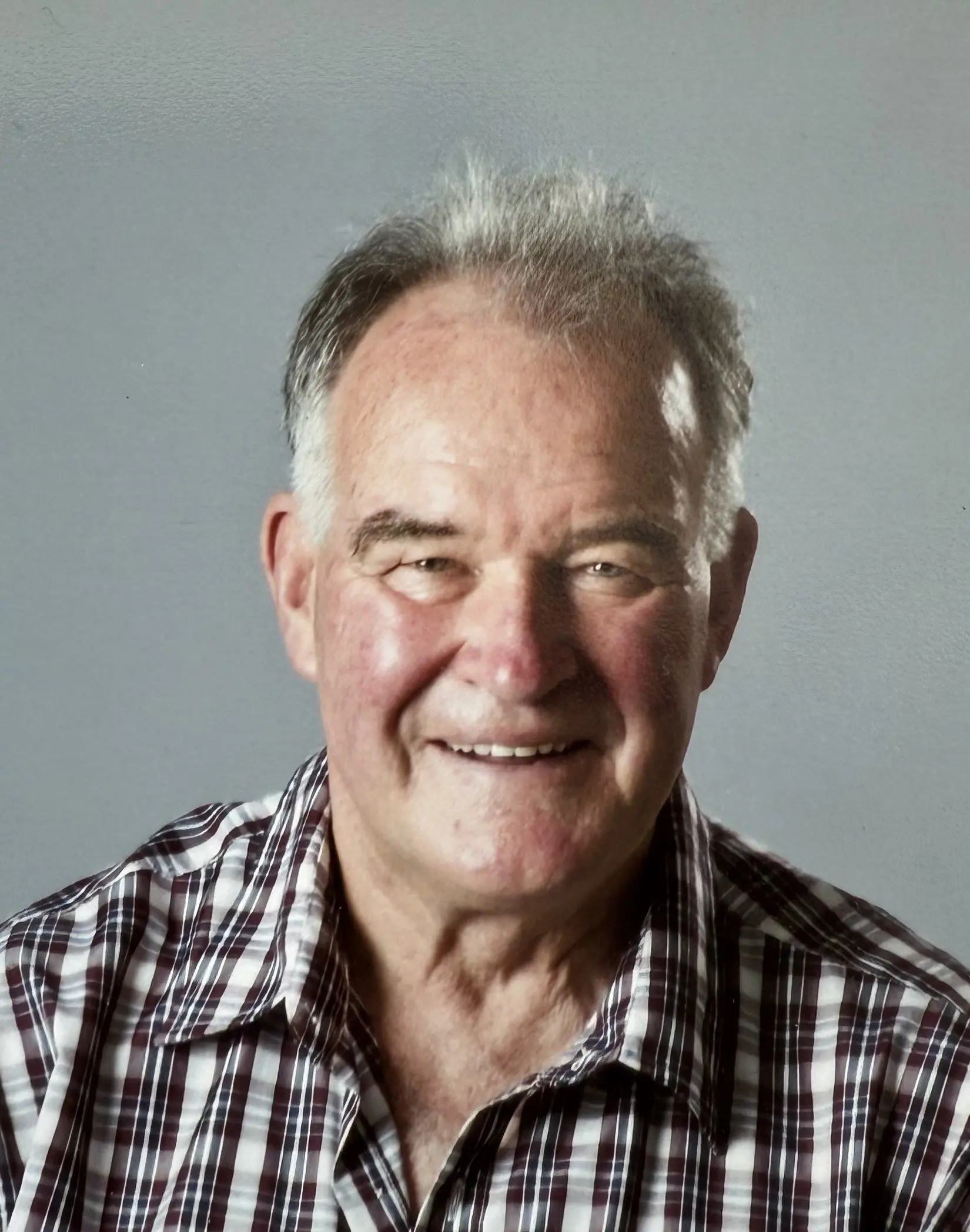
Grahame, known to many as Chomper or Champs, was a true and loyal friend to people of all ages. Many benefited from his in-depth knowledge and he will be sadly missed.
— Dr David Harrowfield, with the assistance of Lyle Champness and the family.