
PHOTO
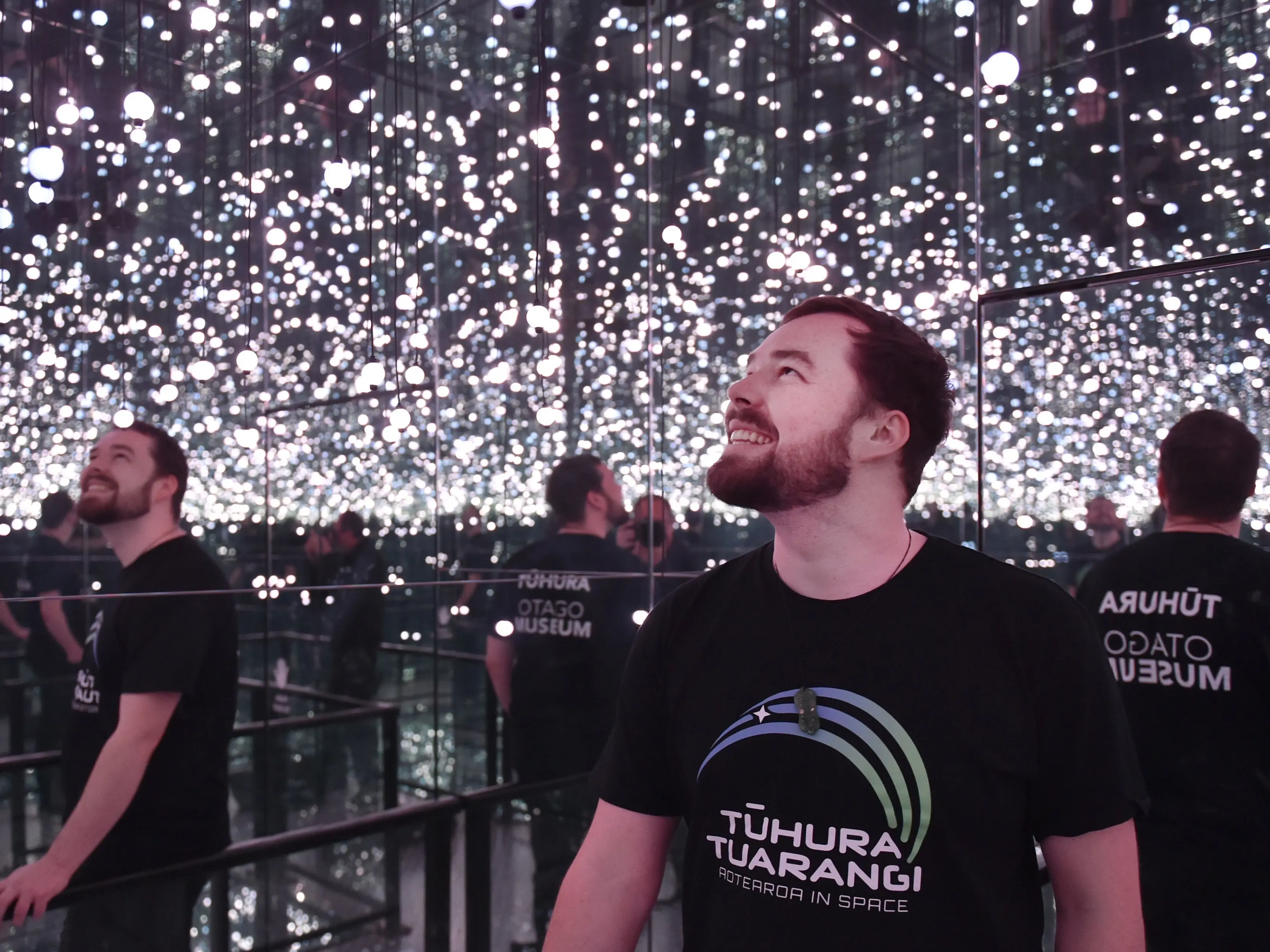
A space science outreach programme has landed Andrew Mills a finalist’s spot at a prestigious international science engagement competition hosted by the Falling Walls Foundation.
The Tūhura Otago Museum senior science engagement co-ordinator launched the Tūhura Tuarangi Aotearoa in Space Showcase last October, giving young people a chance to build a satellite, launch a rocket, get up close with 4-billion-year-old meteorites, explore the solar system using virtual reality and even hold part of a secret Russian spacecraft.
Mr Mills’ showcase has caught the attention of science communicators around the world and he has been invited to present his project at the annual Falling Walls Foundation Science Summit, in Berlin, next month.
He will be one of a small group of leading minds to pitch their projects in one of three different categories — emerging talents, science start-ups and science engagement.
Mr Mills will be competing in the latter category, which received 207 entries from 70 countries this year.
He is one of 20 finalists in this section, and one of just two from Australasia who will be vying for the title of science breakthrough of the year.
Mr Mills said he was delighted with the nomination.
"It’s a fantastic opportunity to see how science communicators are connecting with communities around the world, and to share a Kiwi perspective on different approaches, challenges and breakthroughs in science engagement.
"The global science engagement landscape is ever-expanding, and I’m excited to bring home fresh ideas about how we can make the Stem [science, technology, engineering and mathematics] sector more accessible."
The winners came from all over the world, and for Tūhura Tuarangi to be counted among them was an outstanding achievement, he said.
"It feels like a real milestone in our ongoing mission to inspire young people to get hands-on with science.
"Looking ahead, I hope we can extend our reach to even more New Zealand communities — especially those in the most remote areas.
"They often get overlooked."
The showcase has already visited more than 25 locations throughout the country, supported by a team of science communication specialists from the museum.
He said it aimed to inspire young people into scientific careers, regardless of their background.
"Even if they ultimately pursue other interests, everyone should see science as a path that is open to them."