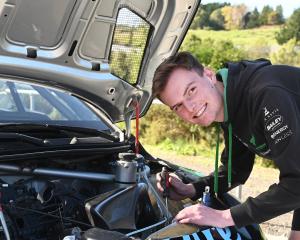
Infamous for his run-in with Sirocco the kakapo - Sorocco tried to mate with Mr Carwardine's head - on his last visit to New Zealand, Mr Carwardine is in the country on a "whirlwind" tour to highlight the "small five" (as opposed to Africa's "big five") species tourists could expect to see on a two-week visit - Hector's dolphins, tuatara, kiwi, kea and yellow-eyed penguins.
The idea was to get across to potential British tourists - his visit was courtesy of Tourism New Zealand and Discover the World - the amazing wildlife in New Zealand.
"I've travelled for eight months of the year for 25 years and New Zealand is one of the best places to see great wildlife,"he said.
Yesterday, he was on search of the last of the "small five", the yellow-eyed penguin, braving strong winds and rain on Otago Peninsula accompanied by member of the Yellow-eyed Penguin Trust and Department of Conservation.
"I think its following me - its been blowing a gale and horizontal rain wherever I go."
It was his sixth visit to New Zealand and he loved the space and ability to see wildlife without a "crowd of other people".
He had also visited Stewart Island where he went on a boat trip to see albatross.
"It was one of the best wildlife days I've had, there were hundreds of albatross around the boat. We saw 27 species of seabird in one trip - there is virtually nowhere else in the world you'd have that."
While this trip was to encourage people to come and see New Zealand's wildlife, he said it was important tourism was managed responsibly.
"You can't cut everyone off from seeing it, they need to be inspired to help species, protect species."
However, species needed protection so it was important visitors were educated and understood the risks so they could go away wiser, he said.
There were also times when one of those visitors was influential and inspired by their visit.
"That can change the direction of conservation for an animal."