
PHOTO
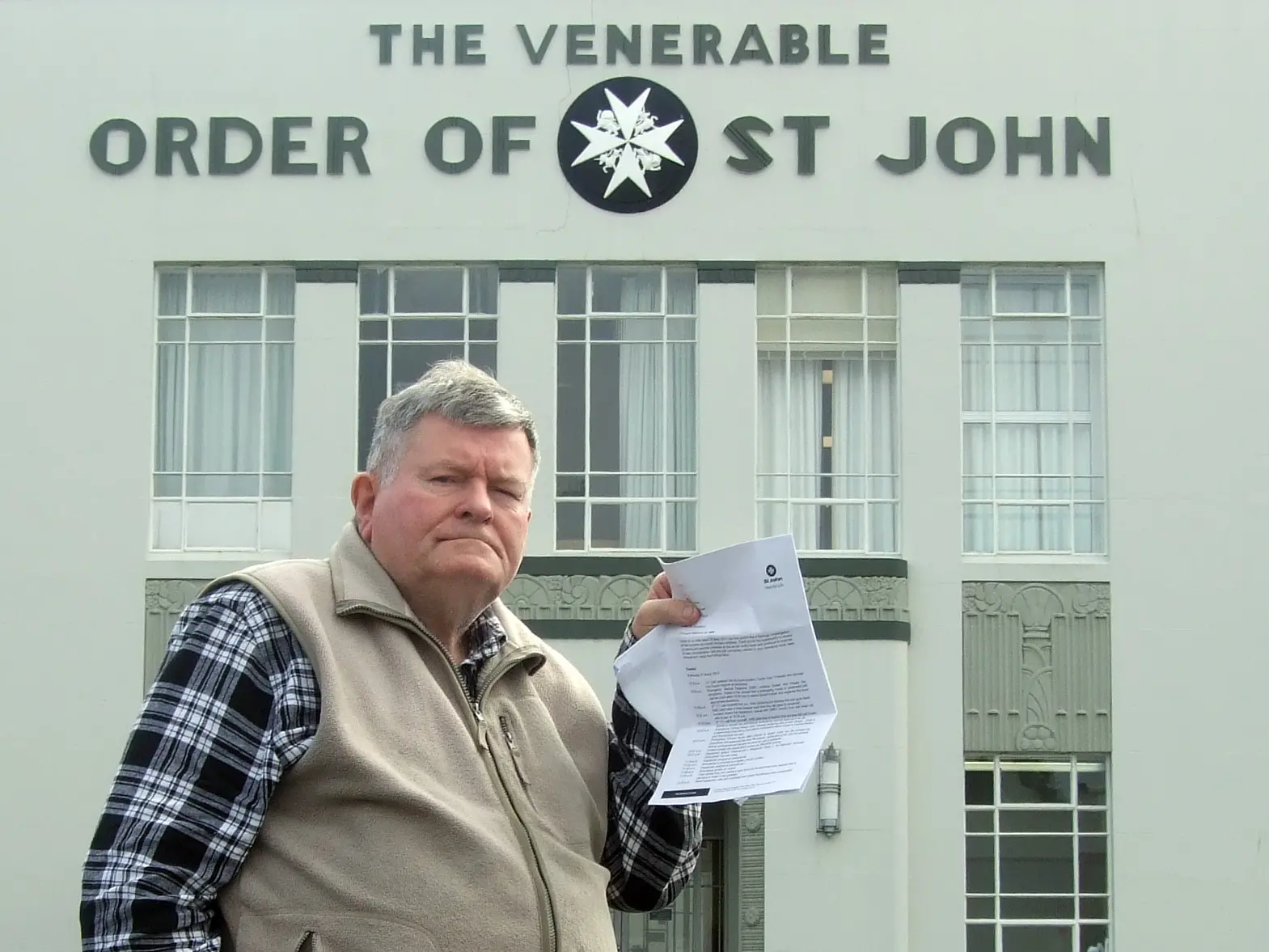
A Dunedin man whose wife was left waiting in pain for a St John ambulance for more than an hour says the incident shows how badly underfunded the service is.
Rob Donaldson yesterday gave the Otago Daily Times an incident report from St John, which identified gaps in its service and offered an apology for "distress caused".
The response was one of two apologies to Dunedin people from St John in recent weeks.
Mr Donaldson said the fact it took more than hour to send his wife an ambulance in Christchurch showed just how underfunded the St John service was.
And, without a personal apology from St John, he remained "very, very disappointed" with the service.
"They let me down so badly. I'm certainly not happy. I'm extremely disappointed."
The incident occurred when Mr Donaldson was in Christchurch to support his 61-year-old wife, who lives there, as she underwent surgery on March 6.
His wife left hospital on March 26 and returned to her St Albans flat, but woke the next morning in pain, which grew worse.
Their daughter phoned St John for an ambulance at 10.19am, but more than an hour later when one had failed to arrive, Mr Donaldson drove his wife to hospital himself.
St John's incident report showed the first call at 10.19am led to Mr Donaldson's wife being triaged over the phone.
She was assessed by St John's dispatcher as "grey", meaning a non-urgent case suitable for phone assessment.
By 10.41am, an emergency clinical nurse had phoned Mr Donaldson's wife and ruled out "life-threatening symptoms", but upgraded her condition to "orange" - meaning "urgent and potentially serious but not life-threatening".
She was told an ambulance would be sent as soon as possible, but by 10.51am no ambulances were available.
More than 25 minutes later, at 11.19am, an ambulance was dispatched, but then diverted to a higher priority call.
Another ambulance was finally sent at 11.45am, arriving at 11.59am to find the apartment empty.
The investigation concluded the correct process had been followed, despite a short delay calling back Mr Donaldson's wife and the failure by St John staff to request a further follow-up welfare call.
St John apologised for those failures, the report by St John clinical effectiveness manager Lilah Barnett said.
In the second case, a Dunedin woman who called an ambulance on March 25 after vomiting for four days was assessed as being "clinically safe" to "self-transport" to hospital.
St John's review backed that assessment, despite finding her lethargy - and access to a private vehicle - had not been properly assessed.
Had that been done, and depending on the answers given, she may have been assigned an ambulance, it said.
The St John nurse speaking to the woman by phone also "did not meet our customer service standards" at times, it was found.
The woman also received an apology from St John.
A St John spokesman, in a statement yesterday, said incidents like Mr Donaldson's experience were not the result of a funding shortfall.
More government funding would allow St John to put more ambulances on the road, he said.
His comments followed those of St John chief executive Peter Bradley, who recently said the level of government funding was not sustainable.
St John, which relied on ambulance charges and fundraising for 28% of its budget, has asked for an extra $350million over four years from the Government to fully fund the service.