
PHOTO
More rain looms for cyclone-stricken regions this weekend - and forecasters are keeping a close watch on any implications for New Zealand with them assessing a "high" risk of more cyclones developing in the tropics from the back half of next week.
The short and longer-term predictions come as police continue to scramble to find hundreds of people still uncontactable following Gabrielle’s devastation.
MetService yesterday urged people to watch coming forecasts, with heavy falls possible about hard-hit Gisborne and Hawke’s Bay on Friday and Saturday. Some long-range models the forecaster relied on to make predictions showed a risk of heavy rain for the east coast of the North Island, with about 50mm of rainfall possible this Friday and Saturday. "Other [models] are more pessimistic," MetService said - with over 100mm possible for the central Hawke’s Bay shown in one model.
"There’s a lot of uncertainty, but it’s not good news," MetService meteorologist Alwyn Bakker said. "Any rain certainly won’t help," Bakker said, given the areas which could potentially be hit include cyclone-ravaged Hawke’s Bay and Gisborne.
‘High’ risk of new cyclones developing in tropics
Forecasters have assessed a "high" risk of more cyclones developing in the tropics from the back half of next week – but that doesn’t mean New Zealand is in for a third unwelcome visit.
"While Cyclone Gabrielle has now dissipated completely, we must remember that we are still in the middle of the South Pacific Oceans’ tropical cyclone season," MetService meteorologist Lewis Ferris said.
Historically, late February and early March marked the height of our November-to-April cyclone season. In a given week around this peak period, chances of a cyclone being present in the southwest Pacific was typically at least 50 per cent.
For the rest of this week, however, the tropical area to the north of New Zealand looked to remain quiet. "We have assessed a ‘very low risk’ of any cyclone development for this week and weekend, this is the lowest risk available," Ferris said. "The first few days of next week remain the same, but the risk of cyclone development does increase in the second half of next week."
MetService had assessed risk from that point – or from March 1 – as high, with chances greater than 50 per cent. "Tropical cyclone development always happens very far away from New Zealand, so even if we do see a tropical cyclone develop next week that does not mean it will affect Aotearoa," Ferris said. "Most tropical cyclones never impact our weather, but every storm follows a unique path, and some get close enough to have a say."
PM vows to ‘do whatever it takes’ to recover
Speaking in Parliament yesterday, Prime Minister Chris Hipkins said this would be a tough year ahead for many but vowed to "do whatever it takes to recover".
"We will get through this," he said as he paid tribute to the lives lost to Cyclone Gabrielle, their grieving families and those who remained missing. To those who have lost loved ones, New Zealand is grieving," he said.
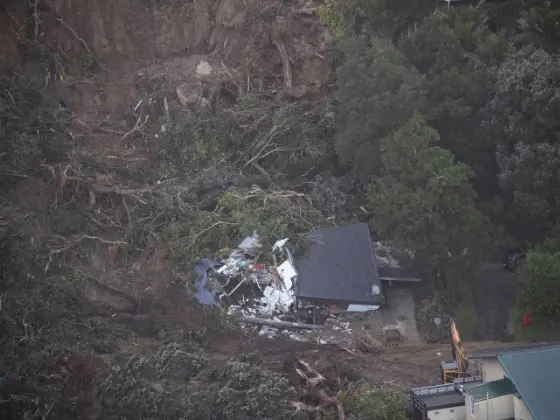
He spoke specifically of the two volunteer firefighters who had died in Muriwai.
Hipkins also said there needed to be much stronger action on climate change.
"Business as usual won’t work any more... Billions of dollars are going to be required not just to repair but become more resilient."
‘Family man’ firefighter remembered today
The funeral for local volunteer firefighter and veterinarian Dave van Zwanenberg was set for today
Volunteer firefighter and veterinarian Dave van Zwanenberg died helping evacuate residents in Muriwai along with fellow firefighter Craig Stevens.
Van Zwanenberg’s funeral was held today.
He was remembered for his good humour, his authentic care, his astronomic intelligence and supreme competence at anything he turned his hand to.
Widow Amy van Zwanenberg said her family was utterly devastated by the sudden loss of her extraordinary husband.
"First and foremost, a family man, Dave was dedicated to spending quality time with his children and building a life to nurture their growth, van Zwanenberg said.
"Reliability and dependability were his core values, whatever the weather," she said.
Thousands still missing
A total of 1131 people remained uncontactable as of yesterday afternoon, as a hundred police staff continued to investigate the reports.
"We urge anyone who has now been in touch with someone previously reported uncontactable to update their status through our 105 online form," police said.
The death toll remained 11 and police were especially worried about 10 people who have yet to be located.
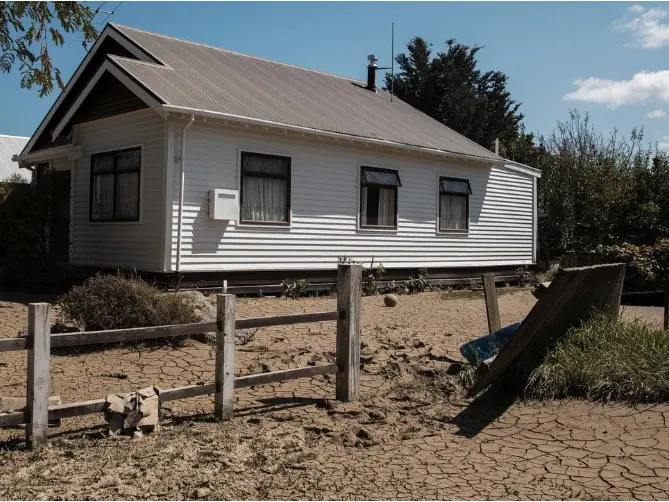
About 2000 people remained without power across Auckland, the city’s emergency management group said. Thousands more across the North Island also waited for electricity to be reconnected.
In Napier, leaking raw sewage forced evacuations away from the Awatoto Public Golf Course while Fire and Emergency’s Hazmat Command Unit responded to the incident.
In Auckland, sewage began seeping from a manhole damaged by a slip in St Heliers, raising the risk of swimming at two popular beaches at St Heliers and Kohimarama.
Land in the city’s west coast settlements remained unstable and Auckland Emergency Management said it could be months before residents were allowed back to their homes there.
An extra 145 officers were sent to the eastern police district, bringing numbers to 500, including specialist Search and Rescue units and the Eagle helicopter.
"Crime levels in the district are currently within the normal range," a police statement said.