
PHOTO
Labour is promising to set up an AI office, an online safety regulator, copyright rules that ensure creators are paid for their work, and impose rules on data centres if elected in November.
The regulator would have a wider mandate than overseeing a social media ban for under-16s, and the public service would be given "clear expectations" around AI, human oversight, accountability, privacy and consumer and employment protections.
The party says it would also work with small and large businesses, community organisations, iwi, educators and unions on how to safely use AI and ensure productivity gains are passed through to wages and conditions.
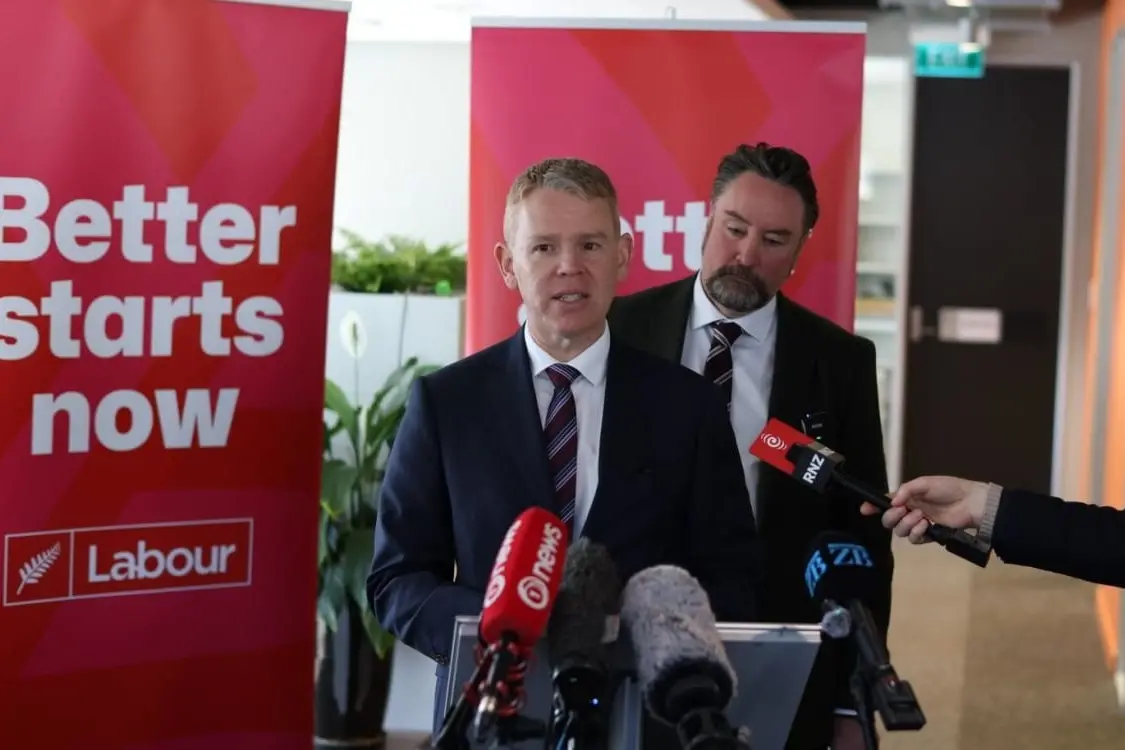
Leader Chris Hipkins and Technology and Innovation spokesperson Reuben Davidson announced the policy at the Victoria University of Wellington's tech hub, across from the capital's railway station, on Wednesday morning.
"Used well, AI has huge benefits. It can cut hospital paperwork so doctors and nurses have more time with patients. Workers and small businesses can be more productive. Certain services can be delivered more efficiently," Hipkins said.
"But we cannot leave it to big international tech companies to decide how it shapes our future."
Davidson said Labour would make sure New Zealand set AI rules on its own terms.
"That means protecting peoples' rights, safety and privacy, creative work, and ensuring that there is always human accountability."
National's social media ban has already proposed an online safety regulator, but Labour's policy said its mandate would be widened to help advise the government on emerging issues and help "seize the opportunities from AI while managing the risks".
"We could look to establish it as an independent regulator, outside of DIA, given the significance of the issues involved," the party's policy document said.
The separate Office of AI would be established within the Department of Prime Minister and Cabinet using existing resources, and would have responsibility for coordinating AI policy across government and developing standards, a long-term plan for the workforce.
A senior minister would also have responsibility for AI, with a whole-of-government work programme to be published "so New Zealanders can see what action is being taken".
Other commitments on the policy include:
- Enable an AI in Education team to support schools, teachers and students to make sure there is clear and adequate support for schools to use AI safely;
- Look at how to strengthen New Zealand's control over its data and establish clear standards around the use of private information, such as health data;
- Work closely with Australia to align standards and approaches and with Pacific countries on safety and security;
- Develop a framework for the use of copyright material by AI, including how creators can control and be remunerated for the use of their work, by working with creators, publishers, technology companies and others to get settings and enforcement right;
- Identify gaps in New Zealand law and strengthen protections where needed, including a ban on non-consensual deepfake pornography
- Require data centres to secure their own renewable energy supply, pay for their own connection costs, reduce electricity demand during peak stress periods, and use water efficiently;
- Work with iwi and hapū on how Māori data is collected, owned, governed and used;
- Support small businesses to adopt AI safely through the AI small business fund, an extension to the AI Advisory Pilot and an increase to the Founder and Startup Support Programme; and
- "Take steps to understand the full lifetime cost of adopting AI across the public service".
