
PHOTO
Alexandra man Stephen Penson felt like he had been "hit by a rock" when he was told he had bowel cancer. "It changes your whole life."
Ahead of the 58-year-old lay six weeks of intensive treatment, as doctors, armed with potentially toxic drugs and radiation, went into battle against the cancer cells.
For Mr Penson it was a nervous time, not knowing what lay ahead or what the next procedure would be like.
However, an education session in a recently established nurse-led clinic, helped to calm his anxieties before he started treatment.
Once treatment began, some of the side effects he had been warned about started to surface.
At one stage, his mouth was so swollen and ulcerated he could not talk.
However the benefits of another new clinic, a service which allows patients to drop in after treatment to discuss side effects and symptoms, also helped.
"If you have a problem you just tell Jo and she fixes it,"Now, with just one week of treatment left to go, he looks back on the past weeks with a smile and says the staff have been "just phenomenal".
The new clinics are just some of the changes that have been taking place at cancer services in Otago and Southland, during the past year and a-half.
Step back two years and chances were someone living in a Dunedin suburb would see a cancer or blood specialist a lot faster than someone living in Te Anau or Gore, who could have waited up to six weeks.
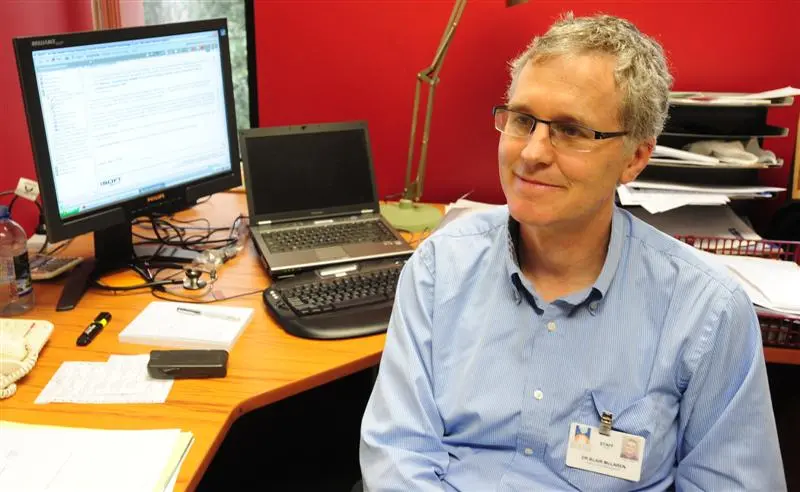
Medical oncologist Blair McLaren said the wait for patients, who have been told by their GP or surgeon they have cancer, to see a specialist could be agonising.
"It is a very stressful time for patients. Life kind of goes on hold for patients when you are waiting to hear what is going to happen next."
The incidence of cancer is rising every year, mostly driven by an ageing population, and cancer services, particularly in Southland, had reached a point where there was potential for a major problem to develop, Dr McLaren said.
"We reached a point where you either do something or give up."
The desire to provide equal access to services, no matter where a patient lived in Otago or Southland, started the year-long process of creating the regional service.
The new service, known as Southern Blood and Cancer, is the first of its kind in New Zealand, which crosses district health board boundaries and creates a single waiting list for Otago and Southland patients.
It has not just led to dramatic improvements in waiting times for cancer patients in Southland, but waiting times for Otago patients have also decreased.
All patients now see a cancer specialist for the first time within 20 days, well within the 28-day guidelines specified by the Ministry of Health.
More than 1800 patients came through the service last year.
However, one challenge of the new service was not just to provide speed of service, but quality of service as well, said Dr McLaren.
Regional service manager Gary Reed said while equal access and better waiting times were a tangible benefit of the new service, behind the scenes there had been a "huge transformation".
"It's fine if we have got the patients in the system and got them treated quickly, but what we want to ensure is making it as patient-friendly and focused as we can."
New databases, computer and booking systems had been introduced with the new services, but "behind all those processes are people" - people who have worked to improve patient-focused care.
Oncology nurse Jo Tuaine wrote a proposal to establish the nurse-led education clinic, while radiation therapist Annie Morris became the first radiation therapist in the country to go through a specially established training course to take part in clinics dealing with cancer treatment side effects.
Other innovations which have been added include a new adolescent "key worker", to help with 15 to 24-year-olds who do not easily fit in to paediatric or adult services, a "complex care co-ordinator", who looks after patients undergoing complicated treatment across multiple specialties, and providing more counsellors who specialise solely in cancer patents.
Video-conferencing facilities have also been bought to help maintain closer links with oncology staff in Southland Hospital and there are plans to expand these facilities so combined meetings with specialists in other areas can be held to plan care for patients.
Other options being looked at for the future include improving on the aim of treating patients as close to where they lived as possible.
Aside from Dunedin and Invercargill, chemotherapy is also given in Balclutha, Oamaru and Dunstan. Mr McLaren said Central Otago was one area under review.