
PHOTO
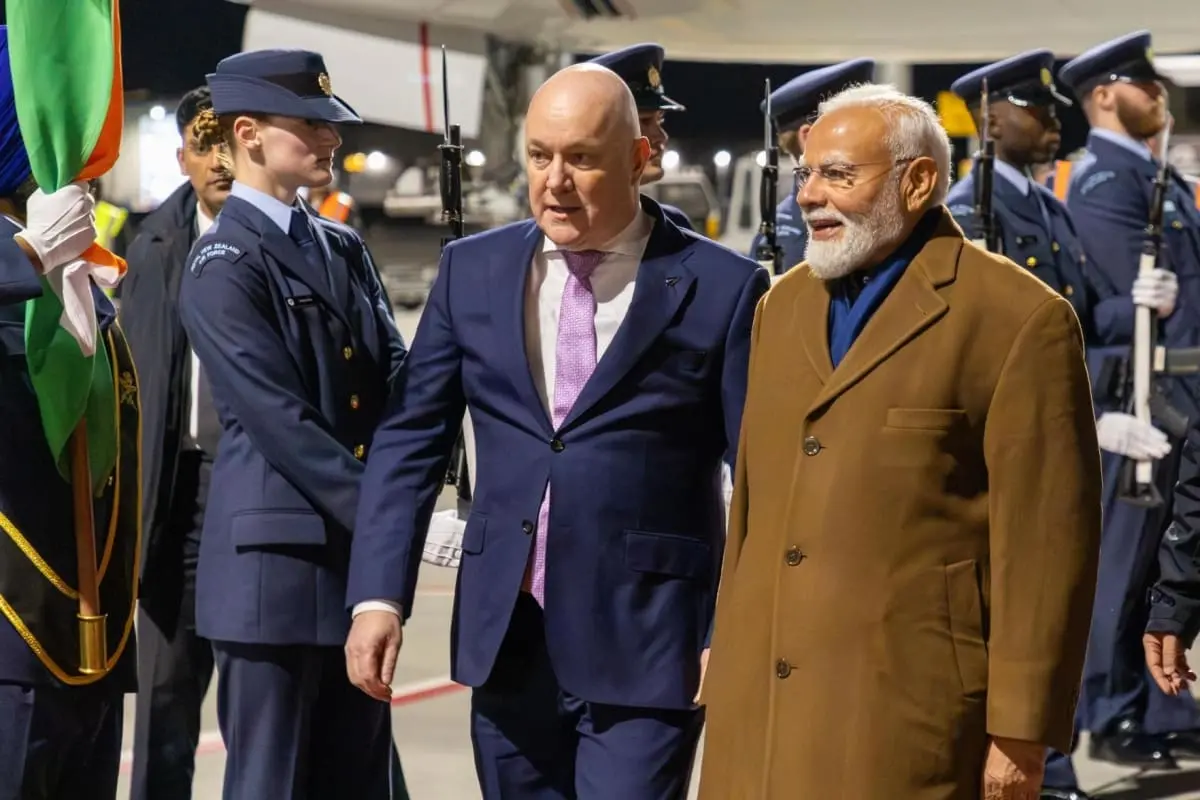
India's Prime Minister Narendra Modi has arrived in New Zealand for a whirlwind visit amid tight security.
It's the first visit by an Indian leader for 40 years and the third visit overall after previous trips by Indira Gandhi in 1968 and then later her son, Rajiv, in 1986.
The overnight visit reflects growing momentum in the New Zealand-India relationship, coming hot on the heels of a free trade deal that will eliminate or reduce tariffs on 95% of New Zealand's exports once implemented.
Prime Minister Christopher Luxon greeted Modi with a guard of honour - and a hug - last night once he had disembarked his private jet at Auckland Airport, a symbolic gesture of the importance the government attaches to the trip.
Ethnic Communities Minister Mark Mitchell was also at the airport on a brisk winter evening.
The Indian leader is scheduled to hold bilateral talks with Luxon today, with discussions between the leaders expected to include trade and investment, maritime security, education, tourism, sport and global issues.
Modi was also scheduled to attend dedicated business and sports sessions, with the two nations celebrating a centenary of sporting ties this year.
He will also meet with Labour leader Chris Hipkins.
Modi is expected to address more than 10,000 people at a community event at Spark Arena in the evening to cap off celebrations.
Police said a sizeable security presence would be seen in Auckland today, with the public advised to expect disruptions at different points of the day.
In the leadup to the visit, motorcade rehearsals and significant security checks were held in preparation for Modi's arrival.
RNZ has been reporting preparations for Modi to visit New Zealand since at least the end of March.
That followed the conclusion of negotiations in December last year for a free trade deal signed by Trade Minister Todd McClay in New Delhi in late April.
Legislation supporting the deal passed its first reading in Parliament at the end of June with Labour's support.
Coalition partner New Zealand First has withheld its support for the agreement.
India's Prime Minister since 2014, Modi leads the Hindu nationalist right-wing Bharatiya Janata Party.
Modi has been credited by some for India's global rise, bringing millions out of poverty.
However, critics and India's opposition blame him for promoting Hindu nationalism, curtailing press freedom and crony capitalism.
This story was first published on rnz.co.nz |  |