
PHOTO
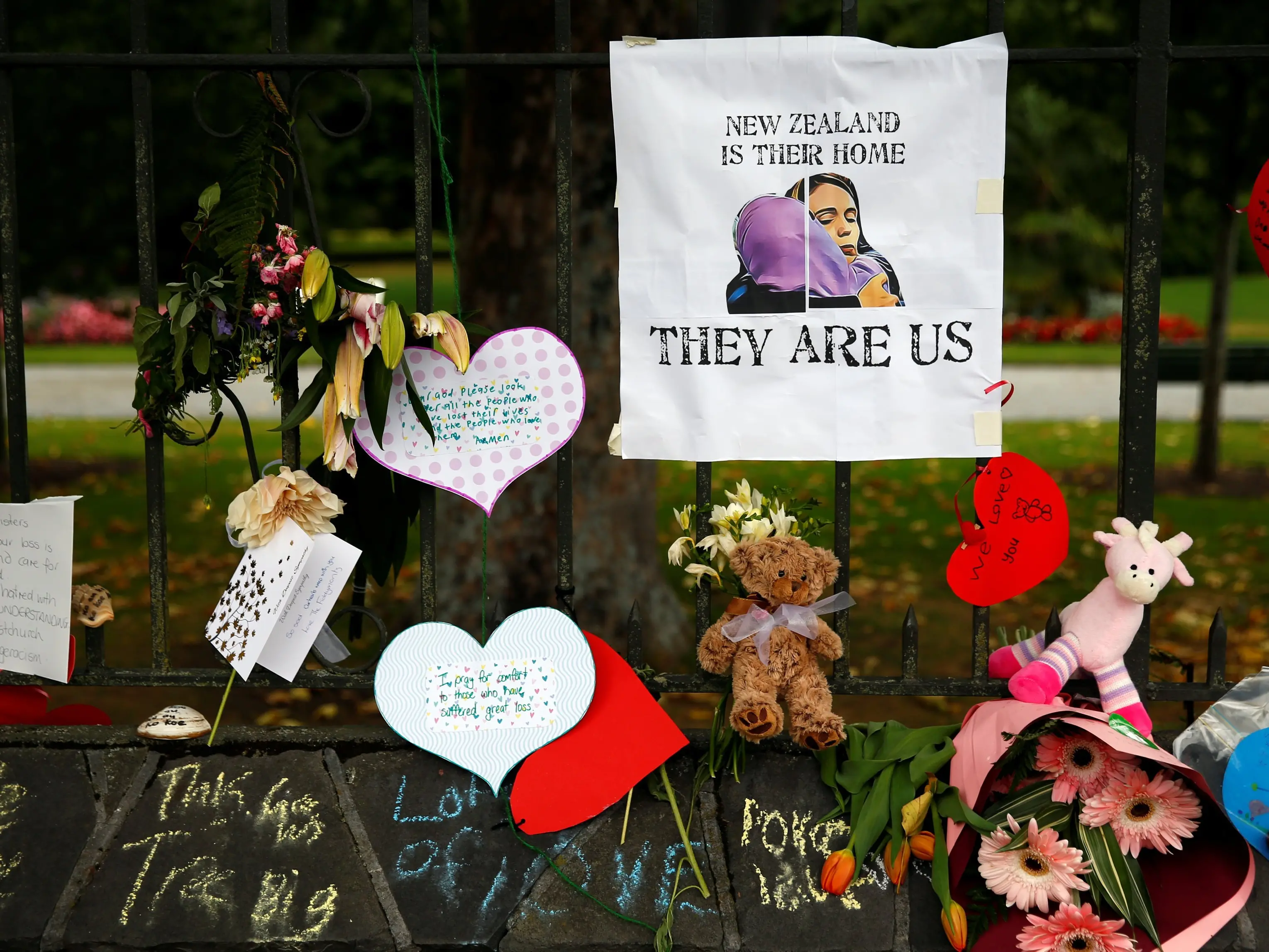
Since the shocking attacks on Christchurch's Muslim community in March, numerous voices have demanded that New Zealand wake up to recognise its legacy of racial discrimination, violence and white supremacy.
Muslims, Maori, and people of colour in New Zealand have described how their concerns regarding racist and Islamophobic violence in New Zealand have been repeatedly ignored. When some responded to the attacks saying, ''but this isn't the New Zealand we know'', others replied, ''this is the New Zealand we experience each and every day''.
A vital question to ask is: where does this violence come from? Right-wing extremism doesn't appear out of thin air. It is not a set of ideas utterly alien to the rest of society. It is not something learned solely from the darker corners of the internet.
An extremism, be it right-wing or otherwise, represents an extreme form of an idea that can also be expressed more moderately. Right-wing extremism shares a connection with right-wing moderatism. The logic that shapes strict immigration policies that discourage migration from certain parts of the world is the same logic that convinces an individual to open fire in a place of worship.
They both desire to control the ethnic make-up of a particular place. Often, the only difference is whether or not they use violence to achieve their aims.
The moderate and the extreme feed off one another. Importantly, therefore, if we want to stop the extreme, we must look to also change the moderate. If we want to stop racist and Islamophobic violence in New Zealand, we need to stop racist and Islamophobic ideas.
The reality is that since the earliest stages of European settlement in Aotearoa, racism has thrived. European settlers' desire to create a ''Britain of the south seas'' came perpetually unstuck by the fact that migrants to Aotearoa were coming from all corners of the globe. Asian migration, and anti-Asian racism, are as old as New Zealand itself.
It goes without saying that this land was never white New Zealanders' in the first place.
This is Dunedin's history, too. On May 7, 1888, the Mayor of Dunedin called a public meeting, which unanimously supported a call to end all further Chinese immigration. The gold rush era was coming to a close and tougher economic times bred resentment and racism.
This widespread sentiment led to a string of policies designed to curb Asian immigration to the country. Alongside this, there persisted a series of white supremacist and fascist organisations who wouldn't stop short of violence to attempt to make New Zealand white. Both of these trends continue to this day.
In the 1920s, as the global economy struggled, the White New Zealand League wrote to 200 local government organisations around the country, asking them to endorse a White New Zealand policy. One hundred and sixty such organisations supported this idea.
By the end of the 20th century, it was clear that these trends were not letting up. Anti-Asian politics of the 1990s painted a chilling resemblance to the politics 100 years earlier. In 1993, the journalists Pat Booth and Yvonne Martin published an article raising concern about an ''Inv-Asian''. Organisations such as the National Socialist Party of New Zealand (known as the New Zealand Nazi Party) were standing in elections.
The current Deputy Prime Minister Winston Peters ran his 1996 election campaign largely on a platform against what he described as ''non-traditional'' immigrants. In 2015, the Labour politician Phil Twyford was heavily criticised for noting that 40% of houses sold in Auckland had gone to people with ''Chinese names''.
These instances of what might be termed ''right-wing moderatism'' are dangerous. They are dangerous because they encourage and legitimise those with more extreme attitudes to voice their beliefs. In 2004, 2% of the electorate voted for the former leader of the white supremacist organisation New Zealand National Front, Kyle Chapman, to be mayor of Christchurch.That number might seem small, but it placed him fifth in a list of 10 candidates.
These attitudes have violent consequences. In 2003, a Korean tourist was murdered by white supremacists on the West Coast. And of course, this year, we have the seen the chilling conclusion of the toleration of intolerant attitudes.Making sure that the attacks on Christchurch's mosques don't happen again requires far more than just gun control or online censorship. It requires asking difficult questions of how societies as a whole allow for extreme, violent attitudes to foment.
As the weeks pass since the tragedy took place, we must not become complacent in recognising the hard work ahead.
-Kieran Ford is a PhD student at the National Centre for Peace and Conflict Studies, University of Otago.