
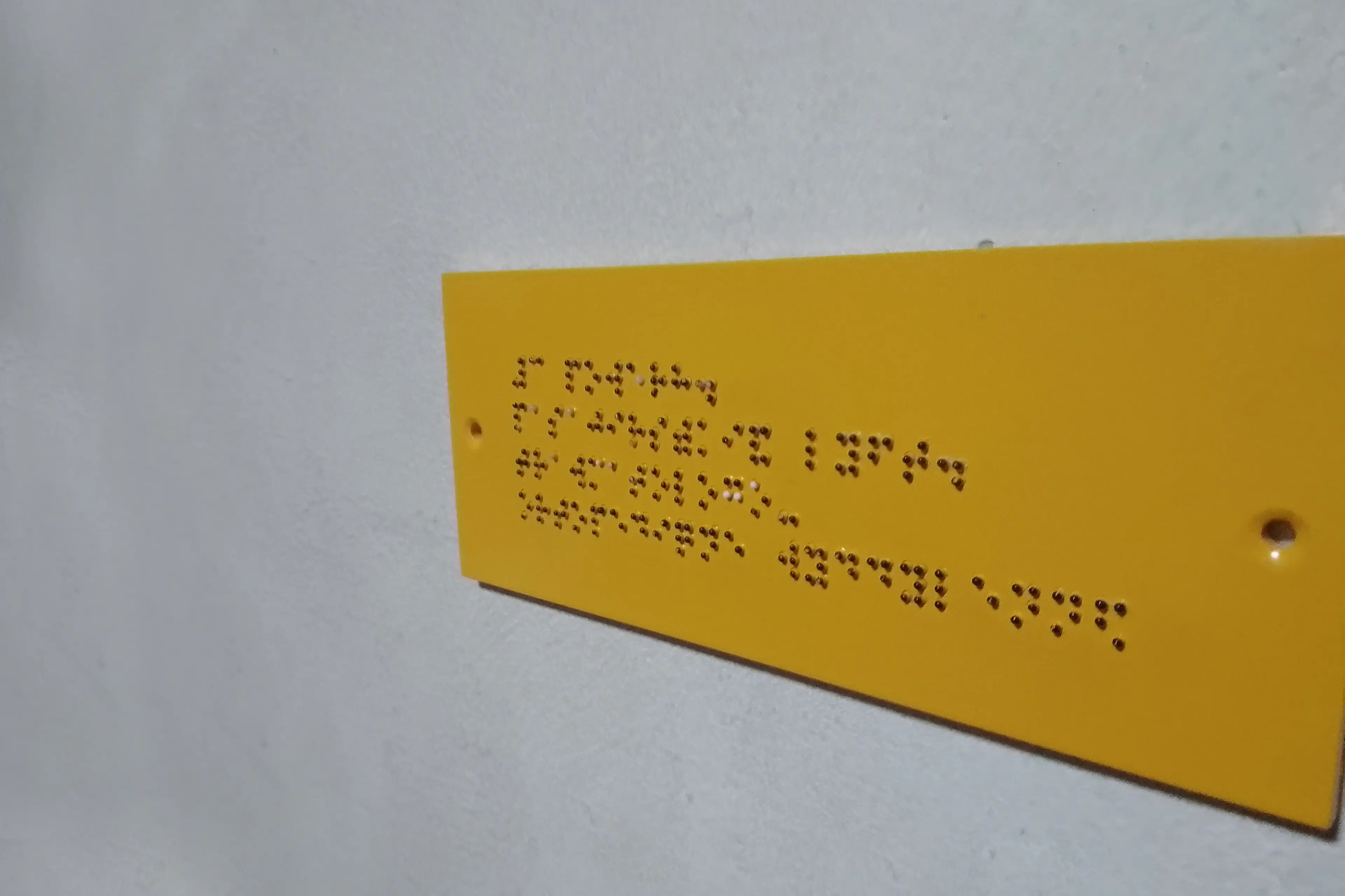
PHOTO
Around the world, digital accessibility is moving from practice to legal accountability.
In Europe, new accessibility requirements are being tested through the courts. In June, a French court ordered Carrefour (a large supermarket) to make its e-commerce website and mobile app accessible within six months, with financial penalties for delay.
In the United States, companies continue to face legal challenges over services that disabled people cannot use.
New Zealand should pay attention. These cases show that digital accessibility is no longer simply a matter of goodwill or website design.
Increasingly, it is being recognised for what it is: an issue of rights, equality and accountability.
Every day inNew Zealand, more of our lives are becoming digital. We book medical appointments, apply for financial support, check bank statements, pay for parking, and find transport information online.
For people who are blind, deafblind, or have low vision, it can be the difference between independence and exclusion.
Digital accessibility is often treated as a technical feature, something to be added late in a project if time and budget allow.
But accessibility is not an optional extra. It is about dignity, privacy and equality. When a website cannot be used with adaptive technologies or is in an inaccessible format, the message to the community is clear: this service was not built for you.
This matters because vision loss is not rare or marginal. Blind Low Vision NZ’s Shining a Light on Blindness report, found that in 2023,110,376 New Zealanders were living with vision loss.
Behind this statistic are people managing work, whānau, study, health, transport and community life. They should not have to rely on someone else to access information that should have been accessible in the first place.
The barrier is not blindness. The barrier is design.
Screen readers, magnification, Braille displays, voice control, keyboard navigation, colour and contrast settings work when services are designed properly. They fail when forms are unlabelled, buttons unnamed,
images lack alternative text, colour alone conveys information, or systems timeout before a task can be completed.
The result is not inconvenience; it is inequity.
In health, inaccessible letters and portals can mean missed appointments or private information having to be read by someone else. In banking and retail, inaccessible payment terminals and online systems can remove independence and create security risks.
Poor accessibility practices in government agencies can block people from services they are legally entitled to use
These are not edge cases. They are the outcome of digital systems that have been designed without input from people most affected by these oversights.
New Zealand already knows what good practice looks like. We are not starting from scratch.
The current government Web Content Accessibility Guidelines provide a practical baseline for making digital content usable with assistive technologies.
The proposed Digital Accessibility Standard is an important step because it recognises that accessibility should not stop at websites.
However, the government is still confirming which agencies will have to comply.
That uncertainty matters, as overseas experience shows that standards need more than aspiration. They need accountability, monitoring and consequences when organisations repeatedly fail.
Accessibility is too often left to an enthusiastic staff member, a late-stage audit, or a quick workaround after a complaint has been received. Retrofitting accessibility after a system has been procured, designed and launched is harder and more expensive than including it from the beginning.
The most reliable way to build accessible services is to involve blind, deafblind and low vision people from the start.
Co-design is not a courtesy; it is quality assurance. It reveals barriers that checklists may miss and helps create services that work in real conditions, on real devices.
Accessibility also benefits everyone; plain language good contrast captions, and well-structured documents make information easier to use.
This is where the government must step in. Digital transformation should not mean shifting the burden onto disabled people to adapt, make complaints or seek help.
It should mean removing barriers so New Zealanders can act for themselves.
For people who are blind, deafblind or have low vision, accessible digital services are not a luxury and should not be treated as a special request. They are a safeguard for independence, privacy, and equal participation to be protected in a digital age.
The challenge now is simple. Build accessibility into every digital decision.
If a service is essential, it must be accessible.
- Andrea Midgen is chief executive of Blind Low Vision NZ.