
PHOTO
The silence in New Zealand’s tourism sector is deafening.
There is no reaction to open-cast mining in areas of National Significance, to the further commercialisation of the conservation estate, or to over tourism; a latent threat as it loomed large before Covid struck.
All threaten tourism productivity which, as it turns out, is little understood as the tourism sector fails to reveal any politically relevant stance or strategy.
Unique landscapes, protected environments, and welcoming locals are the very material source of tourism’s productivity that need understanding and educated management.
Consecutive political leaders have provided little of these. Ongoing attempts to exploit the Denniston Plateau and other sites of National Significance through open-cast mining are not just creating a few minor beauty-spots as another minister would have it.
Indeed, activities such as mining or contesting the boundaries of the Conservation Estate means giving away the substance and source of tourism productivity.
Bit by bit, New Zealand’s image as a clean, green and environmentally conscious destination becomes diffused.
Landscapes are not just the physical things you see when looking at a mountain, a fiord, or hills covered in native bush: they embrace New Zealand’s heritage and people too.
Tourism’s productivity can only be enhanced by understanding the role and genesis of their stories about these landscapes; of how they create our relationships and interact in tourists’ experiences.
It is the credibility, genuineness and authenticity of these stories that are measurable and must become inputs into measures of tourism’s productivity.
Wantonly increasing tourist numbers does not improve productivity but hollows it out – for example the tolerance of tourism as felt by locals whose increasing dislike had almost hit breaking point before the pandemic.
Before December 2019 there were frequent reports of economic, environmental and social friction when New Zealand attracted about 4 million tourists a year.
The current frantic chase and politicians’ desperate hope for increasing tourism numbers shows these tensions have been totally forgotten.
Glossy brochures and roadmaps for a resilient and more productive tourism sector have also failed to generate national plans that identify and actively address the underlying threats to New Zealand’s tourism resource and its relationship with growth in productivity.
The Milford Opportunities Project, for example, spent $18 million of rare research funds on managing tourist numbers, but failed to lift its banal findings into discussions of regional and national importance for structural change.
It exemplifies the tourism sector’s immaturity and inability to develop and harness its forces.
The overused phrase of ``value instead of volume’’ by tourism ministers continues to turn out nothing but vacuous talk.
So far, it has failed to create any decisive investments or national initiatives that improve the waning social licence for tourism and enhance New Zealanders’ quality of life.
Instead, the development of better national transport systems, for example, that could broaden transport availability and choice, and which would have important consequences for tourism flows, is obliterated by petty squabbles and the costly mismanagement of the Cook Strait ferry-purchase disaster.
The employment of New Zealand’s natural estate, the contestation of its boundaries, and the role and effects of using culture for commercial purposes have yet to find mention as important variables in calculations of tourism’s productivity.
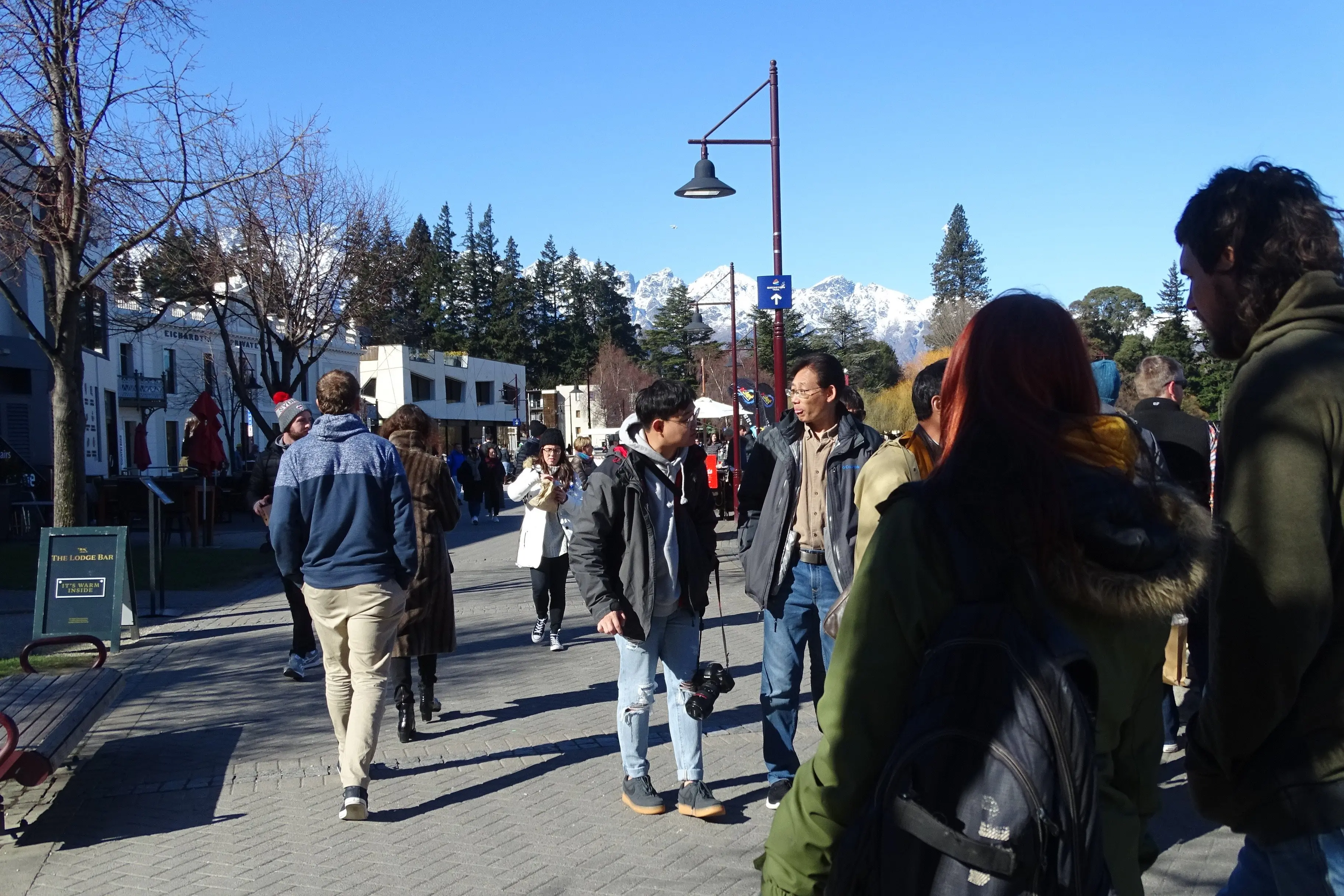
Queenstown, for example, is still tourism’s powerhouse. Yet, after years of untrammelled growth, it has lost sight of its heritage, and hence its mythical attraction as New Zealand’s frontier town that ties it to adventure.
With all the rampant investment, and the social and infrastructural problems it created, it failed to look after its own story.
It now tries to find a new story to tell but drowns in all those predicted traffic jams, labour inequalities and loss of uniqueness.
Increasingly defined by the demands of mass tourism which its management invited, its international competitiveness is waning as sameness of service offerings and overtourism destroy the memories of Queenstown’s pioneering legacy.
Productivity in tourism cannot simply be measured by the dollar return on dollars invested. It relies on the management of a combination of diverse but interacting resources.
These inputs are the attractiveness of New Zealand’s landscape, the management of the natural estate, the friendliness and uniqueness of its people, and the story they all tell together.
It is these stories that imbue New Zealand’s tourism product and create the tourist experience.
Open-cast mining, including the threat to the Denniston Plateau, put a lie to the story of ``clean and green’’ New Zealand.
It undermines or even prevents tourists’ ability to have authentic experiences and satisfy their aspirations and expectations of value. Realising these values is what draws them here.
New Zealand’s history and social life play out in New Zealand’s physical environment and are the true sources of tourism’s productivity.
Open-cast mining, as much as bottom trawling, are fundamentally counterproductive for the tourism sector, as they destroy the environment and New Zealand’s image.
By tinkering with landscapes, we change our story, and brutally harm New Zealand tourism’s productivity at its source.
In addition to existing roadmaps and commitments to the environment, the New Zealand tourism sector needs to discuss and reveal itself as to where it stands in relation to environmentally destructive initiatives.
It needs to mature as a political force and, like the agricultural sector, bring discussions to the forefront of people’s minds as stakeholders.
The sector needs to become a champion of New Zealand’s environment and advocate for the Conservation Estate, including strengthening the role of the Department of Conservation.
Productivity will thereby be enhanced measurably, and not only in dollar terms, as it values and helps preserve New Zealanders’ legacy.
In turn, New Zealanders will cherish tourists and enhance their experience as the source of what tourism operators thrive on, extract, and charge for.
A mature tourism sector will also be able to offer clear alternatives to open-cast mining and be more able to develop strategies to enhance labour productivity and wages. — Newsroom
- Juergen Gnoth is an emeritus professor of marketing at the University of Otago, specialising in tourism behaviour and experience research.