
PHOTO
Wilding conifers are one of Otago and New Zealand’s most pressing environmental and economic problems.
Uncontrolled spread of self-sown introduced conifers has the potential to affect 25% of New Zealand’s land area and could cost up to $3.8 billion over the next 50 years.
This will come from losses to agricultural production, losses in biodiversity, reduced water yields limiting hydro generation and irrigation, increased risk of landscape scale wildfires as well as from social and cultural impacts.
It’s been just over four months since the government announced it would provide $79 million of new funding to the national Wilding Conifer Control Programme making up a total package of $109m over next three years.
For those involved in wilding conifer management this came as a wonderful surprise after two years of going backwards due to reduced funding.
Credit for this must go to National Party led coalition and to the Biosecurity Minister Andrew Hoggard. Thanks must also go to local MPs Joseph Mooney and Miles Anderson, as well as to Federated Farmers, the Wilding Pine Network and community groups for their lobbying efforts over the last two years.
The case for more resourcing was very strong and thankfully the government listened.
The new funding has now been allocated to the regional and local wilding conifer control programmes and is being put to work. It will mean that most programme budgets will increase by 300% compared to last financial year.
The first task will be to catch up on tens of millions of dollars of deferred work which was not done over the period of underfunding. Then the focus will be to eliminate high risk sources of seed to prevent further spread.
After that programmes will continue with the three maintenance cycles in controlled areas every 3 to 5 years to remove any surviving trees before coning and ultimately to exhaust the seed bank.
The aim of the programmes after effective control is to transition responsibility for any residual maintenance back to land occupiers. This may take a decade or more if the control programmes are able to be completed.
The new funding will also provide the opportunity to improve the way wilding control is carried out.
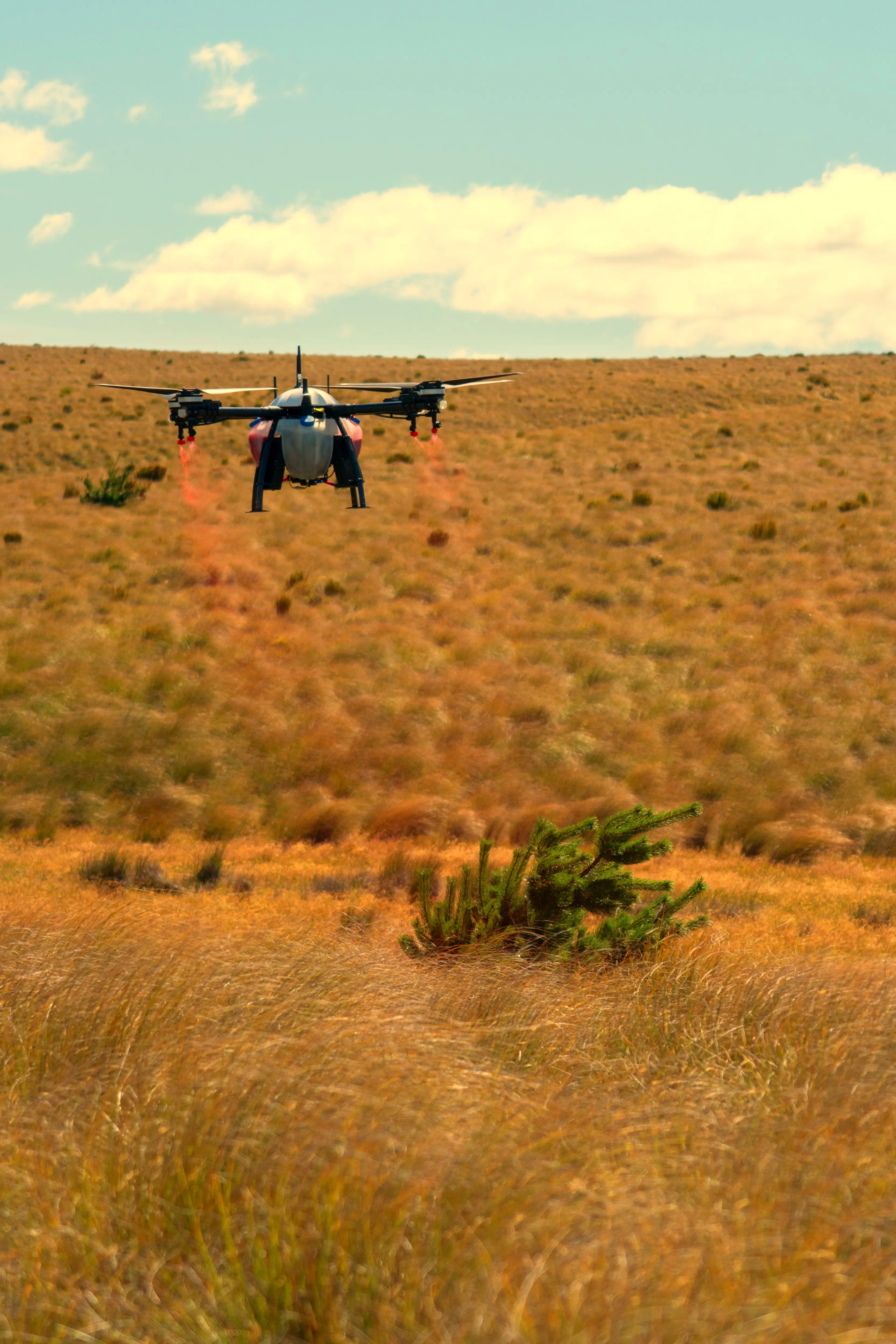
One of the most exciting developments is the use of drone technology. This has progressed very rapidly over the last few years with several local companies rapidly creating more effective tools for finding and destroying wilding trees across vast landscapes.
The new funding is great, but what happens after three years in 2029?
In the May 2024 announcement few people would have paid attention to the second part. That was a commitment by government to a develop and implement a National Pest Management Plan for Wilding Conifers over the next two years.
This would provide funding for the national programme for five years and beyond. Funds would be drawn from all who benefit from wilding control as well as those who contribute to the need for it.
Beneficiaries could include affected farmers, the irrigation industry, the hydroelectric power generators, communities who will be protected from landscape scale wildfires.
Those who contribute to the need for wilding conifer control could be the owners of trees that cause unwanted spread.
The Plan can also impose national rules to protect the investments made and those who control their wilding trees from those who don’t. Until now inadequate funding and rules have consistently prevented effective wilding conifer management.
The Ministry of Primary Industries has already started work on the Plan. It will be a complex and onerous process and will require the co-operation and agreement of many affected parties before it can be brought to the Minister for sign off.
The closest model for a such a Plan is the national Pest Management Plan for Bovine Tb. This has operated successfully for over 30 years and has reduced the number of Tb-infected farmed cattle and deer herds from over 1700 in the late 1990s down to 16 today.
It has cost over $1.5b but has protected our ability to trade dairy and meat products internationally as well as providing considerable gains to indigenous biodiversity.
It clearly demonstrates the benefits of a strategic, national approach to solving very widespread and potentially costly long-term problems.
Due credit must be given to the current government for its 2024 announcement.
However, we are facing an election on November 7. It is now critical that whatever government is in power after this clearly understands the economic and environmental threats wilding conifers pose. It must also fully support the development and successful implementation of the national Pest Management Plan for Wilding Conifers.
- Richard Bowman is a member of the Wilding Network and a Trustee of the Mid Dome Wilding Trees Charitable Trust.