
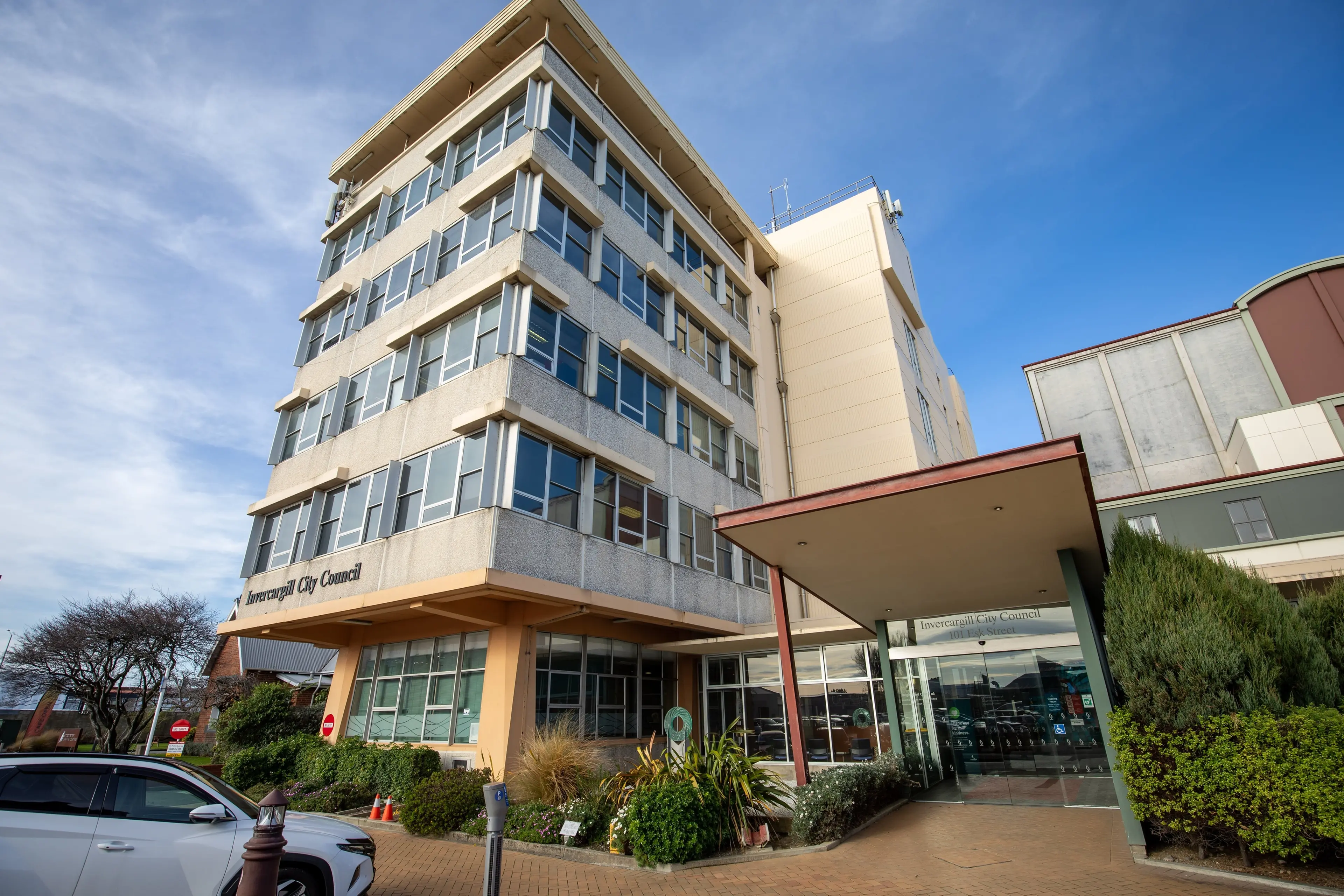

PHOTO
Invercargill city councillors have voted against establishing a Māori ward, opting to stick with the status quo.
The decision was made at a meeting this week where council manager Michael Morris said there had been overwhelming feedback from Te Rūnaka o Awarua and Waihōpai Rūnaka to not progress with a ward.
Ngā Hau E Whā were also opposed once it understood those on the Māori roll would only be able to vote for one Māori ward candidate and the mayor, Mr Morris said.
Mayor Tom Campbell said the views of rūnaka and mata waka had been respected in the past and should be given "particular weight".
“If their view is clearly that they do not wish to go down this track, then to me that’s a slam dunk answer,” he said.
Under the existing arrangement, both Te Rūnaka o Awarua and Waihōpai Rūnaka are able to appoint one mana whenua representative each to council.
The appointees are not afforded voting rights at full council level due to legislation constraints, and are paid $5000 less than the base rate for sitting councillors.
Mike Bain represents Waihōpai Rūnaka, while Te Rūnaka o Awarua has left its seat vacant after informing the council in February it had undertaken a “stocktake” of external representation arrangements.
A report prepared for this week's meeting noted the council could decide on a Māori ward every three years.
One Māori ward would cover the city and anyone could stand for it, including non-Māori and people who did not live in Invercargill, the report said.
The ward was not the only election-related decision made, as the council also opted to stick with First Past the Post (FPP) for voting instead of switching to Single Transferable Vote (STV).
FPP requires voters to tick the names of preferred candidates, with the most votes securing election.
STV works on a quota system and requires voters to rank candidates. Votes can be transferred to others if a candidate has secured election or been eliminated.
Changes to the voting system or a Māori ward would have been binding for the next two elections, although the council would have been obligated to run a citizen-initiated poll if 5% of the city's electors pushed for one.
The door has not been fully closed to change, as the poll is still an option to electors. It would come at a cost of about $200,000 to the council.
LDR is local body journalism co-funded by RNZ and NZ On Air.