



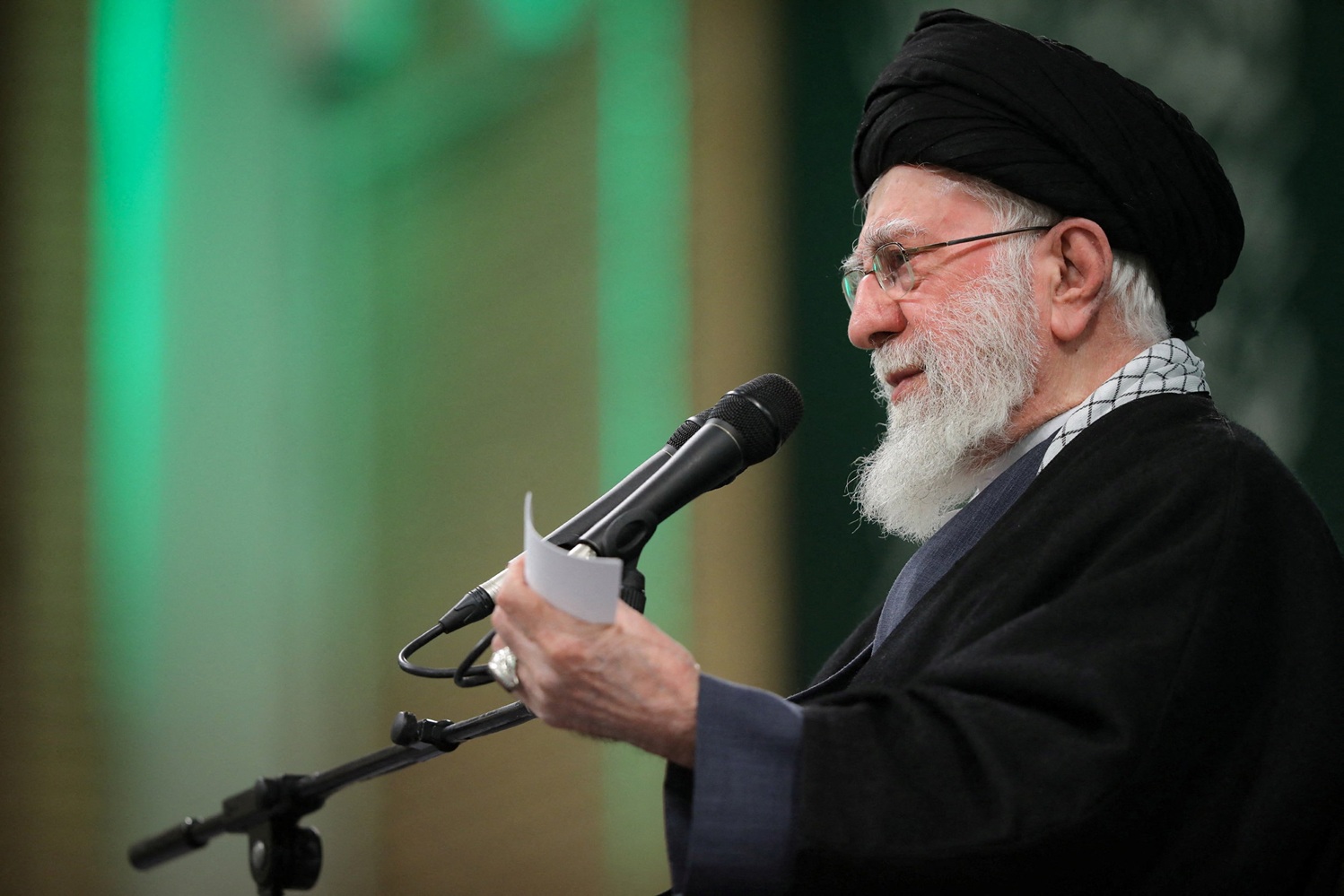
Iran's Supreme Leader Ali Khamenei was killed on Saturday, state media confirmed, after the United States and Israel launched the most ambitious attack on Iranian targets in decades.
Iranian state media announced Khamenei's death early on Sunday (local time). A senior Israeli official told Reuters earlier that the Iranian leader's body had been found after a strike and US President Donald Trump said the United States worked closely with Israel to target the man who led Iran since 1989.
“The Supreme Leader of Iran Has Reached Martyrdom,” state broadcaster IRIB reported on Sunday morning (local time).
Iran has called the strikes unprovoked and illegal and responded with missiles fired at Israel and at least seven other countries, including Gulf states that host US bases.
Trump, making the biggest foreign-policy gamble of his presidency after campaigning for reelection as a "peace president," said the strikes were aimed at ending a decades-long threat from Iran and ensuring it could not develop a nuclear weapon.
- Are you impacted by the conflict? Are you an Iranian in Otago or Southland? Are you a southerner in Dubai or the Middle East? Email reporters@odt.co.nz
Intelligence and tracking systems kept track of Khamenei's whereabouts, Trump wrote in a Truth Social post, adding that "there was not a thing he, or the other leaders that have been killed along with him, could do."
Trump reiterated calls for Iranians to topple the government but warned: "The heavy and pinpoint bombing, however, will continue, uninterrupted throughout the week or, as long as necessary to achieve our objective of PEACE THROUGHOUT THE MIDDLE EAST AND, INDEED, THE WORLD!"
Israeli Prime Minister Benjamin Netanyahu earlier said Khamenei's compound had been destroyed.
Three sources familiar with the matter said Iranian Defence Minister Amir Nasirzadeh and Revolutionary Guards commander Mohammed Pakpour were killed in the Israeli attacks.
Israel's military said it had confirmed that five other senior military commanders were among the dead, including Ali Shamkhani, an adviser to Iran's supreme leader. Iranian media had said Khamenei's son-in-law and daughter-in-law were also killed.
CELEBRATIONS, FEARS AMONG IRANIANS
Witnesses said some Iranians took to the streets in Tehran, the nearby city of Karaj and the central city of Isfahan to celebrate after the reports of Khamenei's death. Videos posted on social media, which Reuters was unable to immediately verify, also showed celebrations in other locations.
The explosions during the strikes caused widespread panic across Iran. "We are scared, we are terrified. My children are shaking, we have nowhere to go, we will die here," mother-of-two Minou, 32, said weeping as she spoke to Reuters by phone from the northern city of Tabriz.
Iran launched hundreds of missiles and drones in response to the attacks, but the Pentagon said there were no US deaths or injuries.
Iran warned that the Strait of Hormuz, the narrow passage through which around a fifth of global oil consumption passes, had been closed. Traders expected a sharp jump in oil prices. Airlines cancelled flights in the Middle East.
Israel's military said some 200 fighter jets had completed the largest flying mission in its history, hitting 500 targets throughout Iran, including strategic defence systems already damaged in strikes last year.
A girls' primary school in the southern Iranian town of Minab was hit, killing 85 people, according to a local prosecutor cited by state media. Reuters could not independently confirm the reports. Israel's military did not immediately respond to a request for comment.
TRUMP CITES 'IMMINENT THREATS'
In a video message on social media, Trump said the aim of the military campaign, which the US Department of Defense named Operation Epic Fury, was "eliminating imminent threats from the Iranian regime."
The Iranian people should "take over" governance of their country, Trump said in the video. "It will be yours to take," he said. "This will be probably your only chance for generations."
Israeli military operations over the past two years had already killed some of Iran's senior military officials and severely weakened several of Tehran's once-feared proxy forces across the Middle East.
After Israel pounded Iran in a 12-day air war in June, joined by the United States, the US and Israel had warned they would strike again if Iran pressed ahead with its nuclear and ballistic missile programmes.
Negotiations between US and Iranian officials took place as recently as Thursday, but senior US officials said on Saturday that Iran had not been willing to give up its ability to enrich uranium, which the Iranians argued they wanted for nuclear energy but US officials said would enable the country to build a nuclear bomb.
During a United Nations Security Council meeting on Saturday, envoys from Russia and China criticized the US and Israel for launching the strikes while Tehran was negotiating with Washington. Russia's UN envoy Vasily Nebenzya said Iran had been "stabbed in the back" and disputed the US claim that preventing Iran from acquiring a nuclear weapon justified the attacks.
UN Secretary-General Antonio Guterres called for an immediate cessation of hostilities.
Trump also faced pushback at home from opposition Democrats, and a few of his fellow Republicans, who said a prolonged campaign against Iran would be illegal without congressional approval and that lawmakers should vote within days.
A girls' primary school in the southern Iranian town of Minab was hit, killing 85 people, according to the local prosecutor cited by state media. Reuters could not independently confirm the reports. Israel's military did not immediately respond to a request for comment.
TRUMP SAYS 'BOMBS WILL BE DROPPING EVERYWHERE'
In a video message on social media, Trump cited Washington's decades-old dispute with Iran and Iranian attacks, dating to the seizure of the US embassy in Tehran during the 1979 Islamic revolution.
Trump said the aim was "eliminating imminent threats from the Iranian regime". He urged Iranians to stay sheltered because "bombs will be dropping everywhere," but added: "When we are finished, take over your government. It will be yours to take. This will be probably your only chance for generations."
But he faced pushback from opposition Democrats, and a few of his fellow Republicans in US government, who said a prolonged campaign against Iran would be illegal without congressional approval and that lawmakers should vote within days.

Iran's clerical leaders were already in a difficult position after mass anti-government demonstrations in January, which led to a crackdown in which thousands of people were killed in the worst domestic unrest since the era of the 1979 revolution.
Protesters had again taken to the streets in recent days in remembrance of those killed the previous month.
Israeli military operations over the past two years had already killed some of Iran's senior military officials and severely weakened several of Tehran's once-feared proxy forces across the Middle East.
After Israel pounded Iran in a 12-day air war in June joined by the United States, the US and Israel had warned that they would strike again if Iran pressed ahead with its nuclear and ballistic missile programmes.
The threats were backed up recently by a US military buildup in the region, even as Iranian and US officials held nuclear talks.
Eyal Zamir, the Israeli armed forces chief of staff, said that over the past months, he had been involved in preparing joint battle plans against Iran in coordination with senior leaders in the U.S. military.
MISSILES FIRED AT ARAB GULF STATES
Oil markets have been closely watching the standoff. Jorge Leon, head of geopolitical analysis at Rystad Energy, predicted prices could shoot up by $US10-20 per barrel when markets open on Monday, if there is no sign of de-escalation.
Iran, the third-largest producer in the Organization of the Petroleum Exporting Countries, pumps about 4% of global oil supplies, and a far larger share is shipped past its coast through the strait leading out of the Gulf.
In Israel, sirens and mobile-phone warnings sent Israelis rushing to air raid shelters as Iran launched a series of missile barrages. There were no immediate reports of serious damage or casualties.
Loud booms sounded in Abu Dhabi, capital of the United Arab Emirates, an oil producer and close U.S. ally, and several blasts were heard in the business capital Dubai, where one of the city's plush hotel districts was also hit.
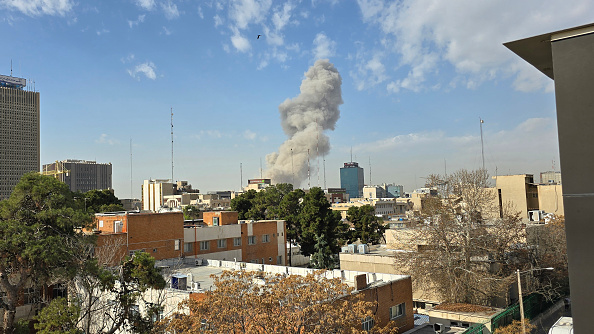
Nada AlGarhy, 30, said she and her husband had been at the Waldorf Astoria hotel on Dubai's luxury Palm development for Iftar, the evening meal during the fasting month of Ramadan, when they heard a loud explosion.
Bahrain said the service centre of the US Fifth Fleet - base for American naval forces in the region - had been subjected to a missile attack. Video footage showed a thick grey plume of smoke rising from near the island state's coastline.
Qatar said it had downed all missiles targeting the country and that it had a right to respond. Kuwait confirmed a missile attack on a US military base there.


