

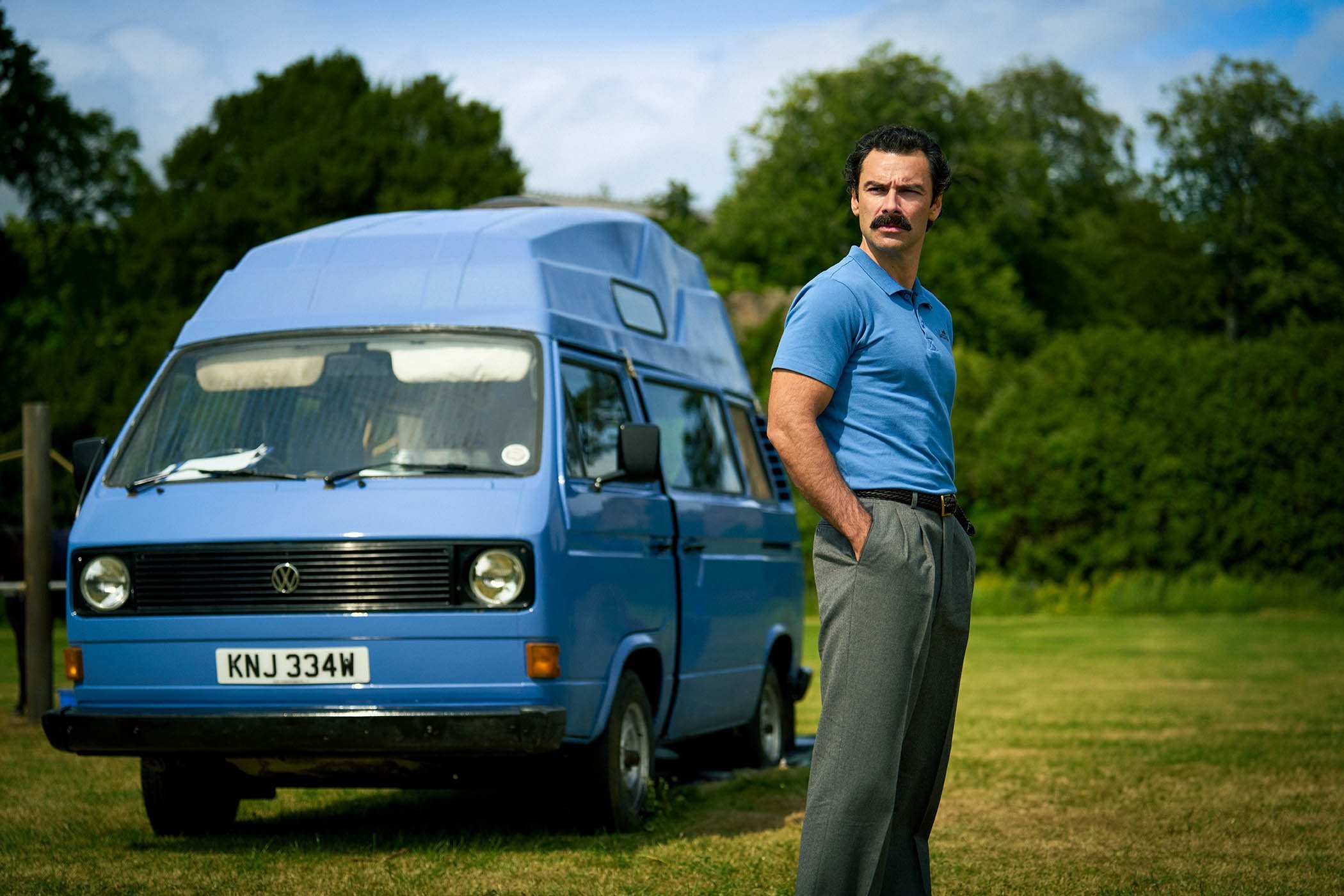
The 42-year-old Irish actor Aidan Turner remembers exactly where he was when the phone rang: in Waitrose with his partner, the American actor Caitlin FitzGerald, packing up the shopping. The couple’s 4-year-old son was mucking around, making a nuisance of himself.
"So I got the call," Turner recalled recently, "and my wife’s looking at me going, ‘The f..... is taking the phone call! He’s actually picking up!’."
He briefly giggled.
"Of course, it wouldn’t have mattered if I’d called back 10 minutes later, but I just had that feeling: ‘I should probably get this one’."
The call was from the National Theatre, offering him the part of Vicomte de Valmont in a new production of Les Liaisons Dangereuses, Christopher Hampton’s adaptation of the fire-cracker 1782 epistolary novel.
Valmont was a role made famous first by Alan Rickman for the RSC in 1985, and then by John Malkovich, three years later, in the film adaptation, Dangerous Liaisons. Turner studied the play at drama school.
"It was one of those full-circle moments," he told me.
"Some parts you outgrow. Like, ‘Ah, s..., Romeo’s gone. Maybe Hamlet? Now that’s gone, too.’ Or whatever the part was that you had your eyes on as an actor. Like, ‘S..., I was doing some f...... television series in Budapest — and now I’m too old’."
The actor and I were meeting in early January in a deserted hotel bar in Bristol, where he had spent the past 10 months shooting the second series of Rivals, Disney+’s raucous adaptation of the Jilly Cooper book, and the surprise hit television series of 2024.
Turner became very well known for leading Rivals, as Declan O’Hara, a fierce principled TV interviewer who was in many ways the moral heart of a salacious show. No naked tennis for Declan.
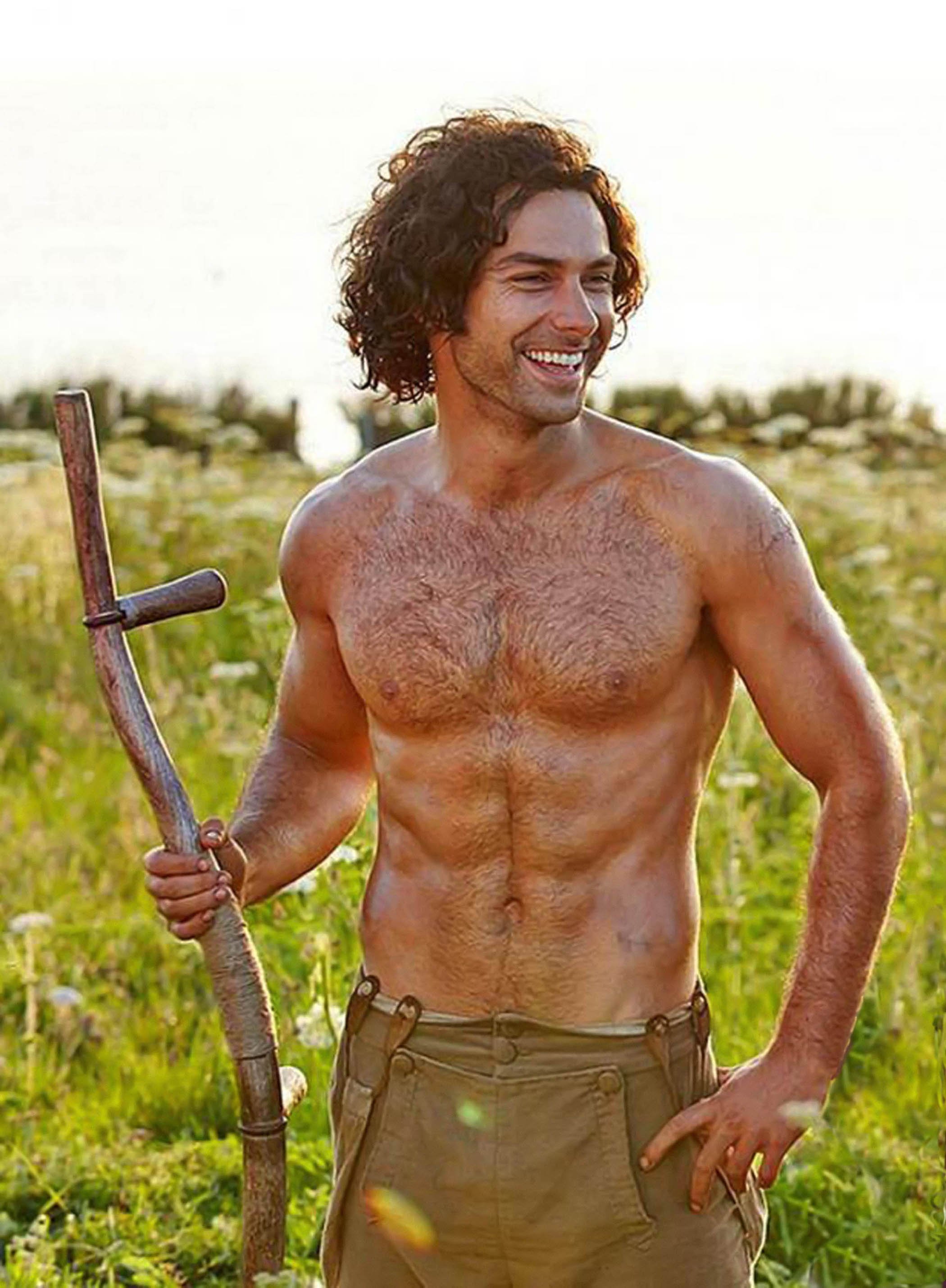
Before that he was very well known for playing Ross Poldark, a brooding, gruffly physical, former army captain in charge of an 18th-century tin mine in Cornwall, who would every now and then complete a spot of light farm work with his top off. Turner played Poldark for five seasons during his 20s and 30s, a period when he became both a cult heartthrob and a pop-culture phenomenon. For a few years from 2015, he was inescapable. At one point he became the 6/4 bookies’ favourite to succeed Daniel Craig as James Bond.
Poldark was, in certain horny ways, a natural precursor to Rivals, which also trades in lust and arousal, but which has better shown Turner to be both a versatile and gamely talented actor. He remains powerfully, unmistakably handsome, even with the broom brush of a moustache his Rivals role demands, and which was on full show when we met. But he is also older now, and with his ageing has come a kind of epiphany.
"I welcome it, really," he said, of reaching his 40s.
"A lot of my career, my early career, was based on how I look. And for a long time that was frustrating. Like, ‘God, is this really all I’m being hired for?’."
Valmont is an example of the sort of complex hot-ticket role for which Turner might have been previously overlooked. As played by Rickman and Malkovich, he is an Olympic-level playboy and a cad, an aristocrat in 18th-century France killing time by seducing and ruining woman until his inheritance arrives. He is spurred on in his sport by the Marquise de Merteuil, an equally immoral libertine, played in the 1988 film by Glenn Close and in the 2026 production by Lesley Manville.
Manville, a powerhouse of stage and screen, is clearly excited about making mischief with Turner.
"Whenever I go into the rehearsal room Aidan is there, even before me, and I get there early," Manville told me.
"He is bold — there is no ego, I think — and he is inventive, and he’s got a sharp creative mind, and he’s up for it. He has not left anything at home. He brings it all, everything, so I am full of admiration for him."
Turner, meanwhile, cannot wait to play unscrupulous and sadistic.
"If you’re a romantic lead ... " he said. "Well, they tend to be the less interesting parts."
He has been looking more recently for "well-rounded, maybe sinister roles. An Iago kind of guy."
While he was playing Poldark, more than a few viewers approached him to say, "Oh, we’re more of a George Warleggan fan." Warleggan was Poldark’s nemesis.
"He was sometimes good, sometimes bad," Turner said. "A manipulator. Machiavellian."
He smiled, "I’m not 25 any more. I won’t ever look like that again. And I’m not 30, holding a scythe in the field. In my 40s, my body doesn’t look like it did, and I don’t want it to." He added, "And as soon as I let that go, strangely enough, the more interesting roles came along."
Before Turner was an actor, before he was a leading man and a potential 007, he was a dancer, a good one. He grew up in the suburbs of Dublin and spent his childhood on sprung floors, specialising in ballroom and Latin American.
He was 6 when he started. At 16, he won the couples All-Ireland Ballroom Championships, but soon after, Turner’s partner suffered an injury, and he struggled to graduate from the "youth" classification up to the "amateur" one.
"Suddenly, from getting to the last couple of 100 in Blackpool as a youth, now there are thousands of dancers you can’t beat," he recalled.
Turner, as an actor, has tried to develop a script that would allow him to showcase his prowess at the quick step. But again he has been forced recently to acknowledge that certain ships have sailed — and he’s OK with that.
"I’m too old to play a dancer who could compete, that dream has been shattered," he said.
"I had these notions in my late 20s that I could do [a film about] the world championships at Blackpool and be this dance champion, kind of thing." He laughed, ruefully.
"Now I have aspirations to play his teacher."
At 18, looking to fill "a void", Turner found himself walking past the Gaiety School of Acting, in Dublin’s Temple Bar. In many ways, he wasn’t an obvious candidate to join a prestigious, two-year course whose alumni includes Colin Farrell and Olivia Wilde. Turner’s father was an electrician. His mother was an accountant. No-one in his family had a history of performing. The only play he’d ever seen at that point was a production of Roald Dahl’s The Witches, which he went to for a friend’s 14th birthday.
"I’ve often felt like I wish I had somebody else’s story," he told me.
"With other people, it’s almost like a vocation. Even before they come to drama school. They’ve seen all these plays. Their parents are actors. The first gift they ever got was a puppet set for their birthday and they used to write plays. And f..., damn, I never had any of that stuff. For years, I felt a phoney and a fake. I didn’t know how to talk about it."
Still, even as an outsider, Turner experienced immediate success.
In an early role, he was one of the leads in the cult BBC Three series Being Human, in which he played a vampire living in a flatshare with supernatural housemates. From this, he was cast as a dwarf by Peter Jackson in the Hobbit trilogy, and relocated to New Zealand for a couple of years. But it was Poldark, adapted by Debbie Horsfield from the Winston Graham novels, that proved to be life- and career-changing. One scene — the one he has already mentioned, in which he appears topless, with a scythe — was voted best television moment of the year in a 2015 Radio Times poll.
The Poldark audience skewed mostly female, and its viewers were often characterised as passionate if not literally aroused. Some critics huffed a bit, but they did near-unanimously hail its appeal. (Of the first series, the Guardian wrote: "Rugged and gorgeous — and that’s not just the coastline.")
"It wasn’t necessarily groundbreaking television," Turner said, but "it didn’t try to be."
He went on, "There was comfort in it. And with that comfort I learned very quickly that we would be doing a lot of it."
The success of Poldark wasn’t altogether helpful for diversifying Turner’s career: for a while he was swamped with offers of period dramas and little else.
"It’s the price you pay for being in a hit, I suppose," he said.
"Casting directors look at you and go, ‘Just get him to do the same s...,’ you know? It’s the popular character they want, they don’t want the actor behind it. And it can take its toll."
The second series of Rivals returns in May. On set, it turns out, there was stiff competition over facial hair.
"I’ve always been slightly jealous that he’s got a better ’tache than me," Danny Dyer, who plays tech entrepreneur Freddie Jones, told me recently.
"And I had a f...... good ’tache. His one just sits on his boat a little bit better. We presented a Bafta award and we both had moustaches and black tie. I said: ‘It looks like a before and after picture’."
Moustaches weren’t the only area where things got heated on the Rivals shoot: on days when they finished early, Turner, Dyer and Alex Hassell, who plays Rupert Campbell-Black, would retreat to a nearby pool hall for a game and a couple of shandies. Turner takes the sport pretty seriously.
"They were just laughing at me," he told me.
"I show up with a carbon-fibre cue and a glove, special chalk that takes weeks to arrive, that costs a fortune, and then I get my arse kicked sometimes by some of the guys who never play, who just pick up some s..... cue and beat me."
Dyer recalled the matches slightly differently.
"Now, I’ve never played pool with a man that’s got a f...... pool glove," he said.
"When a geezer pulls a glove out, you think, ‘You better be f...... good.’ And he is. I’m a good player, but I thought, ‘F...... hell, I stand no chance against this f.....’. He could probably play professionally, to be fair."
Details about the new instalment of Rivals are scant: there will be 12 episodes, released in two batches of six, and some additions to the cast, notably Rupert Everett and Hayley Atwell. Turner will only say: "It feels bigger and fuller". Dyer added: "It’s going to rock people’s worlds".
Turner is clearly proud of it, and also more broadly with how his career is shaking out. "I’m doing shows now that I would watch myself," he told me. "Rivals is a show I’d watch. Les Liaisons Dangereuses is a play I’d go and see. These aren’t just roles I’ve found myself in because the offer came along."
When the run at the National finishes in June, Turner has no idea what he will do next. In the past that might have scared him but, as we wrapped our second conversation, he sounded very much at peace with the idea. He’s never made a family film, or really anything that he could show his son, and he likes the thought of trying that. Or he may just trust the universe and see where that takes him.
"In the space of a Waitrose shop, you can get a phone call that completely changes the next six months, year, 18 months of your life," he said. "And I’ve always found that really soothing, actually. You don’t need to put a ton of work in to keep this ball rolling." — The Observer


