
PHOTO
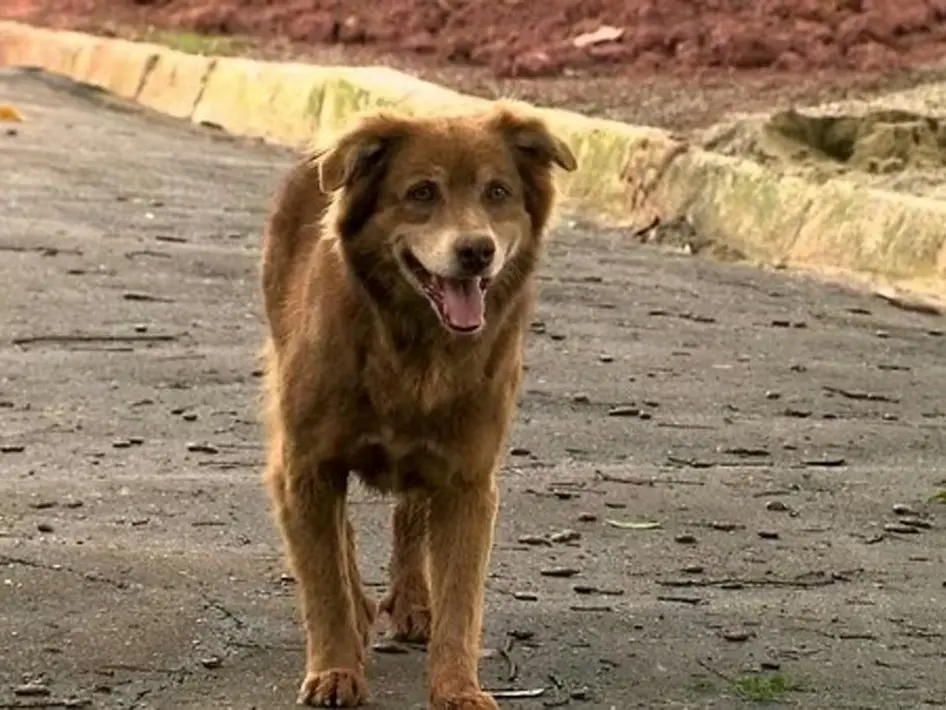
Josh Billings, a contemporary of Mark Twain, once said, ‘‘A dog is the only thing on earth that loves you more than he loves himself.’’
Last week the state of Sao Paulo in Brazil passed a new law. It allows dogs to be buried in the same grave as their owners.
The law is named after a devoted dog called Bob whose owner died 15 years ago.
Bob refused to leave his side and spent the next 11 years living in the cemetery next to the grave.
Initially, the family of the deceased were called to remove Bob. They tried to do so but it did not last. Bob kept going back to the cemetery and returning to the grave.
In time, the cemetery staff recognised that Bob was not going to be parted from his owner. They allowed him to stay, adopted him, and gave him food and water. He became part of cemetery life.
Bob found an active role in cemetery rituals. He understood that funerals are a time of grief.
He attended graveside gatherings with a ball in his mouth. He sought to make friends with any children — or others — who might want to receive support from a friendly dog.
He became known as Bob Coveiro, or ‘‘Gravedigger Bob’’ (coveiro means ‘‘gravedigger’’ in Brazilian Portuguese).
When Bob died five years ago, he was buried next to his owner even though Brazilian law forbade this.
Fortunately, public feeling was on Bob’s side. He had such strong support that the city council decided to make an exception to the regulations.
Five years later the law has now been changed. Dogs can be lawfully buried alongside their owners.
Throughout history, the emotional bond between owner and dog has been appreciated as deeply meaningful. In the Greco-Roman world, dogs were sometimes buried with headstones that included tributes to their good character and acknowledged them as part of the family.
A moving scene in ancient literature is when Odysseus returns to his home to Ithaca after 20 years away.
Odysseus is in disguise. He knows he is likely to meet a hostile reception from the suitors who want to marry his wife Penelope and take his place.
Nobody recognises him until he sees his old dog Argos outside the palace.
Odysseus had trained Argos as a hunting dog before he left for Troy. Argos had excelled at hunting but by the time Odysseus returns Argos is weak and near death. He has been neglected and mistreated.
But when Argos senses Odysseus he lifts his ears and wags his tail in greeting. Odysseus is moved to tears at this.
However, breaking his disguise would put his life at risk, so he continues into the palace.
Dogs also feature in the biblical world. Many of these passages refer to dogs in negative ways. Describing a person as like a dog seems to have been an insult.
However, there is also recognition that dogs served as hunters, and guards, and sheep dogs. Given the affection that some Romans had for dogs it is likely that some dogs in the biblical times were valued and appreciated as companions and were kept as pets.
We don’t know whether Jesus ever had a dog. There is no explicit evidence one way or the other.
No dogs are listed amongst the followers of Jesus. There is no account in the Gospels of Jesus and a dog that matches Book 17 of The Odyssey.
However, textual silence is not definitive evidence. A writer might take dogs for granted as part of the landscape and not mention them explicitly.
Dogs were not ritually unclean and could be very useful for a group of travellers. They would offer company and provide protection against other dogs, and anyone else who might threaten harm to the group.
It is possible that Jesus and his disciples had one or more dogs that accompanied the group on their travels in Galilee. Dogs might have been particularly welcome on the long journey to Jerusalem.
If a dog accompanied Jesus and the disciples on their travels, it is intriguing to think about what a dog would have made of it all.
It would probably have developed the sort of bond that Bob and Argos had with their owners, never complaining, and serving as a faithful follower to the end.
- David Tombs is Howard Paterson Professor of Theology and Public Issues at the University of Otago.