
PHOTO
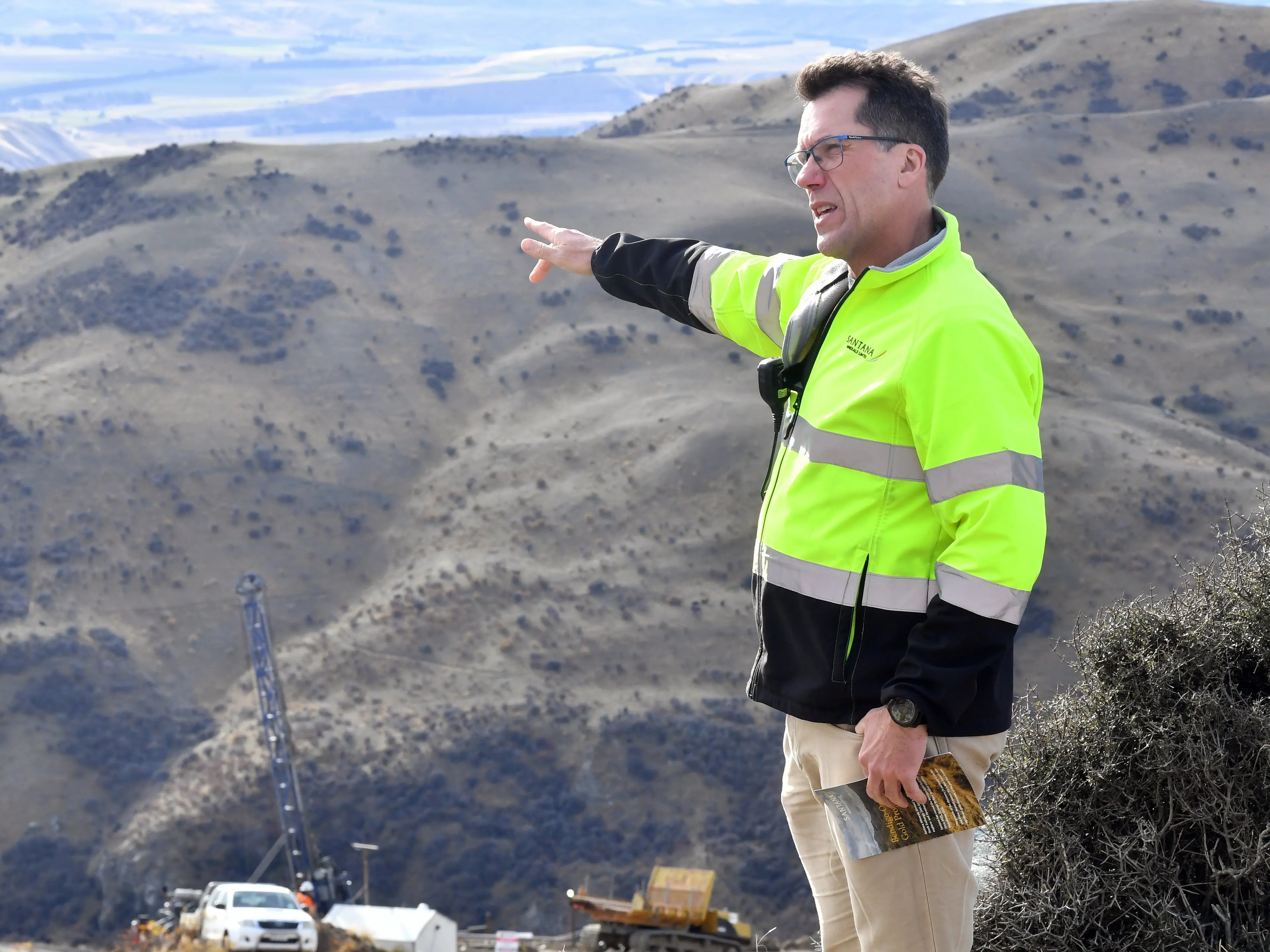
The loudest voices against the Bendigo Ophir Gold Project have a few things in common: they haven’t been on site, they haven’t read the 9400-page, $8 million evidential application and they’re more than happy to throw around words like "toxic sludge" and "tailings dam" as if repetition equals truth.
The two highly vocal knights of the realm, Sir Ian Taylor and Sir Sam Neill, have been invited to visit.
One has quietly ignored us (or our email is in his spam folder) while the other is yet to confirm dates.
Both carry on as if they’re the only ones across the detail, leaning on loaded terms such as "irreversible" and "catastrophic".
In an era where AI can verify claims in seconds, the hard facts are hardly difficult to find, if accuracy is the objective.
Meanwhile, across Central Otago, thousands of locals, the people actually building local businesses, raising families and staking their future here, are starting to push back.
You wouldn’t know it from the mainstream media coverage, which seems oddly uninterested in that part of the story.
Maybe that’s because they haven’t read the application either.
This piece is a fact check for anyone still claiming that the Bendigo Ophir goldmine will send polluted water roaring down the hills wiping out everything in its path, that all mine tailings are "toxic", and that a modern tailings storage facility is simply a "dam" full of poison.
Understanding the fundamentals — arsenic, cyanide, water, tailings — and suddenly the noise is a lot less convincing.
Arsenic: it’s in the rock, not in a truck
Arsenic is already in the ground. Mining doesn’t add it.
It is in the Otago schist, the same rock that makes up the Dunstan Ranges and sits under farms, vineyards and towns across Central Otago.
Think of it like salt in seawater: it’s there whether anyone is mining or not.
Gold often travels with arsenopyrite; geologists track arsenic because it signals where gold could be.
At Bendigo-Ophir, some ore carries up to 1% arsenic within the mineral.
Grinding frees the gold.
While most arsenic stays locked in place; the small soluble fraction is captured and chemically turned back into a long-term, stable solid before entering the tailings facility.
Legacy hard-rock mining left arsenic dispersed through local gullies and streams.
Routine and regular sampling of historic workings records levels above our proposed 0.042ppm surface-water threshold.
Modern practice flips that script: identify arsenic early, stabilise it and keep it contained.
Independent modelling shows the passive and active treatment systems reduce levels to below statutory standards before any water leaves site.
Regulations require mines to measure, monitor and manage naturally occurring elements like arsenic in a controlled way.
Other activities on these same rocks have never had to look for it, let alone manage it.
Santana’s baseline testing didn’t uncover anything exotic; think of it like layers of history written into the soil.
Untouched hills average about 20ppm of arsenic.
Ground that the old hard-rock miners worked trends closer to 100ppm-1000ppm.
In some locations, soils naturally formed over the millennia from this mineralised schist run at 1000+ppm.
A legacy of the landscape.
Those numbers sound dramatic until you understand and realise they have sat across farms, vineyards and waterways for decades without any public health crisis.
The proposed treatment systems at Shepherds Creek will treat any residual levels of arsenic and other elements to levels below the safe limits.
Against the scale of the Clutha catchment, Lake Dunstan’s small streams mean any traces will be diluted to undetectable levels.
And the mining process itself?
Where arsenic appears in waste rock or soils, it is tested and buried deep within engineered landforms, compacted to keep out air and water, the conditions that drive weathering.
Even topsoil with higher natural levels is handled separately, managed to prevent dust or sediment and returned during rehabilitation rather than spread across the landscape.
And the vineyards?
Dust control is standard practice: water trucks, water sprays, speed limits and early rehab of soils to stabilise sediment.
Factor in the prevailing winds moving away from vineyard blocks and the idea of arsenic settling on a pinot tasting-room is tittle-tattle, not reality.
Cyanide: controlled, treated, below drinking-water limits
The word "cyanide" tends to appear where the technical understanding ends.
We are talking about the chemical compound sodium cyanide; a tightly controlled industrial reagent used globally in many industrial processes, including to recover gold.
About 400g per tonne of ore, roughly a coffee mug spread across a carload of rock.
Before anything reaches the tailings facility, it runs through a dedicated destruction circuit, cutting cyanide to below 50ppm, the strict limit for discharge.
Test work shows the same process could reduce levels to about 0.5ppm, with further optimisation under way.
Despite the noise online, cyanide doesn’t linger.
Exposed to light and air, it breaks down naturally to the two non-toxic component elements, carbon and nitrogen, in days, not years.
While the "toxic sludge" posts make for catchy campaigns, they skip the chemical reality entirely.
What a tailings facility actually is (and is not)
The phrase "tailings dam" still gets thrown around like it’s the Clyde Dam waiting to fail.
It isn’t.
A modern tailings storage facility (TSF) is mostly settled, silt-like material, a future landform — not a lake.
Only a shallow layer of water sits on top, and it’s recycled back through the plant.
Would you drink this water?
No, but you wouldn’t drink any water immediately downstream from a septic discharge field either.
This water sits within safe limits within the TSF and is recycled back through the plant, which again, is at odds with the catastrophe script.
The TSF is designed and built with drains to promote collection of any seepage and returned to the process. Water is monitored continuously.
The final TSF footprint is about 65ha — think a large Central Otago vineyard block, or golf course — and it is engineered not to fail.
It is designed and built to New Zealand and international standards and stress-tested against 1 in 10,000-year earthquakes, extreme storms and is independently certified.
This TSF isn’t just compliant, it’s overbuilt.
A 1km downstream rock buttress, made from overburden rock removed during mining, reinforces the structure well beyond the standards.
It is monitored and regulated from day one to closure and beyond. We pay a bond — another myth busted and another guardrail against the "walk away and hope" narrative.
Tailings are shaped, capped with rock and soil and planted.
Closure turns tailings into terrain, not a leftover.
Facts over drama
Here’s the reality.
Arsenic is natural geology and soil chemistry; historic mining sometimes liberated it and spread it around, modern mining is built to stabilise it and lock it down safe, forever.
Cyanide is used in measured doses and treated to below safe limits.
A tailings storage facility after closure is a solid landform designed to modern standards and built to withstand.
What is still missing from the debate is our community itself.
In the past weeks, an online group supporting the mine has topped 5500.
Many small business owners, families and young people are weighing up what this project could mean for their future.
They are looking for jobs, stability and a reason to come home.
Contractors are lining up, CVs are landing daily and, on the ground, the conversation sounds less like conflict and more like opportunity — a shift that has yet to hit the national narrative.
If the conversation is going to move forward, let’s start with the facts.
As the ODT editorial said last week, let’s trust the process and "let the panel do its work".
— Damian Spring is the chief executive of Santana Minerals.