
PHOTO
About 10 years ago, I stood in our Bannockburn holiday home watching the waters of Lake Dunstan being whipped to a frenzy during the tail end of a huge westerly gale.
Then quite abruptly a wall of spray lifted off the width of the lake a bit north of Pisa Moorings. In about 20 seconds, the entire view across the lake and beyond was obscured by spray, lifting almost as high as the tops at Bendigo.
The gale then blew the spray away over the Dunstan Range and within about five minutes, it had all dispersed.
I believe such events happen regularly. On our property we have just found a healthy conifer with its 125mm trunk broken or you might ask the Bannockburn locals in Hall Rd about damage to their properties from stones blown up from the diggings.
Climate scientists tell us such events are likely to be more frequent and more violent in future.
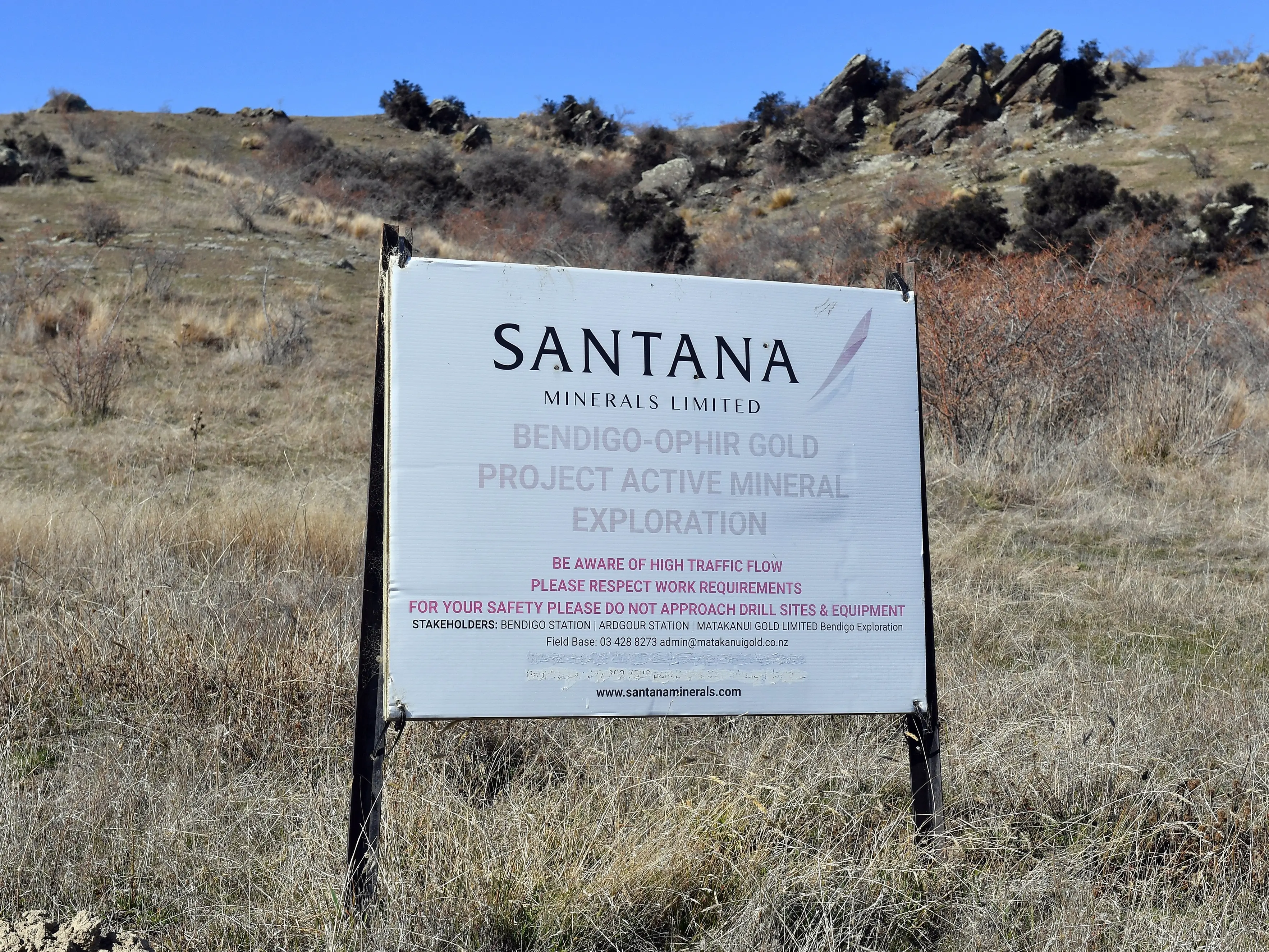
I simply ask, what is the wisdom of a gold mine at Bendigo when screaming gales can blow spray from the tailings pond and gritty tailings dust, laden with arsenic and cyanide across the Central Otago landscape?
Just consider what happens when such an event spreads this toxic soup over an entire vineyard. The vines might survive but their product might never again be marketable.
And how can a landowner remediate his property? Simply hosing down buildings and vines concentrates the toxins in the land and inevitably into Otago waterways. The damage done will be severe.
A good westerly is likely to spread such contamination as far as Lauder, Omakau, Ophir and Chatto Creek. Or a good southerly could do the same for Tarras and the entire Ardgour Valley.
Water is critical to all primary production in Central Otago. Contamination from any event, wind, seismic or seepage will spread across the catchment into ponds and water races and then into the ground which will affect bores feeding fresh water to people living in the area.
Santana has no plans to line their proposed tailings pond to try to prevent seepage. The dam forming the pond has to be intact forever, a situation that is simply not possible given seismic and flooding events. Recall the Roxburgh downpour in November 2017 anyone?
And when the pond does leak or a good quake causes sloshing, its contents will seep or tumble all the way downhill into water races, the Lindis River and Lake Dunstan. What an enduring legacy for our citizens.
Then what happens when the mine closes? Do Santana propose to drain this pond (to where?) or just let it seep into the ground to contaminate our lands and groundwater?
Santana claims that seismic risks can be "mitigated". This is hardly able to be supported. After all, Christchurch was very severely damaged by a quake of "only" 6.2 magnitude.
Fault lines close to the proposed mine are in the running to cause damage and a rupture of our alpine fault is well overdue. Such events and their aftershocks are known to change whole landscapes.
Another shocker is that Santana has stated that they will not be paying any significant bond to assist remediation in case of adverse events. So, who pays for remediation (if that is even possible) or compensation? Will this fall on the taxpayer, just like the proposed $256 million to remediate the Stockton mine? Is this fair on any of us?
A fast-track consent for this project is appallingly undemocratic. I’m all for the Greens’ intentions to cancel all fast-track consents so local people and businesses can be party to considered consents processes and have a voice in the defence of their existing productive lands, homes and businesses.
We have been told recently that Otago is "leading the way" with a "rock star" economy. Let’s keep it that way.
Anyone who has experienced Central Otago loves the place. A huge and toxic mine and reputational damage for all Central Otago products are definitely not assets.
Some things are best left in the ground.
— Dunedin resident Terry Thomas regularly stays at his holiday home in Bannockburn.