The legacy of Robert (Robbie Burns) and the Rev Thomas Burns is to be found throughout the city of Dunedin and beyond.
When I embarked on a stage one English course many years ago, lectures were delivered in the centrally located Burns lecture theatre at the University of Otago. On our first day Prof Margaret Dalziel outlined with considerable clarity what studies lay ahead and what was expected of us. The attraction of the nearby student union cafe, however, would be for some an impediment to those expectations.
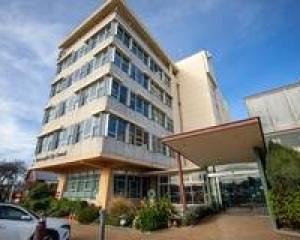
The Burns name has become entrenched in the history and culture of Dunedin as evidenced in street names and buildings including Burns St, Thomas Burns St, Burns House and Burns Hall. A Burns Night dinner has been celebrated by the Dunedin Burns Club since 1885. A Burns poetry competition takes place annually. An inaugural Robert Burns Memorial Lecture was given at the University of Otago in 2004. The Robert Burns Fellowship was established in 1958, its founder being the late Charles Brasch. This is regarded as the top literary fellowship in New Zealand and there have been some notable recipients over the years.
The "Burnses", other than being Scottish and related to each other, could not have been more contrasting personalities and characters. Their impact and influence, however, has not dimmed with the passage of time and continues to shine brightly.
The Rev Thomas Burns (1796-1871) was a formidable figure in the early settlement of Dunedin in his capacity as a religious leader and the original minister of the First Church of Otago. He was also the inaugural Chancellor of Otago University and founder of several schools. Robert "Robbie" Burns (1759-96) was his uncle.
Robbie Burns was a poet of no mean ability and heralded during his lifetime as Scotland’s national poet. He was from humble beginnings and in no way an establishment figure. His thinking and behaviour was at odds with conventional religious and social practices of the period.
He never lived in Dunedin or set foot in New Zealand. Yet he is immortalised in a large bronze statue in Dunedin’s upper Octagon. The dimensions are imposing with a large head resting on top staring steadfastly out, aloof from all of life’s daily toils. Appropriate, too, that the Dunedin Writers’ Walk traverses the surrounding footpath, brass plaques set in the brick pavement containing quotes about Dunedin from published writers.
Robbie Burns and Thomas Burns in their own ways both wished for a fairer society in which all could benefit. Robbie was something of a rebel and could closely identify with the struggles of ordinary people and the injustices they often experienced. He became famous internationally. His poem Auld Lang Syne was turned into one of the most enduring and powerful songs of all time. The early Scottish settlers arriving in Dunedin likewise were seeking a fresh start unencumbered by notions of social hierarchy and stratification. As, too, was the Free Church of Scotland with its Presbyterian ethos and emphasis on the importance of education for everyone. My Scottish great-grandfather was captain of the sailing ship Lyttelton which departed Glasgow in late 1878 on its maiden voyage to Port Chalmers, transporting passengers to a new but unknown future in this distant province and land. The journey took 82 days. More voyages were to follow.
It could be argued that the seeds for New Zealand’s growing sense of egalitarianism found fertile ground in the province of Otago and over future decades became increasingly cemented in the nation’s fabric. In my opinion the Burnses played a significant role in helping lay the foundations for this and ultimately in shaping political and social thinking for the better.
Given our local Super Rugby team is named The Highlanders it seems appropriate to conclude with a few lines from one of Robbie Burns’ poems, My Heart’s in the Highlands.
"Farewell to the Highlands, farewell to the North
The birth place of valour, the country of worth
Wherever I wander, wherever I rove
The hills of the Highlands forever I love."
- Joss Miller is a retired Dunedin lawyer.