
PHOTO
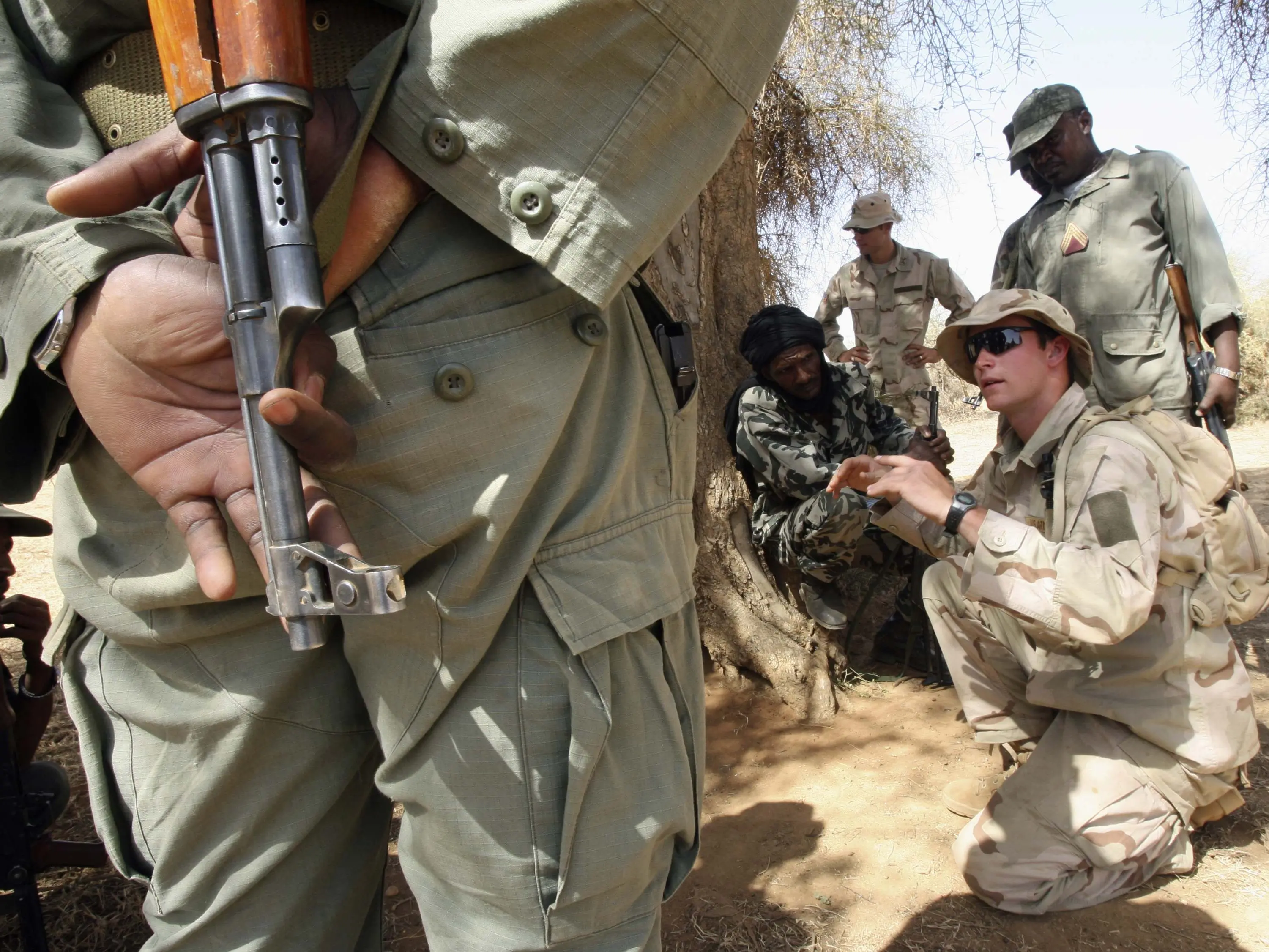
Almost 25 years after 9/11, only the rhetoric has changed, while the ‘‘War on Terror’’ continues unabated.
In 2016, United States President Donald Trump pledged to fix past foreign policy failures after entering the White House. He campaigned on ‘‘America First,’’ criticising Bush’s ‘‘endless wars’’ and rejecting nation-building and liberal internationalism.
Initially, Trump’s approach to global terrorism appeared to differ from Bush’s, being more open, confrontational, harsher, and nationalist.
The language used differed from Bush’s depiction of international terrorism, as shown by the frequent use of the term ‘‘radical Islamic terrorism’’. This language targets identity, civilisations, and borders, framing terrorism through these ideas and diverging from Bush’s articulation.
Despite the differences in rhetoric and political style, US counterterrorism policy remained largely unchanged. While Trump changed the language of counterterrorism, he did little to dismantle the system Bush created after 9/11.
The differences across American administrations under Bush and Trump were mostly symbolic, despite Trump’s different language on terrorism. Military strategies, institutions, and security assumptions post-9/11 largely remained consistent.
The US national security policy had radically changed after 9/11 under Bush. Instead of mainly being seen in terms of intelligence and criminal justice, terrorism came to be viewed as an act of war needing military force and extraordinary state power.
The ‘War on Terror’ broadened national security measures, leading to invasions in Afghanistan and Iraq, and increased surveillance powers under the PATRIOT Act. The Bush administration also justified pre-emptive strikes using the doctrine of preventive war.
The conflicts in Afghanistan and Iraq were viewed differently internationally. Afghanistan received broad international and UN support after 9/11, while Iraq faced major global scepticism and lacked clear UN Security Council authorisation.
The ‘‘war on terror’’ did not disappear once Bush left office. The US national security state became deeply embedded after the 9/11 attacks.
Although Trump may have discarded the language used by the Bush administration aimed at promoting liberal internationalism and democracy, he largely maintained and inherited the same counterterrorism mechanisms.
In Afghanistan, Iraq, Somalia, Syria, and Yemen, drone warfare expanded under Trump’s leadership. Counterterrorism operations, targeted killings, and airstrikes against Isis remained global, escalating despite Trump’s criticism of interventionism.
Executive security powers, expanded intelligence agencies and strengthened surveillance systems established after 9/11 were not dismantled. In certain areas, Trump even expanded operational flexibility for military commanders and drone strikes.
Political messaging may be altered by individual presidents, but deeply institutionalised security structures prove harder to change.
Nevertheless, rhetoric does have serious political consequences. Trump’s language framing of terrorism through the lens of religion and civilisation deepened political polarisation and shifted public threat perceptions.
US counterterrorism was framed by Bush as a defence of democracy and the US-led international order, while Trump justified it in terms of national self-interest, sovereignty and nationalism.
These differences were important internationally, as they affected America’s global image.
The striking contradiction in America’s counterterrorism strategy lies in its stubborn persistence. Bush and Trump’s policies didn’t just respond to a moment in history; they outlived it. So much so that the Bush II and Trump I administrations became virtually indistinguishable.
Indeed, the assumptions from the Bush presidency still shape American counterterrorism over two decades later after 9/11.
While the rhetoric shifted from US-led internationalism to ‘‘America First’’ nationalism, the power structures of the US national security have remained remarkably resilient.
■ Caitlin Fabiano is a student in the Master of International Studies programme at the University of Otago