
PHOTO

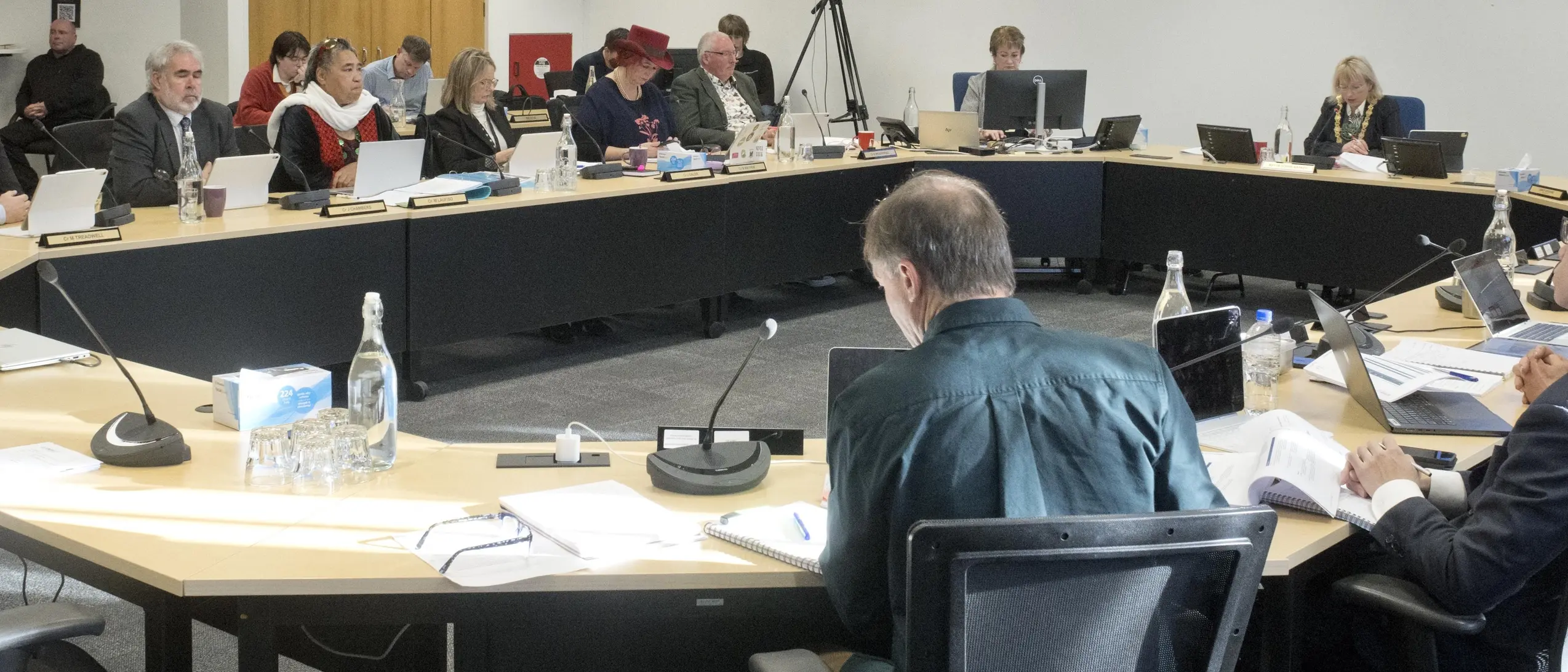
Recent weeks have seen considerable disagreement within the Dunedin City Council about what to do with South Dunedin.
However, the source of the conflict is a deeper matter: namely do the CEO and bureaucracy set the agenda for council meetings, or is this the prerogative of our elected representatives?
This is a matter of critical importance, because control of the agenda equates to control of the body and all of its powers and resources.
In a functioning democracy, the agenda of any sovereign elected assembly is very tightly held by the government for this very reason.
That government invariably holds its own democratic mandate to control the assembly’s agenda.
In New Zealand, the government is the Cabinet, which holds the democratic mandate via its capacity to command a majority in Parliament. The agenda it creates, and by which it controls Parliament and thus the nation, is formally and publicly expressed in the Speech from the Throne, which is delivered by the Governor-General at the commencement of the parliamentary session that will be governed by it.
The Cabinet has no equivalent whatsoever at local government level. The omission of this critical component of the democratic machinery largely explains why representative local government in this country is failing everywhere as unelected bureaucracies and their leaders extend their authority to fill this governance vacuum.
Taking control of council agendas is an important part of this creeping process. The affairs of local government are outlined in two key pieces of legislation: the Local Government Act 2002, and the Local Government Official Information and Meetings Act 1987.
While both define how local government meetings should be run, neither specifies who has their hands on the true lever of power in any such meeting — control of the agenda itself.
It would be a reasonable citizen’s assumption, based upon global democratic precedent, that power over the Dunedin City Council’s agenda would rest with the elected representatives.
However, this power is not protected by quality statute and alert guardians of the public interest.
Consequently, we find this section quietly buried within Dunedin City Council’s standing orders: ‘‘9.1 Preparation of the agenda: It is the chief executive’s responsibility to prepare an agenda for each meeting listing and attaching information on the items of business to be brought before the meeting so far as is known, including the names of the relevant members. When preparing business items for an agenda the chief executive should consult the chairperson’’.
So, there you have it. At some point, your elected representatives have formally handed over their sovereign capacity to govern this city to their chief executive officer.
Note the CEO is only required to consult with the chairpersons of the meetings: the mayor/council is treated as nothing more important than just another chairperson/meeting.
‘‘Consult’’ means that the CEO is not required to incorporate any chairperson’s advice into the meeting’s agenda. Consequently, if the CEO does not want a matter to be discussed at any council meeting then it will not be discussed, and vice-versa.
Therefore, the Dunedin City Council when it is formally in session represents the appearance, but not the reality, of the safe exercise of any democratic mandate. Its smiling reassurance is thus as dangerous to the citizens of Dunedin as a rotten rope is to a mountain climber.
The dispute over the flood remediation in South Dunedin must be considered in this light. The three, now four, alternatives that were finally revealed to the shocked and soon-to-be-evicted homeowners involved are merely different shades of lipstick.
This proposal’s development can hardly be described as democracy in action, and some councillors are actively resisting its inclusion on the agenda in its current form.
However, as the ODT reported on June 26: the DCC’s chief executive said the matter would remain on the agenda.
Unfortunately, the locally developed standing orders to which the council is subject explicitly equip the CEO with the governing power to enforce their will upon both the council and the community that they represent.
As the CEO’s powers are locally assumed rather than backed by statute, then a local solution is possible if voting citizens can further increase this group to a majority (plus mayor) at the next election.
The elected majority could then promptly amend the standing orders, so that ultimate responsibility for the council’s agenda would return to where it rightly belongs, with the elected mayor.
The mayor could then consult with CEO if and when they feel like it.
The amended Section 9.1 would read as below — Given enough citizens’ votes, one then only needs to change five words to save democracy:
9.1 Preparation of the agenda: It is the Mayor/Chair’s responsibility to prepare an agenda for each meeting listing and attaching information on the items of business to be brought before the meeting so far as is known, including the names of the relevant members. When preparing business items for an agenda the Mayor/Chair should consult the CEO.’’
• Dr Robert Hamlin is a senior lecturer at the University of Otago School of Business. He is commenting in a personal capacity.