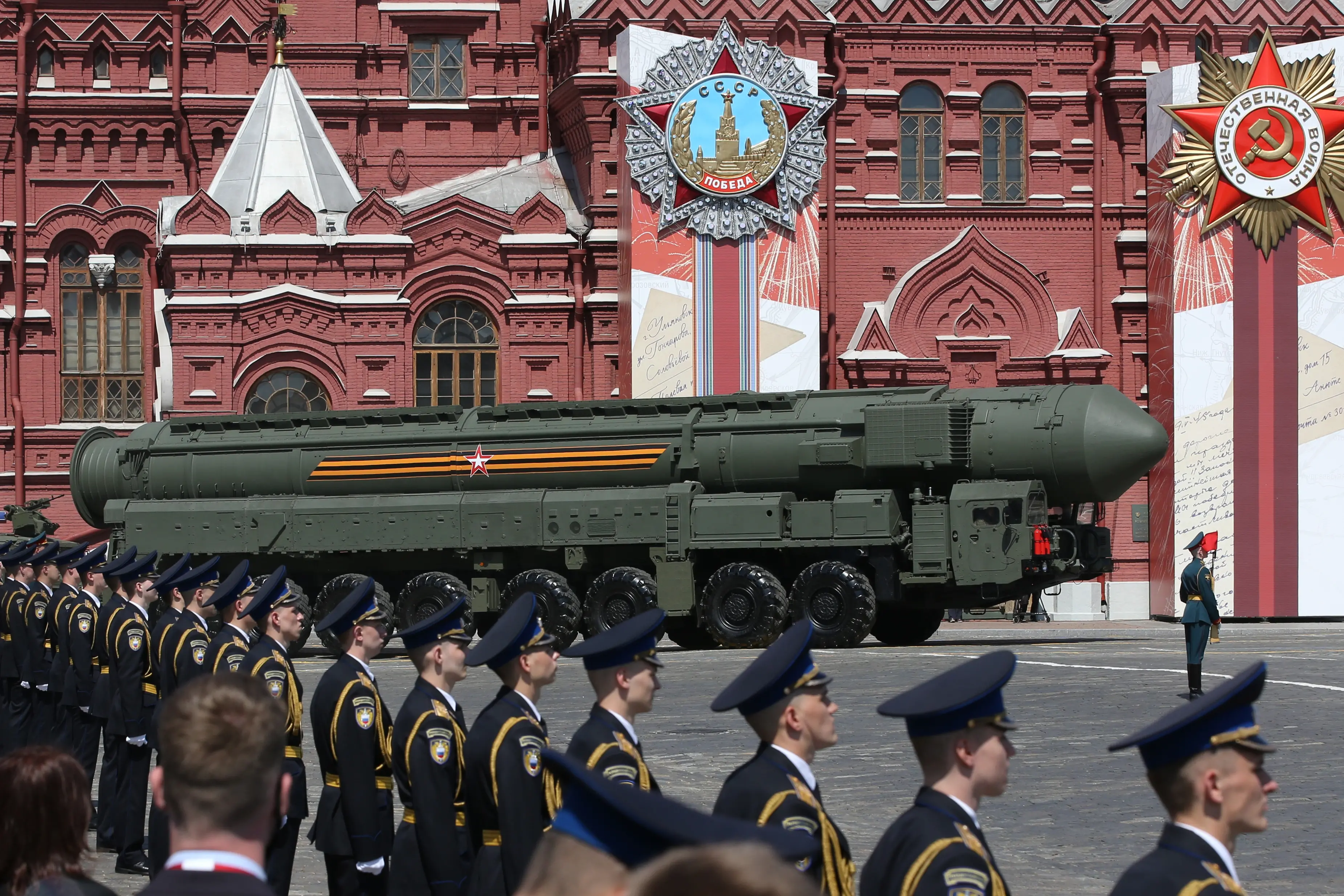
There is a lot of performative militarism in Russia at the moment, which is unsurprising given that the Russian invasion of Ukraine is still stalled halfway through the fifth year of the war. The style is more Mussolini than Hitler, however, and the effect is more tacky than terrifying. For example, pro-war comedian Mikhail Galustyan recently pitched his idea for a reality TV show called Battle of the Drones to President Vladimir Putin at the Everything for Victory! forum in Moscow. School kids, veterans and celebrities would play at being drone pilots in the show, presumably killing fake Ukrainians. “This is an opportunity to explore the topic and make it understandable, engaging and popular,” said Galustyan, and Putin approved it on the spot. “Good luck,” he said. “Propaganda is an extremely useful thing.” In the country where the first Potemkin Village was built, it feels like a perfectly comfortable conversation. The original Potemkin villages, according to legend, were built by Russian statesman Grigoriy Potemkin to influence his former lover, Empress Catherine the Great. She was visiting newly conquered Crimea, and he had entire villages – or rather, wood and plaster facades of whole villages – built along a Crimean river to impress her. Each night, say some versions of the legend, the fake villages were dismantled and moved downstream to impress the empress again the following day. Potemkin probably just had some houses painted and repaired to fool Catherine, but it grew into legend because it resonated with something deep in the historical experience of the Russians. Which brings us, naturally enough, to the topic of Russia’s nuclear weapons, and to the fact that Putin warns the rest of the world several times a year that he has them and that, in certain circumstances, he would be willing to use them even in a first strike. Which circumstances? He doesn’t say, but the context suggests he is warning everybody that he might go crazy and go nuclear if the Russian front in Ukraine collapses and the Ukrainian army starts to retake the occupied parts of Ukraine. It’s the old ``madman strategy’’ revisited, but none the worse for wear. On the other hand, Putin may have a problem we are not aware of: the dependability of Russian nuclear weapons. It’s now 35 years since the collapse of the old Soviet Union, and standards of maintenance in most areas are far below what they were in the old days. Nuclear weapons take a lot of maintenance, and Russia faces a particular problem in this regard: the culture in the military, where for many years officers have been stealing and selling everything that isn’t nailed down. We have seen that at work even in the midst of the war against Ukraine, and some of the most commercially valuable technology is in the warheads of Russian nuclear weapons. Tritium, for example, needs to be replenished in H-bombs every few years, it’s untraceable, and it costs $30,000 a gram. The officer who controls that contract may have a very grand dacha. This does not mean that Moscow could not wage an all-out nuclear war (for a day or so, before everything is destroyed). At least a significant proportion of its 1800 strategic nuclear warheads would make it off the ground, and quite a lot of them would explode over some target (if not necessarily the one they were intended for). However, that’s not a war anybody in a responsible position intends to fight. The unreliability of these rockets and warheads, up to half of them over 30 years old, becomes a much bigger issue when you are using only one tactical warhead, to send a message. magine how embarrassing it would be if you launched your Doomsday bomb and it didn’t work. The reality is that every strategic nuclear force is a kind of Potemkin village. It is not really suitable for its original role (winning a war), but it’s quite useful for deterring other countries and also for making even the most rabidly radical governments act more responsibly. There was great anxiety when the Soviet Union tested its first atomic bomb in 1949, but nobody got hurt. Even more anxiety when China got its first bomb; no foreign war since Vietnam in 1979. Israel, check. South Africa, check: they even walked away from their bombs. India and Pakistan, check. North Korea, check. Going to war to stop a country from getting the bomb is so obviously stupid and counter-productive that one automatically assumes that it is only a pretext for war, not the real reason. Like the US-Israeli attack on Iran, for example. Gwynne Dyer is an independent London journalist.