
PHOTO
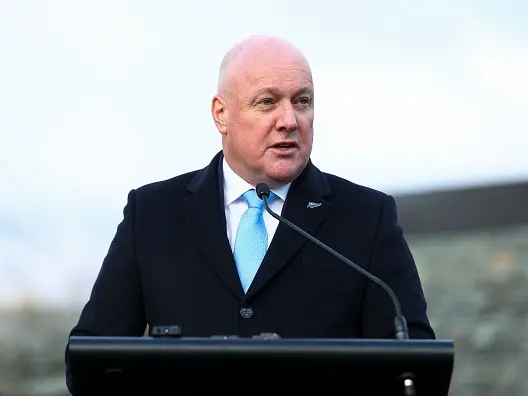
Prime Minister, I’m beginning to wonder who’s actually running the country.
This week, I was somehow included on an email chain sent by Don Brash to members of a group he founded, called Hobson’s Pledge.
Now, if being on the email list of a neo-liberal think tank came as a surprise to me, it was nothing compared to what was in the email.
It was quite literally a call to arms in which Brash directed attention to an ‘important’ release made by the group’s spokesperson, Eliott Ikilei. In it Ikilei made this astonishing claim.
‘We won. The government will remove the requirement for school boards to “give effect to the Treaty of Waitangi” (his emphasis not mine.)
Ikilei went on to make this a personal victory, claiming that Minister Erica Stanford was “Nationals wokest minister” but the campaign he had conducted, called “Stop Stanford’s Sneaky Sell-Out” had worked, and now her own government “was doing what we asked for.”
Prime Minister, these claims, made by a fringe minority, influencing a key government decision, surely rocks the very core of what a democracy is. And it is not the only example of undue influence from people we never voted for.
I had seen an earlier example of this in an email released under the OIA from one of your curriculum advisers, Professor Elizabeth Rata.
In it, she urged the removal of Section 9 of the Education and Training Amendment Bill (No 3) This is the clause recognising the Crown’s responsibility to give effect to Te Tiriti o Waitangi. Rata described Section 9 as the foundation for all other Treaty references in the Bill and she argued that its removal would pave the way for eliminating the rest of them.
She closed by noting that she was also writing to ACT and New Zealand First so that “the responsibility for the removal of the Treaty from the Education Bill should not be borne by the National Party alone.”
The change your government announced last week appeared to give her exactly what she had asked for, and it was welcomed, almost gleefully, by ACT, New Zealand First and Hobson’s Pledge.
But if that wasn’t enough, in his email, Don Brash decided to add a touch of philosophy. He actually quoted Mahatma Gandhi as his inspiration for this so-called “victory.”
Yes, Gandhi!
It’s hard to imagine a more staggering misread of history than that made by Brash. To claim Gandhi as an ally in the removal of Te Ao Māori from education isn’t just ironic, it’s offensive. To call the silencing of indigenous knowledge a “victory” in Gandhi’s name is to turn his philosophy inside out.
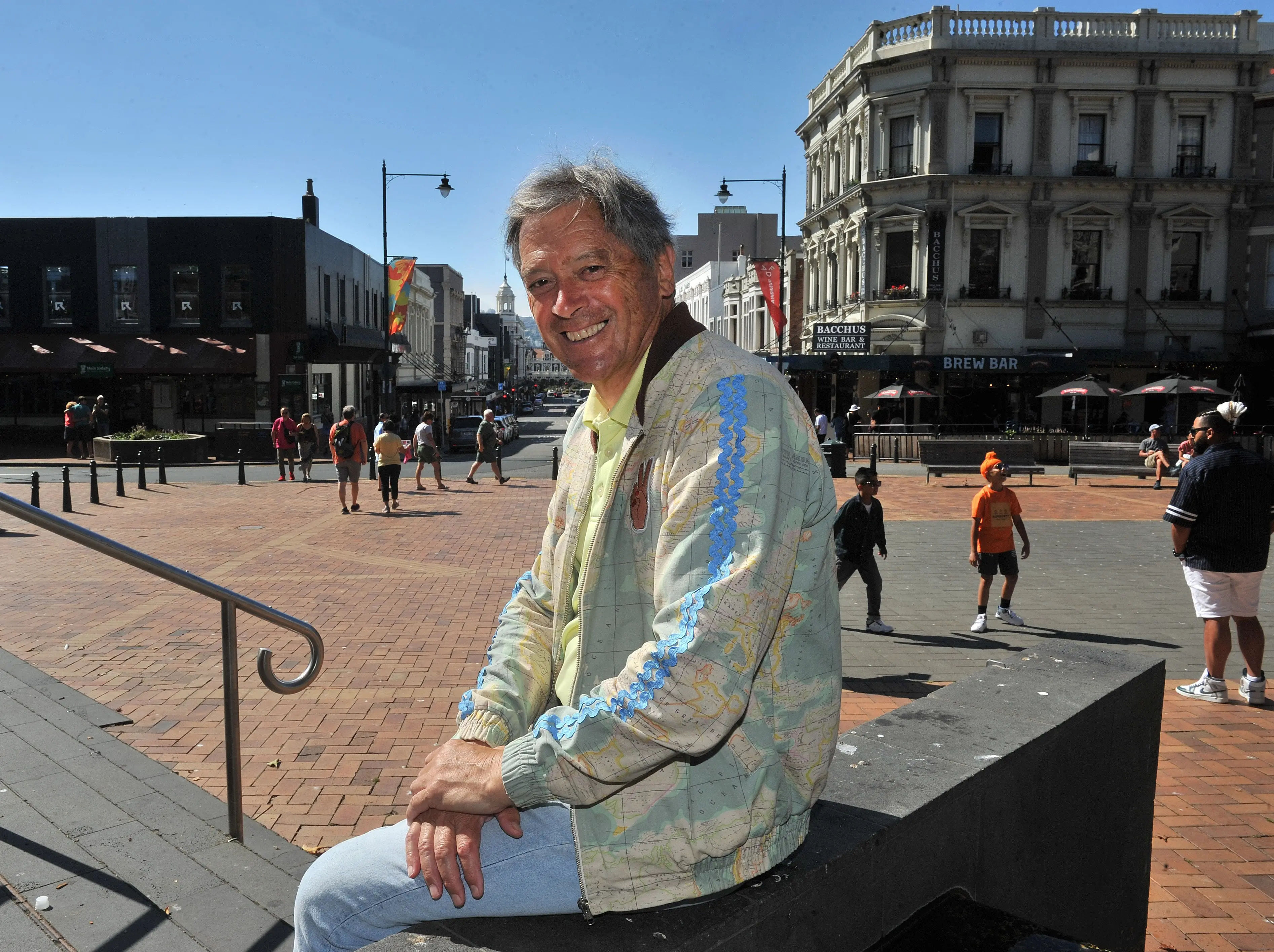
The truth is, if Gandhi were alive today, he’d be standing in the classroom shoulder to shoulder with Te Whiti o Rongomai and Tohu Kākahi to share the remarkable story of Parihaka. Parihaka, if you didn’t know it, is our own indigenous story of peaceful resistance that stands as a precursor to what would later become the better-known philosophies of satyagraha under Gandhi and civil disobedience under Martin Luther King Jr.
If we truly want our children to see how knowledge connects globally, we don’t need to erase Te Ao Māori from the classroom. We need to start there, because indigenous knowledge doesn’t close the world off - it opens it up.
For those of us outside government, it raises a simple question: whose version of education are we now building, and what do we mean by a “knowledge-rich” curriculum?
I agree entirely that education should be knowledge-rich, but only if we understand that knowledge is richer than what can be written, memorised, or tested. Knowledge didn’t begin with books; it began with people, with observation, story and imagination.
Today our tamariki are stepping into a world that’s more connected. Information moves at the speed of light; cultures and ideas cross borders in seconds. In that world, the real challenge isn’t access to knowledge - it’s knowing what to do with it.
So perhaps we should be asking ourselves this:
Now that machines can answer almost any question, shouldn’t we be teaching our tamariki, our children, how to ask better ones?
The future they’re stepping into won’t be shaped by how well they can memorise information, but by how deeply they can think, connect and create. The facts will always matter, but how those facts are used, questioned and re-imagined will matter more.
Which brings me to your Minister of Education, Erica Stanford.
She’s found herself in an almost impossible position. She’s been called the “woke minister” by those who want Te Ao Māori gone from the classroom, and a “racist” by those who believe she’s tearing down what’s left of it.
In my experience, when someone is being attacked from both sides, it usually means they’re standing somewhere near the middle, and often, that’s where the truth and the hardest work lies.
I believe her when she talks about equity. I believe she genuinely wants every child in Aotearoa to succeed, no matter their background.
And that’s where our paths might meet.
We’ve decided to take what we’ve learned over 35 years of leading technology innovation in sport and apply it to education. For decades, we’ve used data, design and storytelling to make complex ideas simple and engaging. Now, we’re bringing that same thinking to the classroom to help teachers do what they signed up to do: teach.
We call it He Waka - The Navigator’s Toolkit. Like its name, it’s about finding direction together, bringing teachers, students and technology into the same vessel, guided by shared purpose.
Our kaupapa is simple:
1. We will value teachers’ time.
2. We will inspire curiosity in our tamariki.
3. We will provide these resources, free, forever, to every teacher, parent and Board of Trustees in Aotearoa and across the Pacific.
There is a fourth, but it doesn’t need to be written down because it’s embedded in our kaupapa, in our wairua.
We will listen.
We don’t claim to be experts in education, but we do know about storytelling and the power of technology. We have built the waka, and we are now inviting others to join us on this exciting voyage of discovery.
You can access an example of the resources we are creating here at The Navigator’s Toolkit: Financial Capability Unit. I have chosen this example because Financial Capability will soon become compulsory in all primary and intermediate classes and we have built this in less than 10 weeks.
That includes all the videos, the downloadable resources and suggested activities. That’s what is possible when you combine the latest technologies with clever humans.
He Waka has been built for teachers. We now invite them on board so we can add – ‘with teachers.’
He Waka Eke Noa — we are all in this together.