
PHOTO
New Zealand is once again feeling the fallout of a geopolitical crisis.
With a de facto blockade of the Strait of Hormuz in place, oil prices soared past the $US90 ($NZ154) per barrel mark after New Zealand’s close of business on Friday.
Little sustained relief is in sight, particularly after Iran’s retaliatory strikes on the Gulf states continued.
The oil price spike and expected associated inflation will be a particular challenge for New Zealand Prime Minister Christopher Luxon, who had been keen to emphasise signs of economic recovery ahead of a general election to be held on November 7.
Despite being more than 14,000km away, New Zealand has long-standing links with the Middle East, especially in the Gulf region. Wellington has maintained an embassy in Riyadh, the capital of Saudi Arabia, since 1984. New Zealand’s embassy in Tehran is even older, having opened in 1975 as one of New Zealand’s first two diplomatic missions in the Middle East.
New Zealand’s embassy in Riyadh’s Diplomatic Quarter is located only a stone’s throw away from the US Embassy compound that was hit by an Iranian drone strike last week.
Since taking power in 2023, Luxon’s centre-right coalition government has sought to deepen relations with the six countries of the Gulf Co-operation Council, or GCC, made up of Bahrain, Kuwait, Oman, Qatar, Saudi Arabia and the United Arab Emirates (UAE).
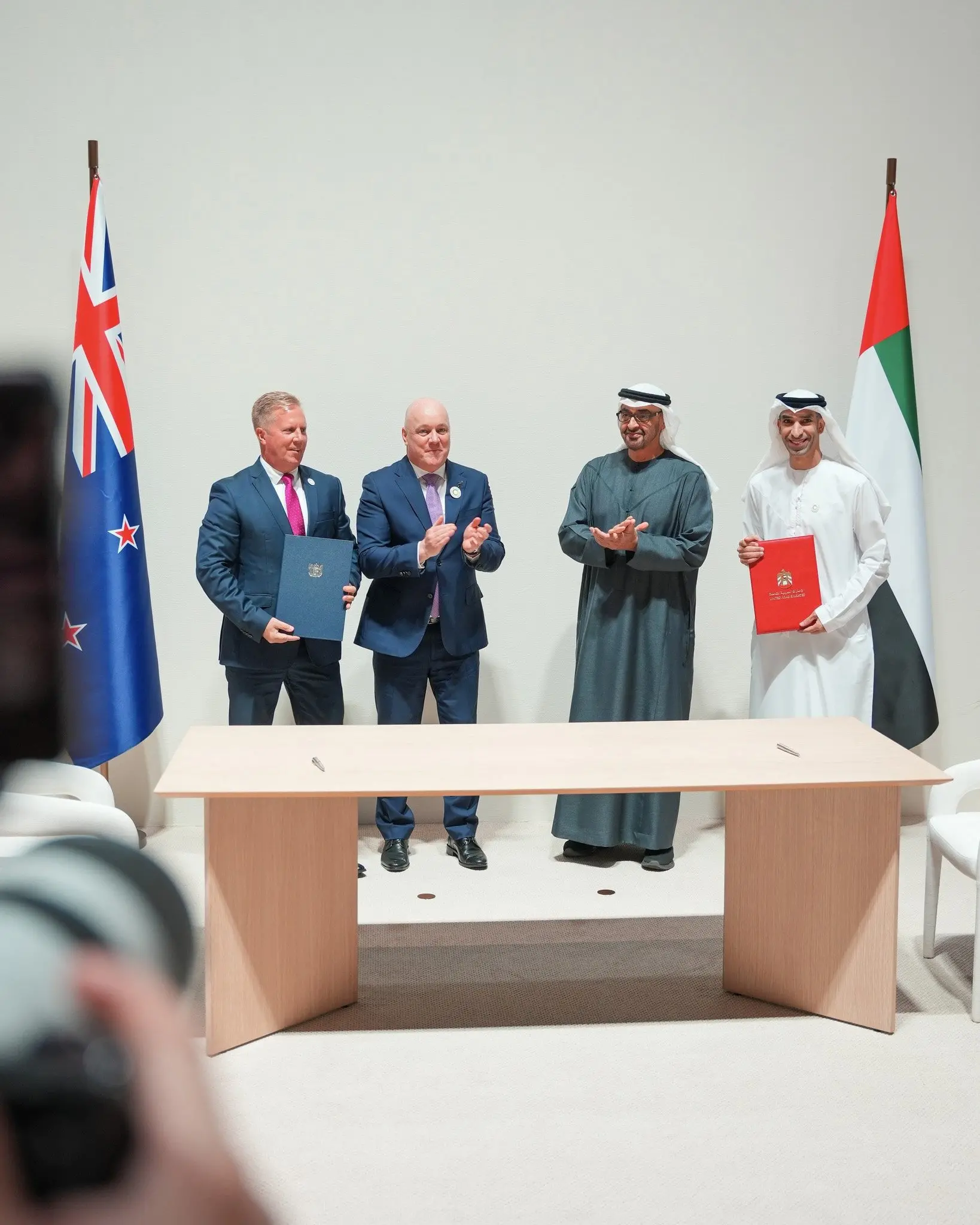
In late 2024, New Zealand concluded negotiations on both a Comprehensive Economic Partnership Agreement (CEPA) with the UAE and a free trade agreement with the wider GCC. The CEPA took effect in August 2025, following a visit to UAE capital Abu Dhabi by Mr Luxon earlier that year.
The close ties with the UAE may partially explain why Luxon was among an early group of leaders to hold a solidarity phone call with UAE President Sheikh Mohamed bin Zayed last week.
Still, despite New Zealand’s links with the Middle East, Luxon last week downplayed Wellington’s stake, telling Parliament that the "final line of effort is diplomacy" but adding that "New Zealand is far from the Middle East, and I do not overestimate our influence over events there. We are not central to this region or this conflict".
More broadly, the war against Iran launched by the United States and Israel holds the potential to reshape the Gulf, with both constructive and less positive possible impacts.
Initially, images of Iranian strikes against airports, ports and hotels threatened to tarnish the "safe haven" image that the Gulf states seek to project. In the short term, tourism numbers will inevitably suffer. However, the longer-term attraction and dynamism of the Gulf will probably endure, as long as Iran’s strikes on the GCC can be halted or at least heavily constrained.
Moreover, higher oil prices resulting from the instability will help to boost government revenues and ease the economic pain. Facing financial pressures, Saudi Arabia had recently been scaling back and recalibrating some of its more ambitious Vision 2030 projects such as the new futuristic linear city called "The Line". The higher prices will be a cushion for the world’s biggest oil exporter, providing it can get its oil to world markets.
This revenue aspect also is good news for New Zealand’s own exporters, which sell around $NZ3.3 billion of mainly food products to the Gulf each year, although shipping routes may need to be adjusted if the Strait of Hormuz remains off-limits. This might involve the use of safer ports in Saudi Arabia and Oman and transhipment by road to the other GCC countries.
Indeed, in the longer term, the war may help to reunify the GCC states and, in particular, heal a rift that had been developing between Saudi Arabia and the UAE.
For New Zealand, the strategic implications of a potential new "arc of conflict" stretching from Saudi Arabia in the west to Pakistan in the east are worth exploring. At a Q&A session in Islamabad with Pakistani President Asif Ali Zardari last month, the author asked about Pakistan-New Zealand relations in the context of New Zealand’s current focus on India, which culminated in a free trade agreement in December.
Wellington’s relations with Islamabad are far more modest than its ties with New Delhi. While Pakistan maintains a High Commission in Wellington, New Zealand services Pakistan — the fifth-most-populous country in the world — via the cross-accreditation of its High Commissioner to Sri Lanka.
Colombo, the Sri Lankan capital, is some 3000km away from Islamabad.
For New Zealand, there are no easy answers, but the option to take a greater role in dialogue, diplomacy and de-escalation efforts remains on the table for Wellington as the crisis in the Gulf expands.
New Zealand is well thought of across the wider Middle East region, in part due to its compassionate response to the 2019 Christchurch mosque attacks, led by then prime minister Jacinda Ardern.
While Wellington may be keen to concentrate its efforts on the Indo-Pacific, the Middle East is once again topping New Zealand’s foreign policy agenda.
It is a crisis, but it is also an opportunity.
• Dr Geoffrey Miller is the Democracy Project’s geopolitical analyst and recently completed his PhD at the University of Otago on New Zealand’s relations with the Gulf states.