

In that unlikely event, you then have a jolt of remorse when you see a place for sale at $749,000 which only 10 years ago you sold for $256,000.
Another touch of remorse came last week when I saw a property for sale which was once something of a haven of happiness. It was nothing to do with dollars, but rather a kind of sentimental nostalgia.

The boat shed was right across the road from our house, and I gazed at it often and wondered if such a gem would ever come on the market. As it happened, the owners were not using it as much now and probably took pity on this bloke who inquired wistfully if they might like to sell it.
A reasonable price was suggested, and I became a boat shedder with no boat.
A local writer was looking for a home for his boat, and I was happy to have it in my new shed, giving the impression that I was something of a man of the sea. I took it out a few times but never further than Yellow Head, where real waves could occur and tax the ability of a pretty naive rower handling oars which never quite got the hang of what you wanted them to do.
About the same time, right next to the boat shed, a small cove with a sandy beach was developed, so fun was to be had without the hard graft of pulling on oars.
The boat shed had a storage area with a winch device, which made it easy to haul your boat up the ramp, and a tiny wood burner which heated the main room while you sketched out your plans to do the place up. Of course, I never got around to any renovating, but later owners have certainly made up for that.
I modelled my approach on Ratty in The Wind in the Willows. He declared: ‘‘There is nothing — absolutely nothing — half so much worth doing as simply messing about in boats.’’
But the family became more involved with activities at school and sports events in town and the boat was mostly idle.
Writer’s block continued, too, despite many hours at the boat shed nursing a red and puffing a pipe awaiting the flash of inspiration which would lead to the Great New Zealand Novel. Even, perhaps a poem which would prove my credentials as a man of letters.
Instead, I scribbled away at pieces for newspapers and magazines and that explains why the boat shed has no plaque like those on the Writers’ Walk, which proclaim that a great writer once was here.

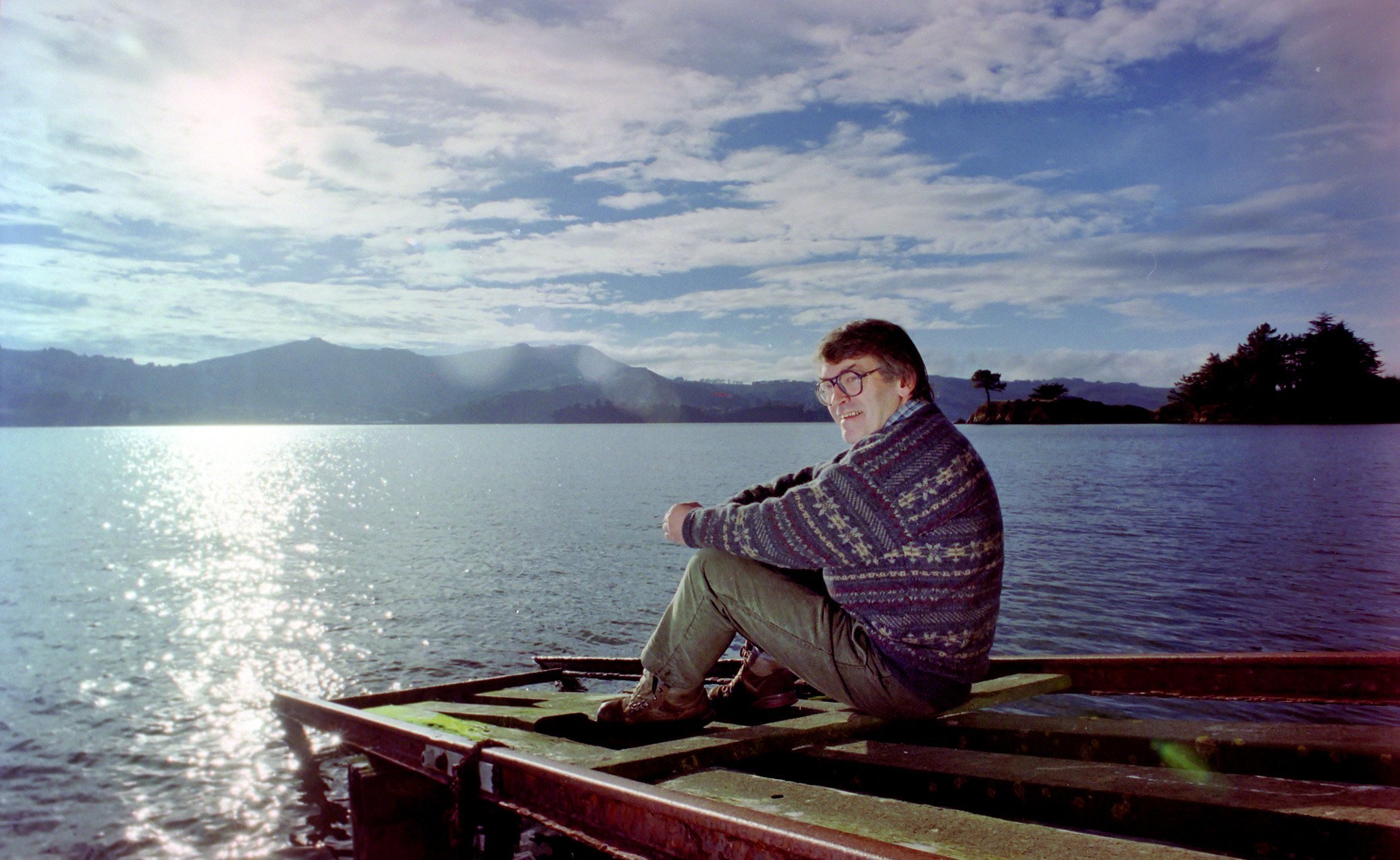
But to be right on the bay at sunset was reward enough. Shoreline living is ever-changing as the tide comes in, goes out and comes in again. In a really high tide, the boat shed seemed like a ship at sea with water lapping at the deck edges and all this only 50 metres from civilisation over the road.
With home so close, the euphoria of getting away from it all for a couple of days was hardly to be achieved by walking across Portobello Rd and so began the search for an inland sanctuary.
Not Queenstown, of course, nor Wanaka. Both places by the late 1990s were unaffordable, involved too much travel and had lost their charm, apart from the views.
So began the still-evolving Patearoa saga.
With a house, boat shed and crib we were oversupplied and, so, when an offer came for the boat shed from a man who could actually row a boat it was accepted, perhaps a touch reluctantly.
Since that time there have been other owners and they carried out all those improvements I dithered about almost 30 years ago.
The boat shed, no doubt about to have new owners, remains a pleasant memory and, while I never got around to writing a poem, perhaps I can borrow a few moving lines from At the Boatshed by one-time Burns Fellow Rhian Gallagher, who writes of a Dunedin boat shed in her collection Far-Flung.
We carried the day through the door
the harbour had earned its keep
light laid its hands on each contour
the shed held abreast with the shore
spreading the waves in pleats
we carried the day through the door.
— Jim Sullivan is a Patearoa writer.


