
PHOTO
When it comes to defence, size isn’t everything. Seriousness is what counts.
And right now, a comparison between New Zealand and the United Kingdom — one small (though with a vast maritime domain), the other a nuclear-armed permanent member of the United Nations Security Council — reveals an uncomfortable truth: the tiny player is showing the great power how it’s done.
Let’s begin with our own country.
In April last year, the New Zealand government launched its Defence Capability Plan, committing $12 billion over four years — including $9b of new spending.
This lifts defence expenditure here to more than 2% of GDP within eight years. For a country where our defence budget averaged just 1.26% of GDP from 2014-24, this is a genuinely transformative commitment. It is, roughly, a doubling of effort.
Critically, our political and public service leaders in Wellington are following through.
The New Zealand Defence Force baseline budget rose to $5.491b in Budget 2026, and is set to keep climbing towards the 2% target.
The government is frank about the state of the force it inherited: former defence minister Judith Collins acknowledged that NZDF personnel had endured 35 years of cuts and underfunding, across governments of different stripes.
The new plan is disciplined about sequencing, designed with a 15-year horizon but deliberately focused on critical investments in the first four years.
The commitment to review progress every two years is important. As Prime Minister Christopher Luxon put it, the funding is ‘‘the floor, not the ceiling’’.
Now consider the United Kingdom.
Britain talks a formidable game. At the 2025 Nato summit in The Hague, outgoing British PM Sir Keir Starmer committed the UK to spending 3.5% of GDP on defence, plus a further 1.5% on wider defence sector infrastructure, by 2035.
Yet his follow-through has been dismal. The UK Defence Investment Plan meant to demonstrate his strategy’s affordability was promised for autumn last year and it arrived, the better part of a year late, on June 30.
This delay was not just a matter of PR timing, it reflects a deep unwillingness by HM Treasury to fund the crucial defence of the realm.
Reports suggest that the bean counters outright refused to offer more than £13.5 billion ($NZ31.5b), while service chiefs assessed that £28b over four years was the bare minimum needed to implement the government’s own strategic defence review.
The fallout has been extraordinary.
Former defence secretary John Healey, former armed forces minister Al Carns and Chief of the Defence staff Sir Rich Knighton all accused Starmer of underfunding the military, with Knighton warning that the armed forces would have to ‘‘dial back’’ deployments, training and exercises straight away.
Healey and Carns went further still, resigning in June and warning that immediate extra support was needed to bolster military readiness. This situation contributed to Starmer’s fall and impending replacement by Andy Burnham.
Even the plan that finally emerged is a pathetic fudge. British defence funding will reach 2.7% of GDP by 2027, but then remain flat until 2029, with the path to 3% left undetermined and pushed into the next parliament.
Analysts warn of a ‘‘hockey-stick’’ trajectory, with much of the needed uplift backloaded into the final years — exactly what Nato Secretary-general Mark Rutte said must be avoided.
The contrast is stark. New Zealand set a target it could credibly fund, published the plan on time, and began investing. Britain set a grander target, delayed the plan for a year, fought its own defence chiefs over the bill, and deferred the hard decisions to a future government.
Britain’s World War 1 prime minister David Lloyd George, when chancellor of the exchequer in 1909, once quipped on House of Lords reform: ‘‘a fully equipped duke costs as much to keep up as two dreadnoughts.’’
The hapless Starmer has achieved both a diminution of the upper house with the removal of the last of the hereditary peers, along with an abject failure to give the dilapidated Royal Navy a lifeline.
None of this is to pretend New Zealand is suddenly a great military power.
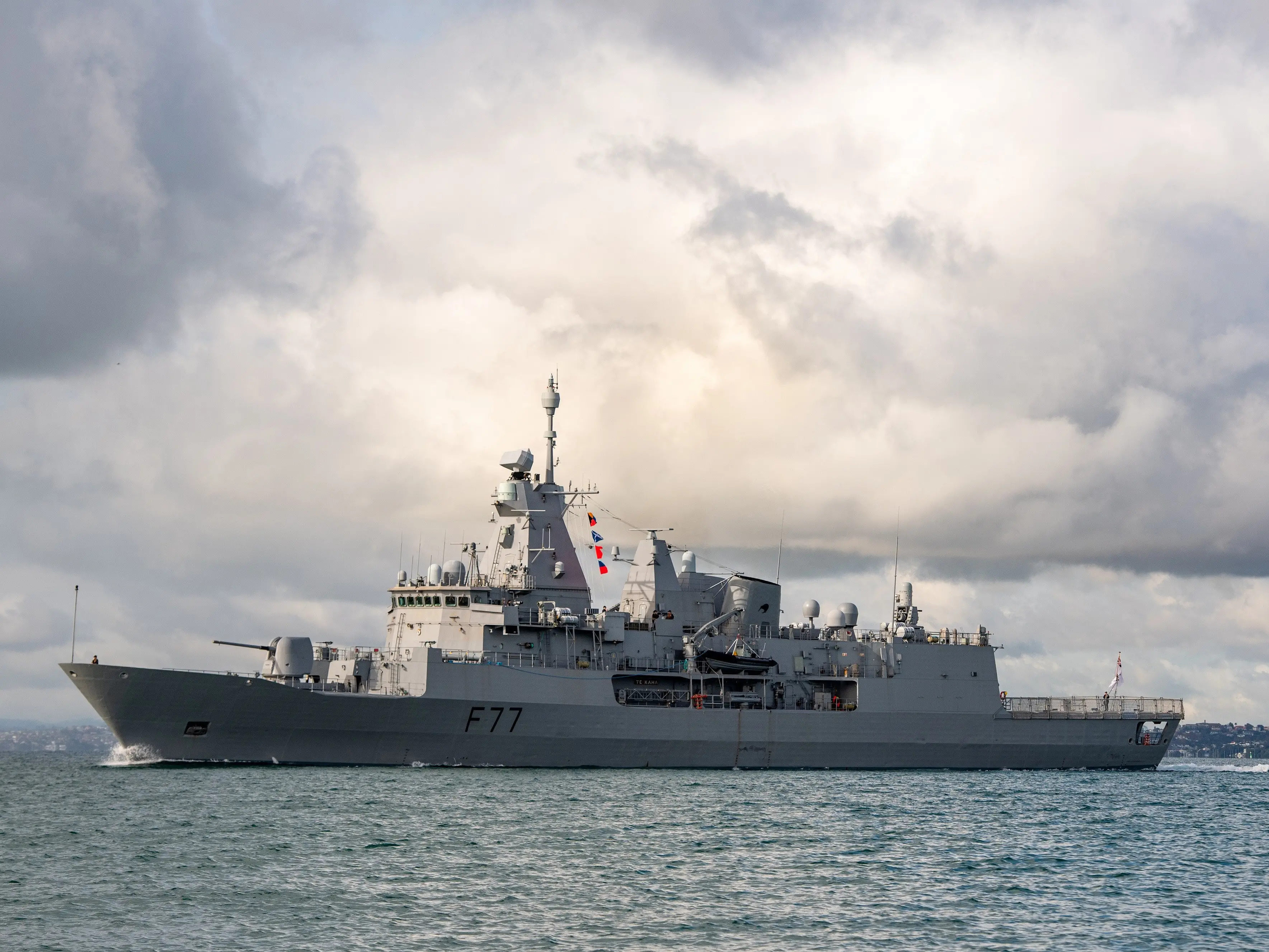
We have but two principal surface combatants and we retired our combat aircraft in 2001 (although an RNZAF P-8 Poseidon successfully striking a target ship with an air-launched Harpoon missile on exercises in the Pacific represents a welcome enhancement in aerial offensive capability).
But investment strategy is about matching ends to means, and Wellington has done that with purpose and candour, spurred by a sharpened threat picture. When Chinese warships conducted live-fire exercises in the Tasman Sea in February last year, Judith Collins observed that ‘‘distance certainly is no longer any protection for New Zealand’’.
Distance offers Britain even less protection. The risks facing the UK are, by its own officials’ assessment, greater than at any time since the Cold War.
A small Pacific nation has looked at a darkening world and reached for its chequebook. A great power has looked at the same world and kicked the ball into the long grass.
• Paul Foster-Bell is a former National List MP and New Zealand diplomat who now works for the University of Otago. All views expressed are solely his own.