
PHOTO
The news came after an extraordinary King’s Birthday weekend at Lake Coleridge: seven sons, six daughters-in-law, eight grandies and moi.
I came home to Dunedin walking on air, replete with the joy of it.

And then the call early the next morning: my youngest brother (‘‘little bro’’ despite being in his mid-60s) has cancer. We lost our middle brother just two years ago, also of the big C.
The shock seemed insupportable. Glorious life as I knew it just the night before ended abruptly.
I carried him in my heart, and slowly my thoughts percolated.
First, I couldn’t bear this on my own. I said to God (more of a yelp, really), Carry me.
Because he’s already a friend, he knows me and his words of comfort (‘‘I will never leave you nor forsake you’’) dropped right into my soul.
Secondly, I looked for wisdom to cleave to. The words of a particular hymn filled my mind, O Love that wilt not let me go.
It was written in 1882 by one George Matheson, a Scottish Presbyterian minister, who learned at the age of 20, when life was assuming a most agreeable shape for him, that he was going blind.
His fiancee promptly broke off the engagement, declaring that in no way could she see herself married to a blind man.
George’s sister cared tenderly for him for 20 years, enabling him to finish his theological studies (to aid him she even learned Hebrew and Greek) and then carry out his work as a parish minister.
He became a preacher renowned throughout Scotland as ‘‘Matheson of Innellan’’, even preaching to Queen Victoria herself on one occasion. Apparently, he was known as a joyful person despite his obvious affliction, his spirit not easily discouraged.
But then his sister was married. On the night of her wedding, June 6, 1882, George, although rejoicing in her happiness, experienced something of an emotional crisis: he’d lost his sight and his own prospect of marriage and now he was losing her daily companionship.
No doubt loneliness and melancholy washed over him unbidden.
In his desolation George sat down and wrote. Afterwards he wondered at the way this hymn came to him within a space of five minutes, fully formed. As he said, ‘‘like a dayspring from on high’’:
‘‘O Love that wilt not let me go
I rest my weary soul in Thee ...’’.
George wrote about a God who never relinquishes hold, whose love persists through all our failures and suffering. Who remains a companion through every stage of life, however testing.
I am comforted by the notion that life is a pilgrimage, often a strenuous one. We are not expected to be buoyant and victorious constantly, leading our ‘‘best lives now’’ as they say. God, understanding life’s vicissitudes, journeys with us, reminding us that we’re not lost or forsaken.
Reminding me right now that I’m loved and remembered, as is my brother, precious to me.
The hymn goes on:
‘‘O Joy that seekest me through pain ...
I trace the rainbow through the rain
And feel the promise is not vain
That morn shall tearless be ... ’’.
Joy through pain, I think, speaking of suffering transformed. Pain comes — yes, because this is life, carrying inevitable happiness and sorrows.
But I don’t need to fear that I’m cast adrift or that I won’t be able to cope with what’s awaiting me; I’m accompanied throughout and there’s joy to be had, maybe simultaneously with the grief.
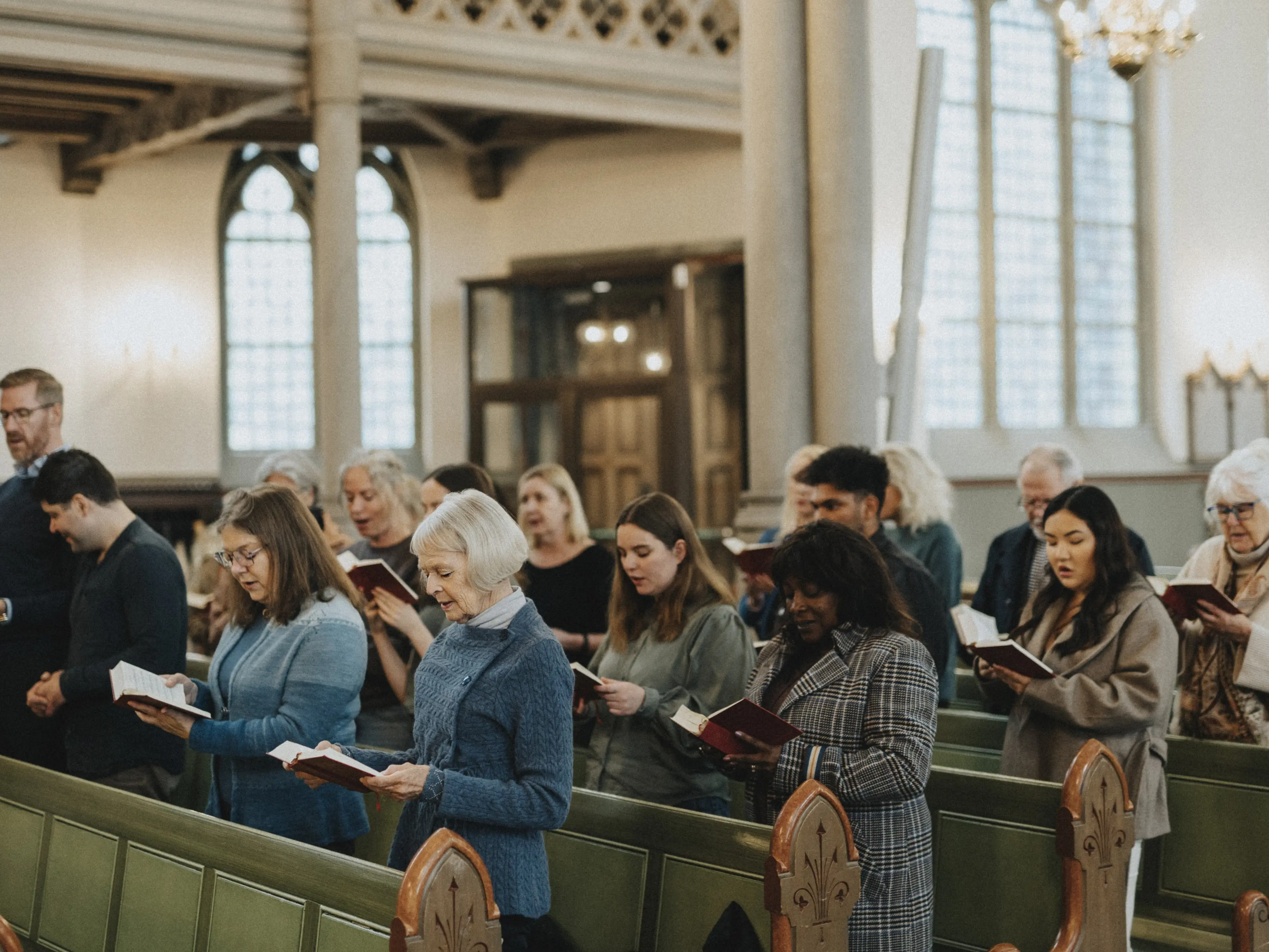
I learned oodles of hymns as a child, at church and gathered around the piano on Sunday evenings for family sing-songs. I’ve always been grateful for the faith that was planted in me through the words we sang.
This particular hymn has been preaching the Gospel to me over the last few weeks, shaping my ongoing response to the grievous fact of another sibling being assailed by illness.
In this time of waiting and becoming accustomed to a new, bitter stage of life, I’m reminded too of Martin Luther’s injunction to ‘‘remember your baptism’’ daily (when you wash your face, he said.).
I reflect on God’s grace and am comforted by the image of resurrection from the dead and new life as a child of God.
I’m discovering again, like George Matheson, that despite the spectre of death (easily imagined with such news), discouragement and the wanderings of my own errant heart, God is faithful and his love never lets go. He has us in his grip.
• Jenny Beck is a lawyer and member of Dunedin City Baptist Church.