
PHOTO
"The hand of vengeance found the bed where the purple tyrant fled
The iron hand crushed the tyrant’s head and became a tyrant in his stead."
The warnings of English poet William Blake (1757-1827) were right as a purple tyrant wears the colour to signify supreme authority.
There is no point in replacing one imperfect (political) system with another. What do radical Māori want of this country besides an overt influence that masks full control?
It is a fair question and long overdue in the asking. Simply replacing a perceived oppressive system with one approved by Māori reflects the poet’s prophecy.
Many academics within our universities also appear to offer tacit approval of the demands of Te Pāti Māori. Instead of the pursuit of truth of our past and accepting that the pathway of the future is available to all those who choose to take it, some local academics engage in what appears to be somewhat vengeful rhetoric for deeds done 180 plus years ago.
It is difficult to find one country throughout the world that has not been forcefully occupied/colonised at some point in their history. Most have moved on to find their peaceful future.
Despite negotiated Treaty settlements being full and final (or so we were led to believe) demands continue for an independent governance role for Māori.
Our biggest problem in New Zealand is our constant failure to talk through important issues. It would seem to be a deliberate policy especially within our universities.
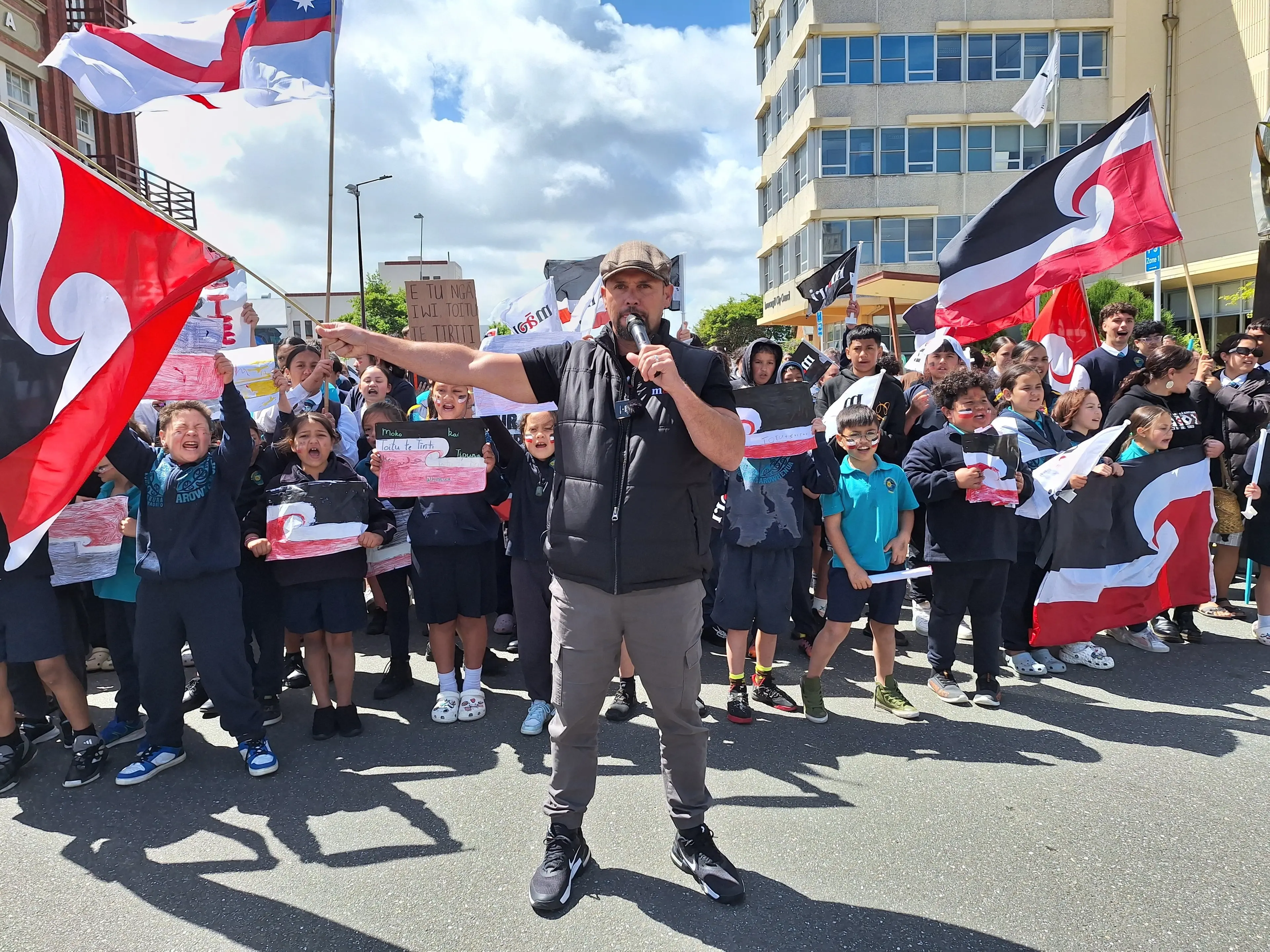
The Treaty Principles Bill is just one recent example. Taking to the streets with placards and shrill voices of abuse seems to pass these days as valid opposition. Governments then fail to risk their fleeting popularity and re-election chances by wordless approval of radical demands.
Parliamentary debates are too often trivialised where the players of all hues vie for the 10-second sound bite. All this occurs in that place we obliquely call the debating chamber. It is a place for party positions to be stated, held and compromises are lost, even if shown to be warranted.
So, what is the actual position of those who purport to speak on behalf of "their people" or is it simply a personal opinion — just as this offering is.
Māoridom do not speak with one voice; indeed, they never have spoken as one people as inter-tribal warfare before the signing of the Treaty of Waitangi shows. Those tribes, decimated by the more warlike ones undoubtedly understood the security the Treaty offered and wanted laws guaranteeing protection from their neighbours.
If there was to be change in our constitutional arrangements — tell us all what that change will consist of.
Some in our wider society believe our way of life and emphasis are wrong — a view which may well have some glimmer of validity but with what are we replacing our democracy?
If we are required to surrender sovereignty, as radical Māoridom demand, then we must understand that with the loss of sovereignty means we also lose our collective cultures in all their many forms.
And what of our shared history? Is that to be consigned to folklore?
Our democracy has given us a civilisation which allows us to live successfully without tribalism and chieftainship. Democracy, and to a lesser degree capitalism, is a successful social heritage that cannot be easily dismissed nor traded away.
It has given us the internet, space travel and organ transplants. Works of incredible art abound from Shakespeare and Mozart, Beethoven and Chopin. The comedic gift of being able to laugh at ourselves is beyond value.
That (in no small measure) is the inheritance our democratic civilisation here in New Zealand enjoys and would be lost due to demands for the transfer of our sovereignty — to a totally combustible one.
It needs to be fully understood that New Zealand’s democracy, with its multicultural population, does not work in isolation. There has been adherence to a common law, along with free and independent media and judiciary. The trite demand for equality of outcome and representation is nonsense.
We all need to be more than careful as to what some wish for. Nothing is perfect, least of all our political system.
Yet we are a small country at the bottom of the world which became a first world nation due to a heritage of conflict resolution through the simplest of all notions — one law for all, applied without fear or favour.
So, Te Pāti Māori, tell us what you and your fellow time travellers want from us all — or from this country of ours as you lecture unformed and impressionable minds.
The quest for truth through challenge and debate is vital, to finally put our shared history to rest ... but then that requires courage.
• Gerrard Eckhoff is a former Otago regional councillor and Act New Zealand MP.