
PHOTO
Why do I love Central Otago so much?
It started early as a child on holiday, later working in a Clutha Valley orchard, and then in Queenstown. I go there still. My heart lifts each time I visit: the huge sky; the sight and smells of wild flowers roadside; the distinct seasons. I’m refreshed and feel truly alive there.
But why do I worry and have so many questions about the Otago heartland now? It’s because the unique and much-loved vistas in our most popular tourist area are under threat.
Mining companies, most from outside New Zealand, know "there’s gold in them thar hills", that the times are right to pounce, dig and plunder at multiple sites in Central.
A fast track government — putting economic growth ahead of environmental concerns — encourages them, cutting out local concerns. The old gold fever is returning, but this time planned destruction of the land is on an industrial scale, using huge machinery to replace pan, pick and shovel.
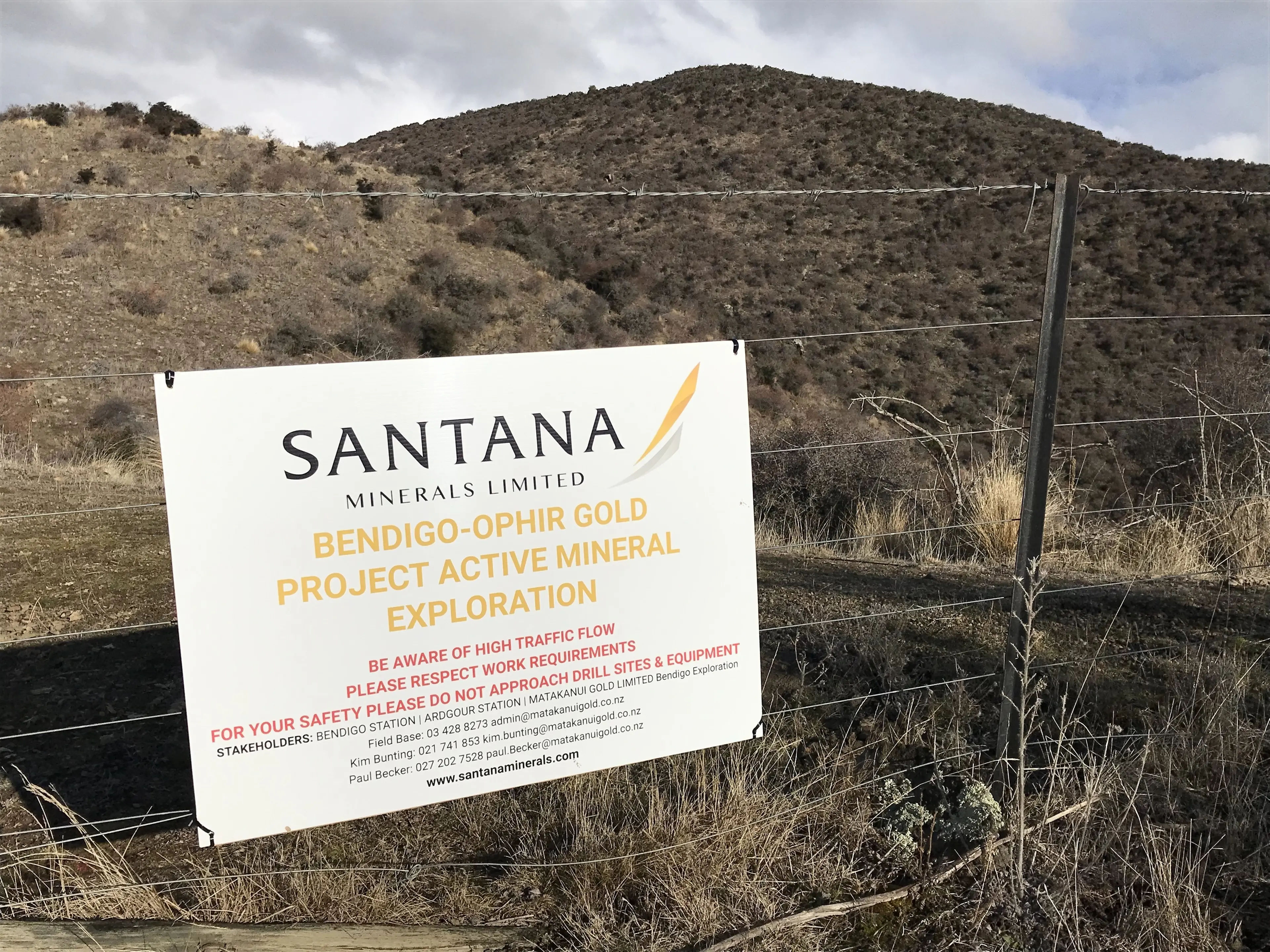
Right now Australian mining company Santana Minerals is urgently requesting consent for a huge open-cast gold mine at Bendigo, near Tarras in the Dunstan Mountains. What will be the effects?
The Central Otago District Plan zones this area as an Outstanding Natural Landscape. The deep scar, impossible to rehabilitate, will be highly visible from the Wanaka-Cromwell road and from the air for travellers en route to Queenstown.
Large trucks working 24/7: harmful emissions blighting the climate, bright light, choking dust, the noise of explosives, rock crushers and other machinery disrupting the peace in this quiet rural, horticultural community — wine country, green with vines.
Huge plans? No, gigantic. According to local community group Sustainable Tarras, there will be four open pits to contain tailings, the residual ground-up rock. The largest will be 1km in diameter and 200-300m deep — that’s as wide as the length of 10 rugby fields end-to-end — and a tailings dam 2km wide, holding the equivalent of 10,000 Olympic swimming pools of toxic waste.
Leakage from the dam can happen. World-wide, dams have failed due to earthquakes, or other disasters which are becoming more common as the climate deteriorates. Do we want the Clutha and the aquifers polluted?
Who will pay to remediate after the company leaves? In a recent RNZ report Santana CEO Damien Spring, asked if the company would commit to taking responsibility if anything went wrong, said that would not happen.
And the much-trumpeted financial advantages to New Zealand? Likely small. The profits from mining are notoriously unpredictable, unlike the predictable harm to the environment. Royalties paid to our government are tiny.
The company mining the nearby Otago Macraes gold mine in some years pay little or no tax. How much tax will Santana pay?
Consultation will be open only to statuary bodies. Shouldn’t we have a say, particularly the people who live close by? We will all lose, including the many from around the country and overseas who love this place and visit for recreation.
I want to add my voice in the only way I can. I appeal to the local Central Otago District Council, the Otago Regional Council and the government. You have a voice.
Please quickly say: no way. Please preserve this special place.
■ Russell Tregonning is a retired Wellington surgeon. He has lived and worked in Queenstown and the Clutha Valley, and is still a frequent visitor.