
PHOTO
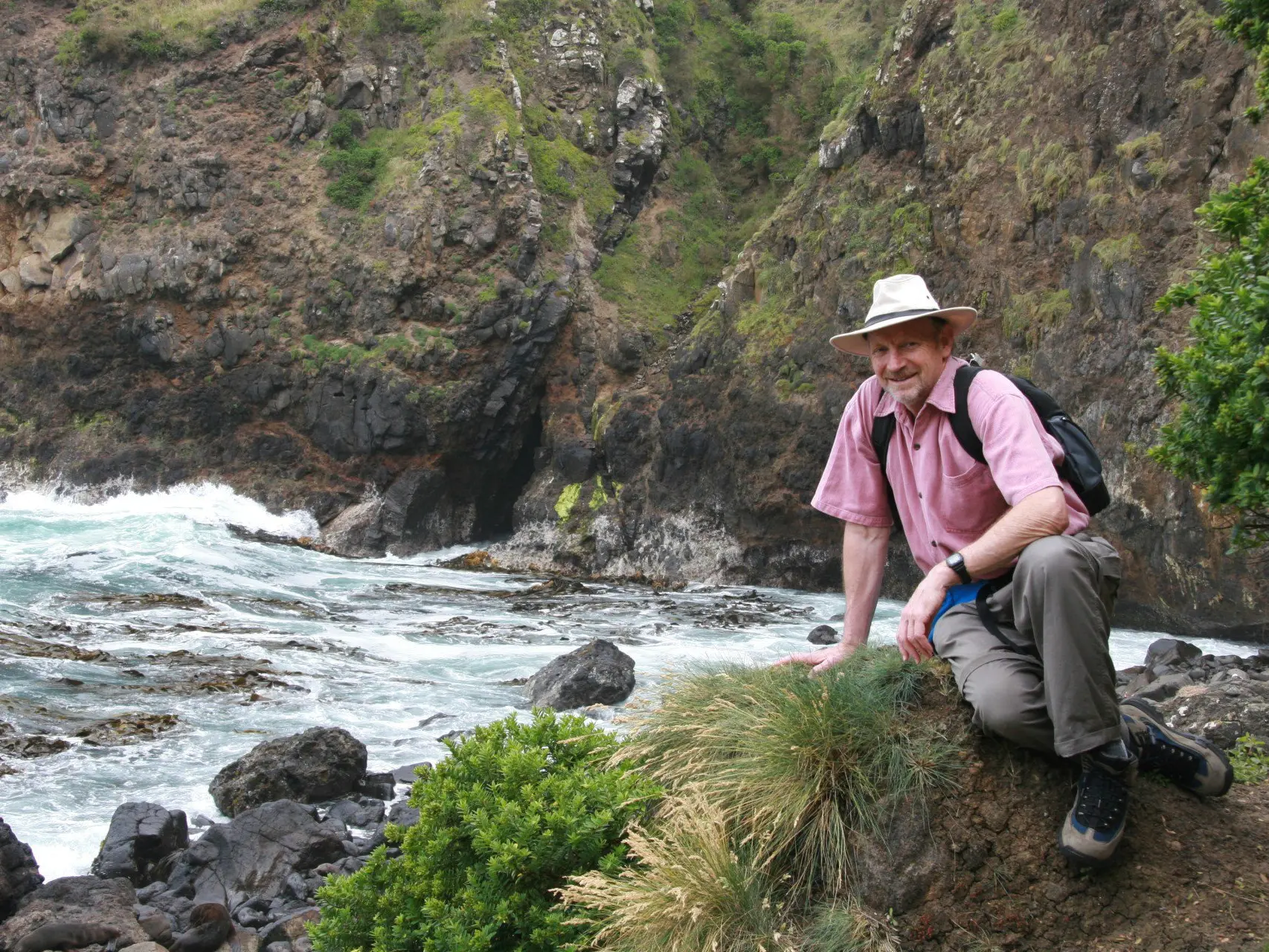
Neville Peat would tell people that the gold in Central Otago was not under the ground, but on top — in the trees, plants, wildlife and people.
The prominent author, journalist, photographer and naturalist had a progressive view of the world, raising concerns about carbon emissions, climate change, biodiversity loss, and habitat destruction, long before these topics were part of everyday conversation.
He thought big thoughts and achieved big things for his community and our country, and led by example in how to be a force for good in the world.
Peat had a knack for making genuine connections with people, and worked tirelessly as an advocate for the communities, flora and fauna, and natural landscapes around him. He had great clarity in his communication and thinking, and with his sense of purpose, his integrity and his mana, he was seen by many as ‘‘a great New Zealander’’.
Peat was born in Dunedin on November 29, 1947, to Jean and Ernie Peat, and he, along with his younger brother Russell, grew up in a very musical family. This left him with a real passion for music. He played piano accordion and harmonica, and became an accomplished guitarist as he got older.
Peat was a proud fifth-generation descendant of Clan Ayson on his mother’s side, his ancestors immigrating to New Zealand from Glenshee, Scotland, in 1853 aboard the Royal Albert.
He grew up in Mosgiel, in a house at the back of a bicycle shop owned by his father. He had a ‘‘sentimental attachment’’ to bikes, the family did not have a car until he was 12, and at school he was called ‘Puncture Peat’.
Peat attended Taieri High School, and after gaining University Entrance in 1964, he went straight into journalism, first, writing for The Evening Star newspaper in Dunedin.
In his most recent work, Home is an Island (2022), which is partly a memoir, he describes how some of his early experiences in journalism ‘‘flicked a switch’’ in him.
Particularly, as a 20-year-old newspaper reporter, the experience of accompanying the globe-trotting Dunedin MacLeod family to Stewart Island/Rakiura on their boat the Heather George, he felt the world opening up, widening his horizons leading to a life full of adventures.
He then moved to The Cape Argus in South Africa writing shipping news. Hints of his adventurous and curious spirit emerged as after his time in South Africa he spent six months touring South America with Australian journalist friends, before returning to The Evening Star to become the paper’s news editor.
In 1974, he completed a Volunteer Service Abroad (VSA) assignment in Tonga for one year, where he was an editorial adviser for the Tonga Chronicle.
During these years, he also found time for sport. Peat was an Otago representative in basketball (1967-69 and 1972-73), water polo (1967-68), and a Western Province (South Africa) representative in basketball (1970-71).
He also trialled for the Tongan national rugby team in 1974.
His insatiable curiosity and drive for personal growth was fabled, and somehow he managed to juggle his writing and sporting commitments with study at Otago Polytechnic in 1974, where he undertook a yachtmaster course.
In 1978 and 1980, Peat also completed two full-time six-week total immersion Māori language courses at Wellington Polytechnic, and he became fluent in te reo.
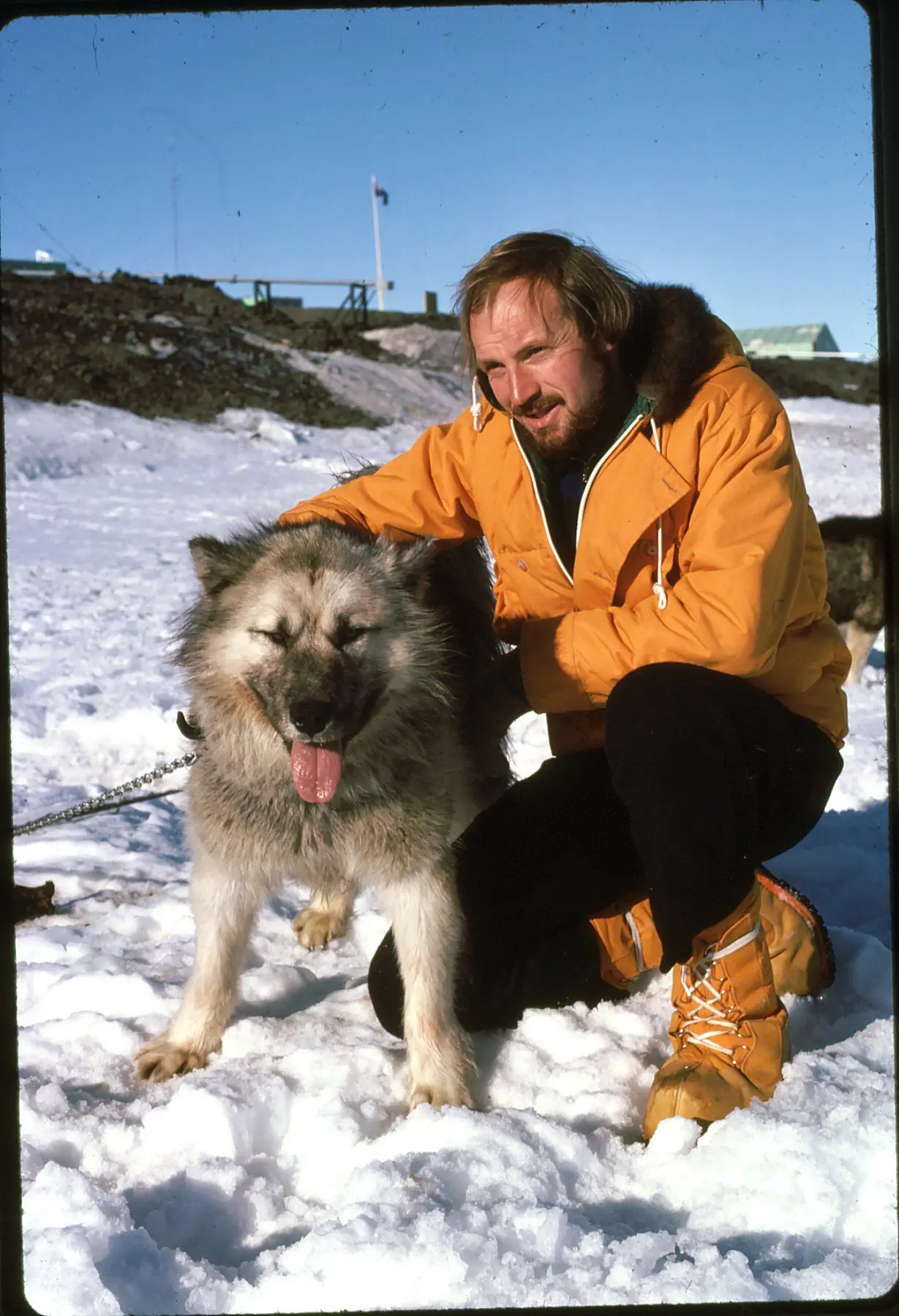
Peat spent two summers — 1975-76 and 1976-77 — in Antarctica at Scott Base as publicity officer for the New Zealand Department of Scientific and Industrial Research (DSIR) Antarctic division.
He revelled in this time, and it provided inspiration for his first book, Ice On My Palette (1977) in collaboration with artist Maurice Conly, where he was already broaching the topic of climate change.
Before returning to Scott Base for his second season, Peat spent three months as a wage worker in the Cascade whitebaiting settlement on the West Coast, which led to Cascade On The Run (1979), an exploration of the lives of these whitebaiters.
Following his second stint in Antarctica, Peat moved into the Ministry of Foreign Affairs (Mfat), working for eight years as a publicist for New Zealand’s overseas aid programme.
In this role, he visited and recorded New Zealand’s overseas aid projects for the ministry in many different countries, from places as varied as remote South Pacific atolls to the tussock grasslands of the Andean high plains.
He left Mfat to write a book, Flight from Afghanistan (1986), about an Afghan refugee family who fled their homeland invaded by Russian troops. This would be the first of three biographies by Peat, followed by his bestselling Hurricane Tim — The story of Sir Tim Wallis (2005), and Seabird Genius: The Story of L. E. Richdale, the Royal Albatross, and the Yellow-eyed Penguin (2011).
In Peat’s writing, he faced up to the big issues. He understood that the way we were treating the environment would have significant negative impacts, and carry long-term effects for future generations.
In 2007, he wrote again about climate change, in Antarctic Partners — Fifty Years of New Zealand and United States Co-operation in Antarctica, 1957-2007; and in 2018, he took the issue head on with The Invading Sea — Coastal hazards and climate change in Aotearoa New Zealand.
His writing made things happen. In 1997, he researched and wrote a nomination for New Zealand’s Subantarctic islands for inclusion in the World Heritage List. And it worked — the following year, five Subantarctic island groups were declared a World Heritage Area.
In all, Peat authored or co-authored more than 50 books during his career — almost a book a year.
Although he is best known for his nature or environmental writing, they were not all on these topics.
In one of his first books, Detours, A journey through small-town New Zealand (1982), he wrote about his journey from Cape Reinga to Stewart Island by bike — a journey he undertook simply because he wanted to explore the country’s rural towns and districts, where he felt he would find that elusive quality that is ‘‘New Zealandness’’.
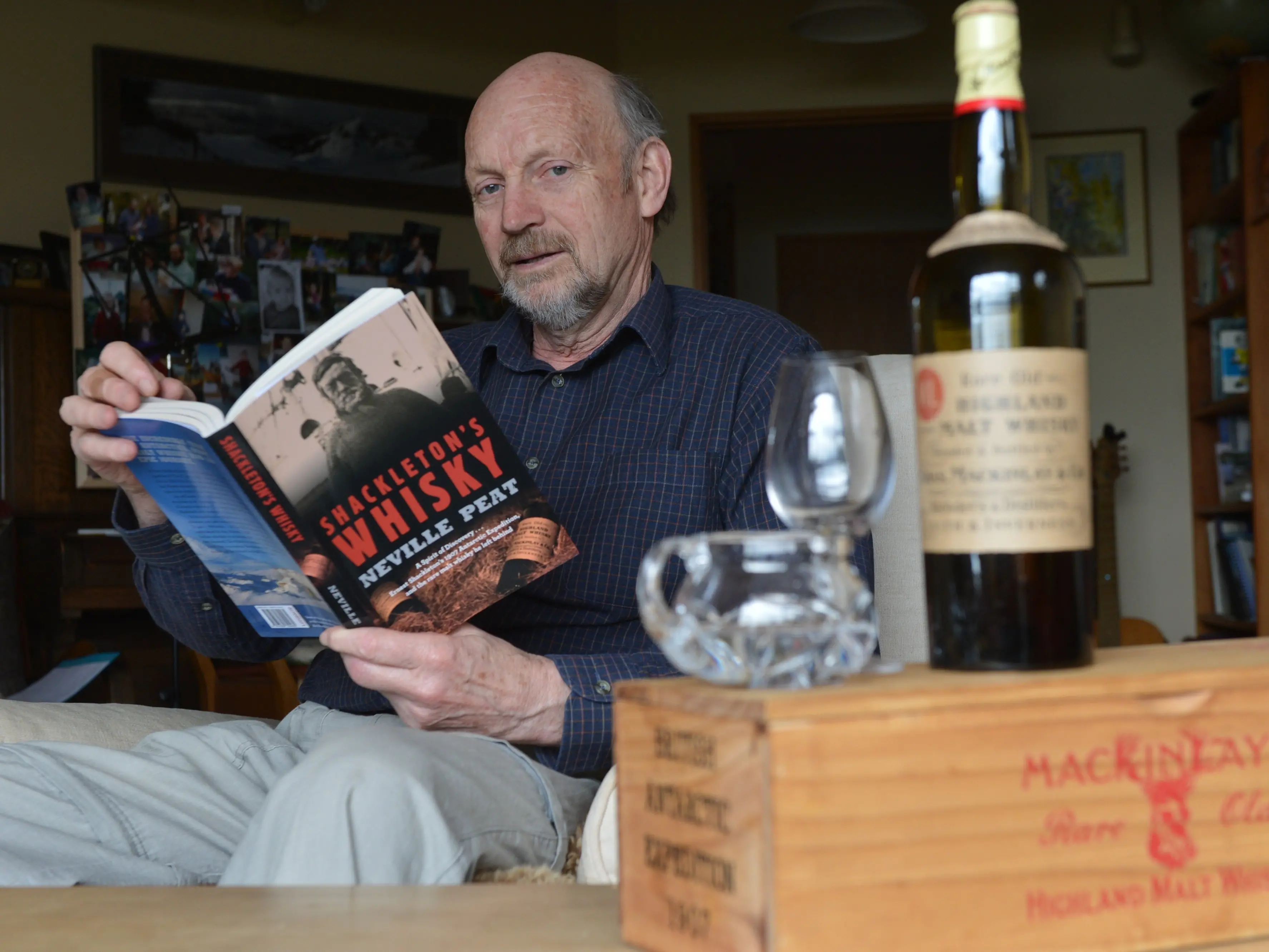
He also wrote about important moments in history, notably in Shackleton’s Whisky (2012) — a book he wrote after witnessing the discovery of three crates of scotch whisky under Ernest Shackleton’s expedition hut. The whisky had been there for more than 100 years, and he recounted the marvellous tale of how they were discovered and painstakingly re-created by Whyte & Mackay in Scotland.
Shackleton’s Whisky was so popular that it was book of the week in the London Daily Mail.
It is, however, perhaps in Peat’s creative non-fiction, that we learn the most about the inner workings of his mind — where he could write purely from his heart.
‘‘All night I had been bathed in the Glad Brook’s effervescent sound,’’ Peat wrote in The Falcon and the Lark, A New Zealand High Country Journal (1992).
‘‘They say the sound of ocean surf soothes one’s sleep. I give you the mountain stream, all froth and frolic, delivering perhaps the most restorative sound in all of nature; clean, wholesome, invigorating, and as innocent as the sweet waters of the womb.’’
His trilogy — The Falcon and the Lark, Coasting — The Sea Lion and the Lark (2001), and High Country Lark (2008) — celebrated life in the way that he did. In these books, his great curiosity takes readers down quiet paths of history, myth, philosophy and humour, to emerge into the light of a cracking good yarn.
In 2007, he won the Creative New Zealand Michael King Writers’ Fellowship, which enabled him to write The Tasman — Biography of an Ocean (2010).
Public recognition of his work included the inaugural Dunedin Citizen of the Year Award in 1994, the Montana Book Award for Wild Dunedin in 1996, an MNZM for services to conservation in 2018, and the New Zealand Antarctic Society Conservation Trophy in 2024.
In the same year, he also received the prestigious Prime Minister’s Award for Literary Achievement, which recognised his outstanding contribution to non-fiction. The quality of his work can be measured by the fact that many of his books are still in print.
But, away from writing, Peat’s life had many other dimensions.
Peat worked as a highly respected study leader/lecturer on ship-based tours around New Zealand and to the New Zealand subantarctic islands, involving American educational institutions that included the Smithsonian Institution, and Yale, Harvard and Stanford Universities.
His overwhelming knowledge, gleaned from his relentless curiosity and research over the years, was particularly useful in his public roles as an Otago Regional councillor for three terms (1998-2007) (the last term as deputy chairman), as a Dunedin City councillor for one term (2013-16) — not standing at the 2016 election so he could return to writing fulltime — and a ministerial appointee to the South-East Marine Protection Forum (2015-17).
He also took on many voluntary roles in conservation and environmental protection organisations, including the Pukekura (Taiaroa Head) Reserves Co-Management Trust, the Otago Natural History Trust (Orokonui Ecosanctuary), the New Zealand Sea Lion Trust, the Hereweka Harbour Cone Management Trust, the Otago Peninsula Biodiversity Group, Friends of Blackhead, Guardians of the Lakes, and he was patron of Wild Dunedin — New Zealand’s Festival of Nature.
In an entirely different direction, he was chairman of the Dunedin branch of the Electoral Reform Society during the 1992-93 MMP campaign.
As a leader, he was always kind and respectful, acting without egotism. He saw the good in others, and had the ability to see things from other people’s perspectives.
Literary friends remember that he never criticised anything they suggested. He would often quietly pose questions, which was always enough to make most people consider a course of action carefully.
By being balanced, rather than opinionated, he brought tolerance and insight to everything he did. When Peat endorsed a proposal, it was usually easily accepted. Despite all his achievements, he remained grounded and humble.
While he had many roles across his life, Peat always maintained that his most important was that of a family man — a gentle, deeply-loving husband, father and Pop.
It was during a research trip to Auckland for one of his books in the late 1980s, that he met his future wife Mary Hammonds.
The book was about the volunteer service organisation, which was celebrating its 25th anniversary. Peat was interviewing ex-volunteers for the book, one of whom was Mary, who spent time volunteering in Papua New Guinea as a nurse and midwife in 1978 and 1979. They had common interests and had both led interesting adventurous lives.
Mary moved to Dunedin at the end of 1990, and a year later, they welcomed baby Sophora. While some of Peat’s friends said that becoming a father at age 44 would cramp his lifestyle, he embraced fatherhood and was in awe of his newborn daughter.
He was a warm, engaging and adored dad, and later he became a very proud Pop to his three grandchildren, Gracie, Oscar and Florence.
He passed on his admiration for the wonders of the natural world to his daughter and grandchildren, and showed them how to live with curiosity and respect for other people and cultures, to have a deep sense of fairness, and to stand up for what is right.
He continued the tradition of musical evenings from his childhood, with his own family and friends, as well as often surprising family and friends on their birthday, playing Happy Birthday on his harmonica down the phone, before speaking.
The close family enjoyed recording and sharing an annual Christmas carol video, with Peat on the guitar and everyone (babies included) joining in.
In 2021, Peat was diagnosed with Parkinson’s disease. Rather than seeing it as something to be battled, he researched the condition, and did what he learned would help.
He went to gym classes for people with Parkinson’s several times a week, and was committed to exercises at home, and he enjoyed taking long walks up hills and through bush tracks, some of which would have challenged people half his age. The bonus for him was, as in the way that he looked at most things, he made a whole new group of friends in the Parkinson’s community.
Peat died, aged 78, at Dunedin Hospital on March 1, following a series of medical events.
More than 300 people gathered to celebrate his life at Hope and Sons on Saturday March 21. There were moving tributes from family and friends, including Sir Alan Mark, Ōtākou Rūnaka ūpoko Edward Ellison, Peter Hayden, Sue Maturin, Peter Johnson and Philip Temple — all affirming the high regard Peat was held in, as a colleague and also, a friend.
He is survived by wife Mary, daughter Sophora and son-in-law Hamish, and grandchildren Gracie, Oscar and Florence.
He will be remembered as an outstanding, kind and humble man, who lived his life with clarity, conviction, and an inspirational sense of purpose that will live on through his books.
• John Lewis and the family of Neville Peat.