
PHOTO
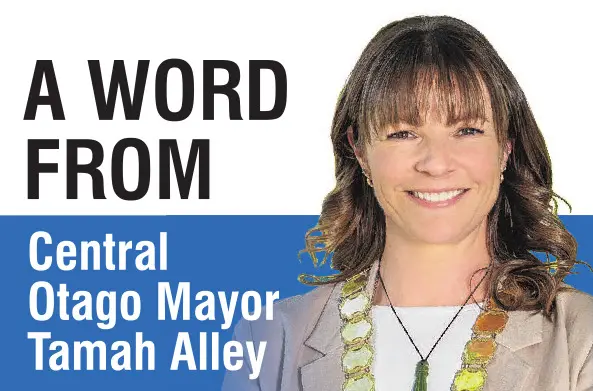
It feels like every week there’s a new announcement from the government, and local government reform is firmly back in the spotlight.
The latest is the "Head Start" pathway, which provides an option for councils to move early if they want to change how local government in their region is structured.
The thing that’s new is that the government has indicated it expects a proposal from each area, and that those who don’t put something forward may face the Big Stick.
No word yet on what the big stick might entail for councils, but it could be a decision from Wellington for the people of Central Otago.
On paper, it’s about giving councils more choice and flexibility. In reality, it puts a fairly tight clock on some big conversations, with the proposals due in 90 days.
Over the past few years, local government hasn’t been short on talk about reform.
We’ve acknowledged the pressures from rising costs, increasing expectations, ageing infrastructure and the challenge of delivering for growing and changing communities.
We’ve talked about doing things differently, working more closely together and finding better ways to serve our regions.
We’ve also moved ahead with implementing Southern Waters as our water entity.
Now we’re being given the opportunity to move from talking to testing those ideas.
Across Otago, mayors are already in conversation.
We’re exploring what this could look like — whether that’s stronger collaboration, shared services or, potentially, amalgamations and unitary councils.
There’s no single model on the table, and no predetermined outcome. What matters is that we approach this with open minds and a focus on what delivers the best result for our communities.
Any change to how local government is structured needs to work for our people.
How services are delivered, how decisions are made and how local voices are heard.
Our district is unique (and huge) and any future model must reflect that.
Getting this right is far more important than moving quickly for the sake of it.
At the same time, we can’t ignore the direction of travel.
The government has signalled that broader reform will follow, whether councils choose to engage early or not.
That means we have a responsibility to be part of the conversation now, rather than having decisions shaped around us later.
This isn’t about rushing into change.
It’s about doing the work properly — understanding the options, weighing the trade-offs and being clear about what matters most.
Your council wants community input on this, and we’re working through what that would look like, together with the rest of Otago, under these time lines.
Another week, another reform — yes.
But this one is an opportunity to shape what comes next, with Central Otago front of mind.