PHOTO
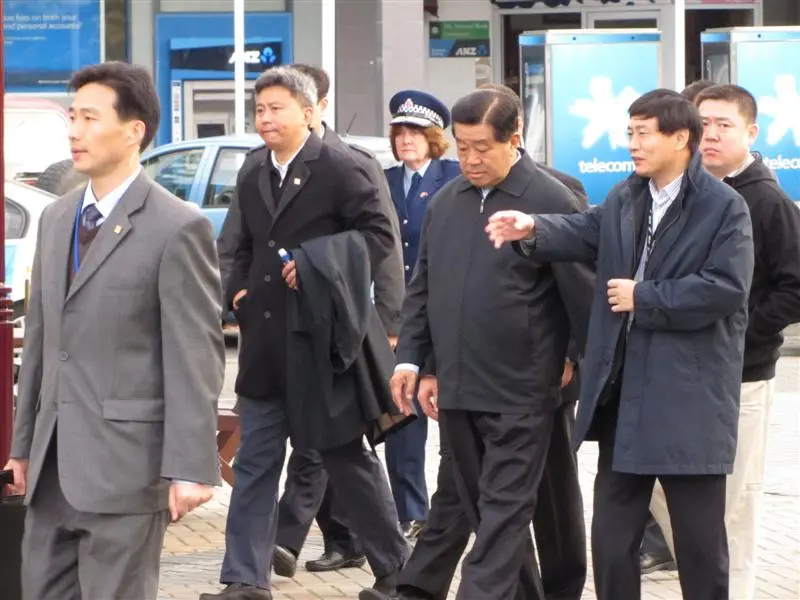
A senior member of China's ruling elite, his delegation and 17 Chinese media delegates have experienced Queenstown and Arrowtown first-hand, as part of a whirlwind trip to New Zealand.
The fourth-ranked Chinese leader, Jia Qinglin, arrived in New Zealand on Sunday for the visit which celebrated the 40th anniversary of diplomatic relations between the two countries.
He was hosted in New Zealand by acting Prime Minister and Clutha Southland MP Bill English.
Mr Jia and his almost 100-strong entourage visited the Lakes District Museum and historic Chinese settlement in Arrowtown on Sunday afternoon.
Queenstown Lakes Mayor Vanessa van Uden, museum director David Clarke and Chinese historian James Ng, of Dunedin, greeted Mr Jia and told him about the village's pioneering ties to China.
The chairman's motorcade was escorted by police patrol cars to lower Beach St in Queenstown on Monday morning for the party's cruise across Lake Wakatipu. Real Journeys international sales manager Tony McQuilkin, of Queenstown, welcomed the VIP and guests aboard the chartered TSS Earnslaw cruise to Walter Peak High Country Farm and back.
The motorcade and police escort took Mr Jia and his group to Queenstown Airport. The Queenstown Times understands the chairman had to arrive and depart the Wakatipu by a chartered Air New Zealand jet, because his Boeing 747 was too large to land at Queenstown Airport.
He was bound for formalities and dinner with Mr English in Wellington.
New Zealand was the first developed country to negotiate a free trade agreement with China. Exports to China have tripled since the agreement came into effect in 2008.
Mr English told the Queenstown Times yesterday said it was a "positive" meeting.
"We get on well with the Chinese leadership. They were very impressed with Queenstown and keen to assist in the expanding of tourism.
"There's work going on directly with them about expanding the number of flights from China to New Zealand. This kind of meeting with their top-level leadership is a good opportunity to get attention focused on where we want progress."
Mr English said Sino-New Zealand relations were "pretty good". The main constraint was New Zealand's ability to produce enough food and other goods and get organised enough to sell them in China, he said.
Asked if New Zealand could encourage progress in terms of democracy and human rights, Mr English said there was "an ongoing dialogue with the Chinese Government and Chinese officials about that".