
PHOTO
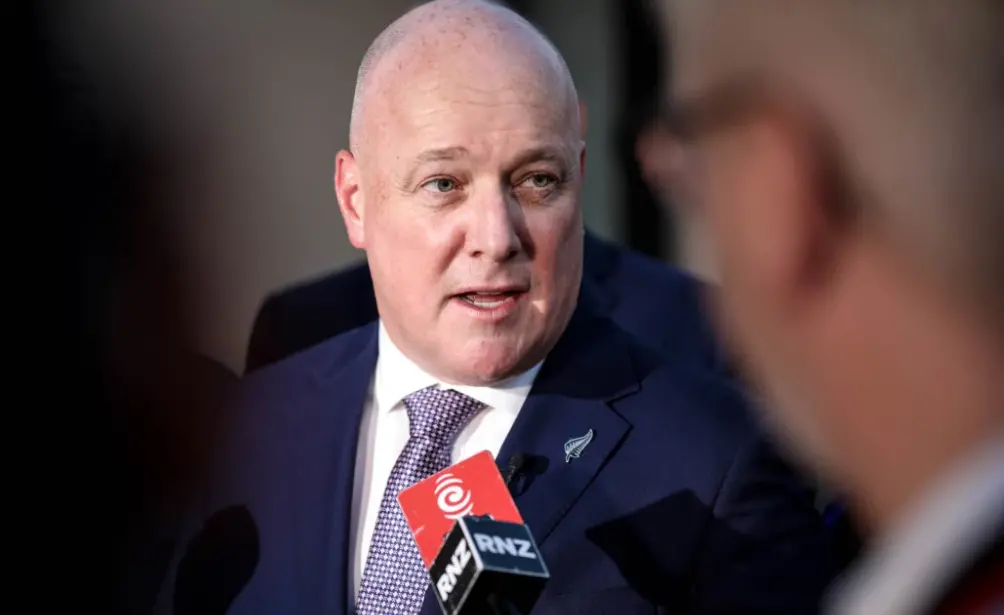
New Zealand's fuel stocks remain strong, says the prime minister, but Cabinet has today discussed the option of pursuing further commercial opportunities to add to current supplies.
Prime Minister Christopher Luxon gave an update on the national fuel plan during an post-Cabinet media conference along side Finance Minister Nicola Willis and Associate Energy Minister Shane Jones.
Luxon opened today's briefing by saying the government was still "gravely concerned" by the ongoing conflict in the Middle East.
"Every day New Zealanders are waking up to news of developments in the Middle East, but what we are yet to see is a move towards a negotiated settlement and solution.
"The longer it goes on, the more the impact, whether that's the human toll in the Middle East, and also the economic pain and suffering being caused around the world."
He said the government's first priority in the situation was maintaining fuel supply.
"That's mission critical to protecting our economy. Without supply, there are serious impacts to jobs and incomes."
Today's briefing follows the latest data released from the Ministry of Business, Innovation and Employment (MBIE) showing total fuel stocks in the country have increased since the last update on Wednesday.
Luxon said he could assure New Zealanders the country was in a good position, with "healthy stocks" of fuel, and the fuel companies had made changes ot their allocations to support demand over the coming weeks, including through Easter and the upcoming school holidays.
He said this meant New Zealand remained in phase one of its fuel response plan.
"But we are continuing to prepare for a move to phase two if we need to."

He said Cabinet today discussed the option of pursuing further commercial opportunities to add to the current level of fuel security.
"Obviously any option we pursue has to be affordable, practical and timely, but officials are pursuing options with urgency."
Willis said the government was now actively seeking proposals for NZ-refined fuel imports on arrangements that would support additional purchase of stocks through to June.
"The proposals would involve the government working with industry partners to deliver additional fuel from offshore to manage the risk of a shortage of supply. An insurance policy, if you will."
She said the government had already been approached by some parties with unsolicited proposals to increase supply, commercial assessment of those proposals was now being urgently carried out.
She said this could see additional supplies for New Zealand stored offshore, and that the government needed to make additional measures now.
"The biggest risk that we face is actually having to move to the sorts of measures contemplated in phase three and four of the fuel plan - a world in which we are having to limit fuel supply to certain users of fuel in the NZ economy is a world we want to take every step possible to avoid.
"The time to take those steps isn't several weeks from now when a fuel supply problem could potentially emerge, the time to take action is now. So that if those fuel supply issues did emerge in the future, we are already prepared, so what we are taking is a proactive, prudent step."
On Friday last week, the government gave more detail on updates to its 2024 fuel plan.
That laid out what would trigger a change from the current phase one, to higher phases; more specifics about what each phase would mean, and how different sectors would be prioritised for fuel if it came to that.
The government has continued to emphasise New Zealand does not face supply shortages.
However, prices have continued to be high - with data from price monitoring app Gaspy showing a 90-cent increase for Unleaded 91 and a 158-cent increase for diesel in the past 28 days.
Luxon told Morning Report on Monday said as long as phases one and two of the national fuel plan were effective, people wouldn't have to worry about phases three and four.
"At this point in time we've had no indication that our fuel importers who we talk to daily, multiple times a day, have had any cancellation of their forward orders," Luxon said.
He said the government's utmost priority was ensuring that the country had fuel - even if that meant fuel suppliers paying additional Iranian tolls.
Luxon said he was leaving it to fuel importers and distributors to organise how to allocate fuel.
"There needs to be a reworking of the allocations which is what the importers and the distributors need to work out this week, and it's up to them to do so."
Latest figures from MBIE show total national fuel stocks have increased since the last update with movements remaining within expectations. Stocks continue to be robust across petrol, diesel and jet fuel.
Overall, New Zealand has 59.3 days of petrol, 54.5 days of diesel and 50.4 days of jet fuel available. This is as of 11.59pm on March 25.
This fuel is either in New Zealand, within our Exclusive Economic Zone (New Zealand waters) - which includes ships with fuel unloading, ships at berth yet to unload, and ships moving between ports - or on water outside the EEZ up to 3 weeks away.
There is currently no indication of fuel supply disruption, and fuel continues to flow normally into New Zealand.
Supply chain data from US investment bank JP Morgan earlier reported the last shipments of fuel from Gulf Oil are likely to arrive in New Zealand on April 20.
Westpac chief economist Kelly Eckhold told Monday's Morning Report the government would be wise to start prioritising diesel allocation now, and that the situation is only getting worse.
He expected 91 to cost an average of $3.70 per litre by the end of the week.
"New Zealand is at the long end, at the end of a very long supply chain, and basically mid-April is looking like when it lines up for when there will be challenges here.
"Diesel that we burn now could be diesel that we need in three or four weeks.
"You can get on the bus, you can drive your EV to work, but in the end, if we want a farmer to be getting our food off the land, then he needs that diesel."
