
PHOTO

The West Coast Regional Council is warning residents to watch out for a nasty new coastal weed that can cause temporary blindness.

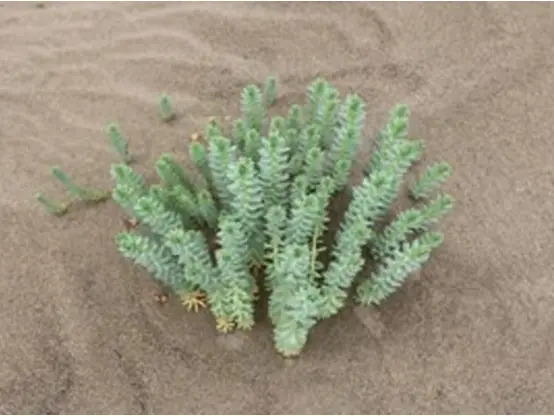
Sea Spurge or Euphorbia paralias is a tough European succulent that first invaded New Zealand shores in 2012 and is now starting to crop up on beaches around the country, including Karamea.
The shrub invades the shore just above the high tide mark, disrupts sand dunes, displaces native plants, spreads quickly and takes over an entire area in a short space of time, the council said.
"The Ministry for Primary Industries (MPI) and the Department of Conservation want people to report any sightings, but if you find it don't try to remove it.
"It has a sap that is toxic to humans and animals that can cause skin irritations and temporary blindness if you get it in your eyes."
Sea spurge has also been discovered growing on the west coast of the north island, at Karekare Beach, Aotea Harbour, Mokau and Himatangi.
It was believed the seeds arrived by ocean currents from Australia where the shrub was now widely established along coastlines, causing major environmental problems at many beaches, the council said.
"If you think you've found sea spurge, don't disturb the plants as it could spread the seeds and don't cut it or try and remove it, as its sap is toxic."
Anyone coming across the plant should take a photo of the location and a close-up of the plant; use GPS to confirm the location if possible and call the MPI Exotic Pestline on 0800 99 66, the council advised.