
PHOTO
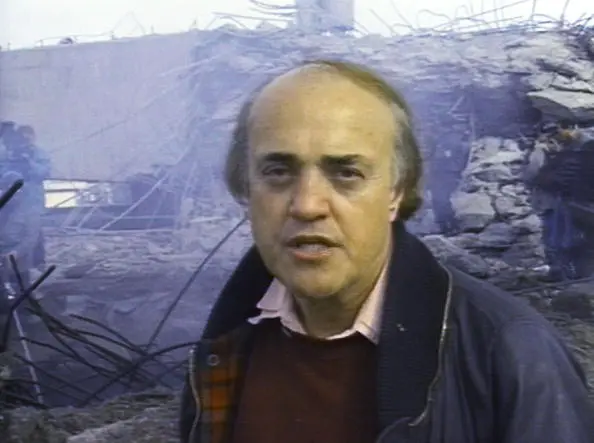
Of the many New Zealand journalists who have reported around the globe, Peter Arnett arguably became one of the most visible on the international stage.
Peter Gregg Arnett was born in Riverton on November 13 1934. the son of Eric Lionel Arnett and Jane (Gregg) Arnett.
The second of three brothers, he grew up in Bluff, "at the bottom end of the world" .
His great-great-grandmother was Ngāi Tahu and his family was entitled to gather muttonbirds on Poutama Island. Arnett once said that some of his richest memories from his youth came from muttonbirding, and that his early adventures on the tītī islands helped prepare him for the adventurous life he would go on to lead as a journalist.
He and his brothers were boarding pupils at Waitaki Boy’s High School but Peter managed to get himself expelled for breaking school rules concerning dating.
All three Arnett brothers wrote for the Southland Times at various times and Peter Arnett "covered my share of cat shows, backyard brush fires, minor sports events and lots of anniversaries and committee meetings of the most obscure organisations."
However, Arnett’s sense of adventure was to take him much further afield, and into contact — and conflict — with world leaders. After a stint in Wellington Arnett worked for English-language papers in Thailand and Laos, before joining news agency Associated Press.
Arnett was in Laos reporting on their civil war for AP when Captain Le Kong seized control of the small South-East Asian Country for a second time on August 10 1960.
Facing challenging communications to the outside world and closed roads out of the country, Arnett swam across a river with his story, passport and $200 in his teeth to reach Thailand.
He sent the story by telegraph, and the next day it appeared in papers around the world.
This was only the start of a career in which he would become a premiere war correspondent, thanks to acclaimed and Pulitzer Prize wining reporting on the Vietnam war.
His peers lauded his work. "The best reporter of the [Vietnam] war" claimed New York Times journalist and Pulitzer Prize winner David Halberstam. "Maybe the quintessential war correspondent of our half-century" extolled the paper’s editor, Bill Keller.
Perhaps the biggest indicator of his journalistic doggedness was his relationship with those in power. In 1965 an aide of American President Lyndon Johnson described him as "more damaging to the US cause than a whole battalion of Vietcong".
The following year Arnett was awarded the Pulitzer Prize, one of 60 journalism awards won during his long career.
"From the beginning of the war to the end I looked at Vietnam as a news story, not a crusade for one side or the other," Arnett wrote in his autobiography Live from the Battlefield.
"I believed that gathering information was a worthwhile pursuit, and truth the greatest goal I could aspire to."
The US quit Vietnam in 1973 and many journalists went with them but Arnett — feeling an obligation to stay and cover the end of a war he had covered from its beginnings — remained until 1975. He was one of the last journalists to leave Saigon when the Vietcong conquered the city.
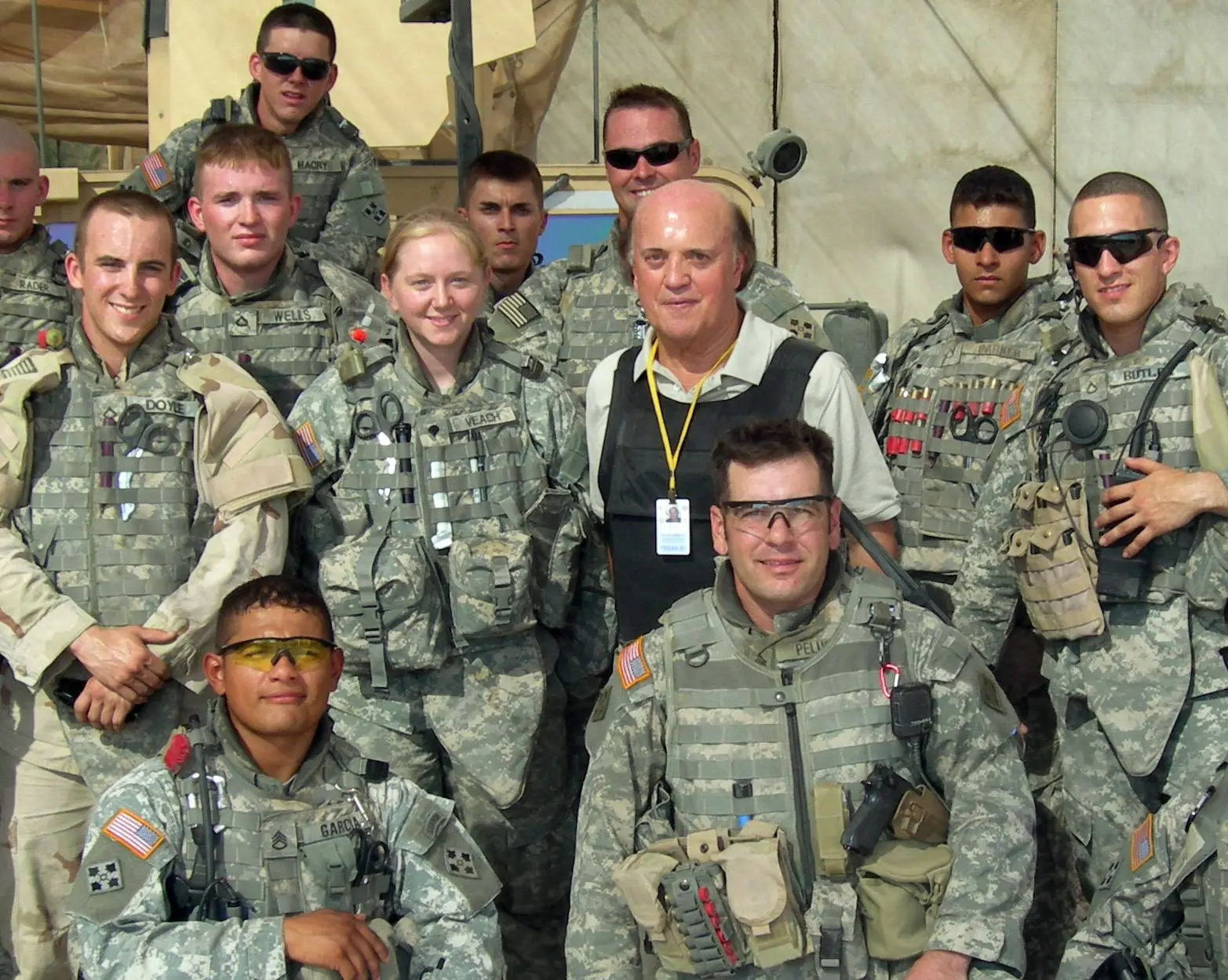
Arnett became a roving reporter for AP but was still best-known for his Vietnam coverage: in 1980 he was commissioned to write a Canadian television series Vietnam — The Ten Thousand Day War.
Screen work started to interest him more and more and in 1983 Arnett produced and presented an award-winning documentary Poisoning for Profit.
In 1981 Arnett joined the fledgling cable news channel CNN, and a decade later — thanks to being in the right place at the right time — became a household name.
Iraq had invaded Kuwait in late 1990 and in subsequent months the United States attempted to build an international coalition to take military action against the Saddam Hussein-led regime.
Operation Desert Storm — the liberation of Kuwait and invasion of Iraq began on January 16 1991 and Arnett and two CNN colleagues were the only reporters to secure access for live coverage directly from Baghdad during those initial hours.
As the frontline neared the Iraqi capital Arnett was left as the sole western reporter in the city. Arnett’s coverage earned both controversy and awards: some Americans, including a number of politicians, called him the "traitor of Baghdad", especially after he was granted an exclusive interview with Saddam Hussein.
Arnett later argued that CNN’s coverage was criticised because "we were giving a view not subject to US censorship. We were able to show pictures of civilian areas we had damaged, people wounded and killed in the bombing by multinational forces."
Regardless of how well it was received, nobody could accuse his war coverage of ever not being comprehensive, as evidenced by the public profile of some of his interviewees. Among them were Fidel Castro, General Manuel Noriega, and Osama Bin Laden.
That 1997 interview with the Al-Qaeda leader was arranged after Bin Laden declared jihad on the United States. When asked by Arnett what his future plans were, Bin Laden’s reply — "You’ll see them and hear about them in the media, God willing," became chillingly prophetic in retrospect.
That same year Arnett received unique honour when the Southland Institute of Technology named its (now closed) journalism course the Peter Arnett School of Journalism.
In 1994 Arnett published Live from the Battlefield. In a positive review, the Los Angeles Times asserted that "Arnett’s book is, above all, a sharp reminder that the technology of journalism may change, but the qualities that make for good journalism do not. What really counts . . . are hustle, savvy, imagination, ingenuity and sheer physical courage, all of which Arnett possesses in abundance."
In 1998 Arnett fronted a controversial CNN/Time magazine report which claimed the American army had used chemical weapons on US deserters in Laos during the Vietnam War.
After an enormous political outcry CNN held an inhouse investigation of the report which concluded that its journalism on the story was "flawed" and retracted it. Arnett was reprimanded and left the network a year later,
With another US invasion of Iraq looming Arnett returned to the country in 2003 to cover it for NBC and National Geographic.
However Arnett once again found himself in at the centre of controversy when he said in an interview on the official Iraqi government television station that the initial US war plan had failed.
Accused of encouraging Iraq, Arnett was fired by both networks; he stayed in Iraq however, writing for British newspaper the Daily Mirror.
Arnett retired from journalism in 2007, and in 2012 he was awarded the New Zealand Order of Merit in the Queen’s Birthday Honours.
He was made a professor of journalism at China’s Shantou University in 2007, where he taught until finally retiring in 2015. He then returned to live in the United States, where he had long ago became a naturalised citizen — although still travelling on a New Zealand passport.
Peter Arnett died on December 17 in Los Angeles. He is survived by his wife Nina Nguyen and their children, Andrew, a film maker, and Elsa, who had followed in her father’s footsteps and become a journalist. — NZ On Screen/Te Ao Māori News/Allied Media