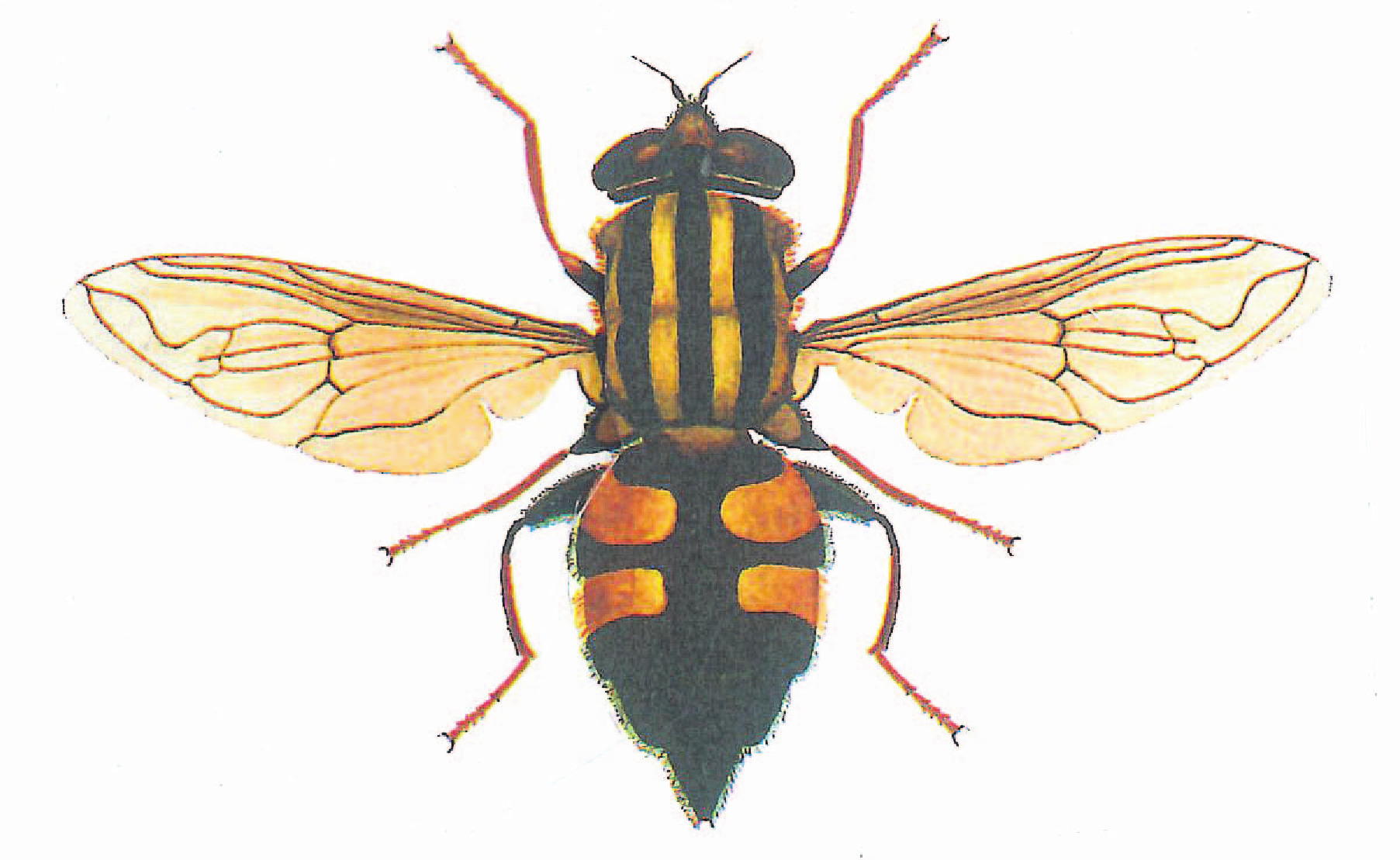
The near worldwide decline in honeybees (Apis mellifera) is seriously affecting food production, as crops depend on bees for pollination. Although the outlook seems grim in many places, an entomologist claims he can train hoverflies to pollinate crops more efficiently and eventually take over the honeybee’s essential pollination role. Hoverflies (true flies, order Diptera, of the family Syrphidae) have long pollinated three-quarters of our crops. Dr Mandela Fernandez-Grandon has found he can quickly train hoverflies to be even better pollinators. It takes him 15 minutes to train a hoverfly. He holds it in a cocoon-like support, then releases a flowery scent near its antennae. Next, he brings the hoverfly a sugary offering, which causes it to extend its proboscis, or feeding tube. After only two trials, the hoverfly reacts by extending it proboscis to the sugary stimulus, like Pavlov’s dogs at the sound of a bell. In fact, hoverflies are already pollinating our crops, to the extent of $300 billion yearly. Unlike bees, hoverflies work on overcast days as well as sunny days, and don’t sting.

— Anthony Harris is a curator at Tūhura Otago Museum.