
PHOTO
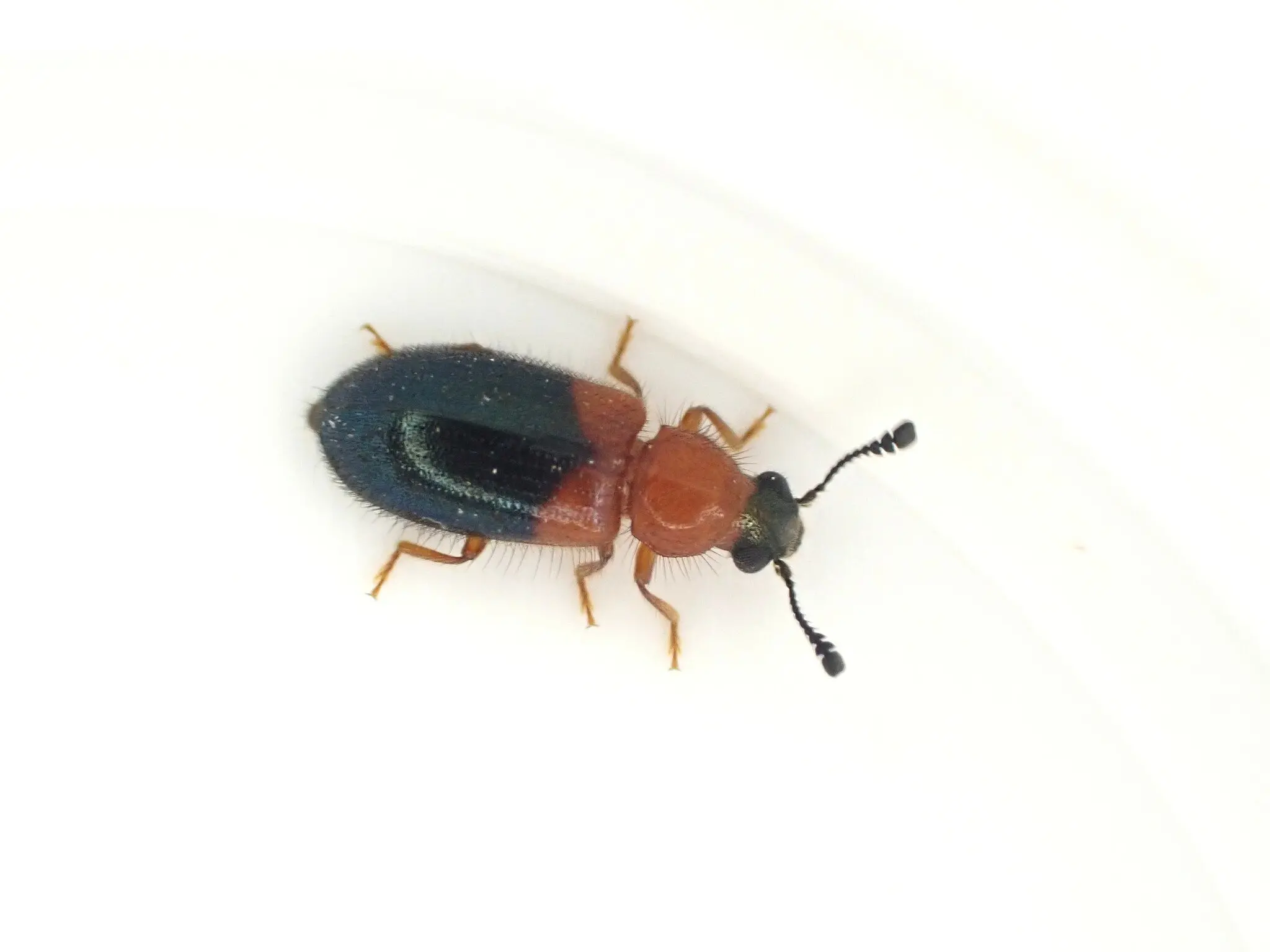
I was recently asked to identify some interesting small beetles, 5mm long, with the legs, prothorax and shoulders of the wing cases red; the head and remainder of the wing cases being steel blue. The beetles were found walking on a decaying dead sheep in a paddock. These were Necrobia ruficollis (Fabricius, 1775) (family Cleridae), one of several beetles that feed on mammalian carcasses.
In the past, N. ruficollis was notorious for burrowing under the skin of hams, where it would feed particularly on the rich layer of fat directly beneath the rind. The beetles are sometimes found in packets of dog biscuits and in dried mammalian meats, fish, cheese, cashews and many other stored products. Adult beetles are known to fly towards meat works, including freezing works.

The red-shouldered ham beetle nevertheless has some benefits for humanity, for example, being used by forensic entomologists to establish the likely time of death of a corpse.
The beetle is predatory and cannibalistic: the females lay their eggs near food and avoid laying too many eggs in the same place, as the predacious larvae, on emerging from their eggs, first eat their own eggshell and then search for any other eggs laid nearby and eat those as well, before commencing to devour the source of food on which they were laid.
The larvae are fully legged and have the hind part of the abdomen strengthened. In former times the beetles bred in the holds of sailing ships carrying hides and copra. The beetles would also burrow into the greasy, copra-saturated wood on the sides of the ship and the hold. Native to Europe, Asia and North Africa, the red-shouldered ham beetle is now cosmopolitan and widespread and is very abundant throughout New Zealand.