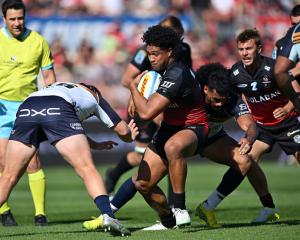


If 2010 was about anything for the Wallabies it was about 2011, destined to be their year of living dangerously.
Australia have made it clear they will attempt to do the near impossible - win a World Cup playing bright, attack-at-all-costs rugby - and they confirmed their status as the international game's entertainers in 2010 with a style that lit up stadiums from Perth to Paris.
Built around the unique talents of Quade Cooper, Kurtley Beale and James O'Connor, the Wallabies played to their strengths - and away from some glaring weaknesses - without the hint of a second thought.
Asked on the season-ending tour of Europe if the Wallabies could change the maxim that World Cups are won by grit alone, coach Robbie Deans replied: "We're changing it all the time."
New refereeing interpretations have encouraged attack and the Australians are the fundamentalists of those new laws.
It may be a gamble for the world No.2 side but it also promises to be one hell of a ride.
To lift the Webb Ellis Cup at Eden Park next October, however, Australia will need to win at least three straight Test matches, something they failed to do in 2010.
If the tournament pans out according to seedings, the Wallabies will play Wales in the quarter-finals, England in the semis and desperate hosts the All Blacks in the big one.
Australia accounted for the Welsh 25-16 in Cardiff last month - despite the Wallaby scrum being demolished in the process.
They played England three times this year for one win, and were trounced 35-18 in their last meeting at Twickenham.
And, despite a 10-Test drought-breaking 26-24 victory over the All Blacks in Hong Kong, Australia managed just one from four against New Zealand.
Whether that put a nagging doubt in the back of the minds of the world No.1 side or just made them determined remains to be seen.
It will first be seen in the shortened Tri-Nations series, where 2010 runners-up Australia and champions New Zealand might fancy they'll be rehearsing the World Cup final when they meet on August 6 at Eden Park.
The trans-Tasman rivals also play in Brisbane on August 27, but it will be tough for Australia to gain the psychological edge from either Test - they haven't won in Auckland since 1986 or against New Zealand in Brisbane since '92.
The Tri-Nations also sees Australia up against South Africa in Sydney and Durban, no doubt buoyed by their incredible highveld hoodoo-busting 41-39 win in Bloemfontein last September.
Beale's after-the-siren long-range penalty goal broke a 47-year drought and was undoubtedly the highlight of an up and down year for the Wallabies.
Australia won nine of 15 Tests in 2010, finishing the year with a record 59-16 thrashing of France in Paris, the last of several matches they won by playing around their most obvious weakness, their scrum.
The Wallabies managed similar victories over England in Perth and Wales in Cardiff, backing their ability in most other facets of the game to get the job done.
The year's low point came with out-of-favour Matt Giteau missing a sitter of a penalty goal to gift England a 21-20 victory at ANZ Stadium in June.
Not far behind was the pointless 15-6 loss to Munster in Limerick, where the weather at Thomond Park gave new meaning to the sporting cliche "atrocious conditions".
The continued progress of IRB player of the year nominees Beale and David Pocock as well as O'Connor, Cooper and Will Genia showed they would be a mature force to be reckoned with by World Cup time, while prop James Slipper's rise to the starting line-up heralded another big future.
On the reverse, Giteau's gradual decline under the Deans regime continued with the 91-Test veteran dropped to the bench by season's end.
In 2011, all of Australia's World Cup hopefuls will need to get through the expanded Super Rugby season - a 15-team provincial competition to be played in three conferences based in Australia, New Zealand and South Africa.
Australia's fifth team the Melbourne Rebels, coached by World Cup winning mentor Rod Macqueen and boasting England's best attacking five-eighth Danny Cipriani, will begin their history against the NSW Waratahs when the tournament kicks off on February 18.
The Tahs (3rd in 2010), much improved Queensland (5th) and the talent-laden Brumbies (6th) will again be in the hunt for one of the six finalists' positions and Australia's first Super Rugby title since 2004 in the July 9 decider.
But the rugby world's focus will turn to New Zealand from September 9, when the host nation opens the World Cup with a pool match against Tonga.
All eyes, though, would be on Kiwi Deans' chance to snatch the prize which has so infamously eluded his homeland since 1987, if the Wallabies were to run out onto Eden Park for the October 23 final.